

Ganesh Visarjan 2026: why Bappa is bid farewell, the religious reason behind the tradition
As Ganesh Chaturthi festivities near their close, here is the timing for this year's visarjan and the mythological reasons behind the ritual.
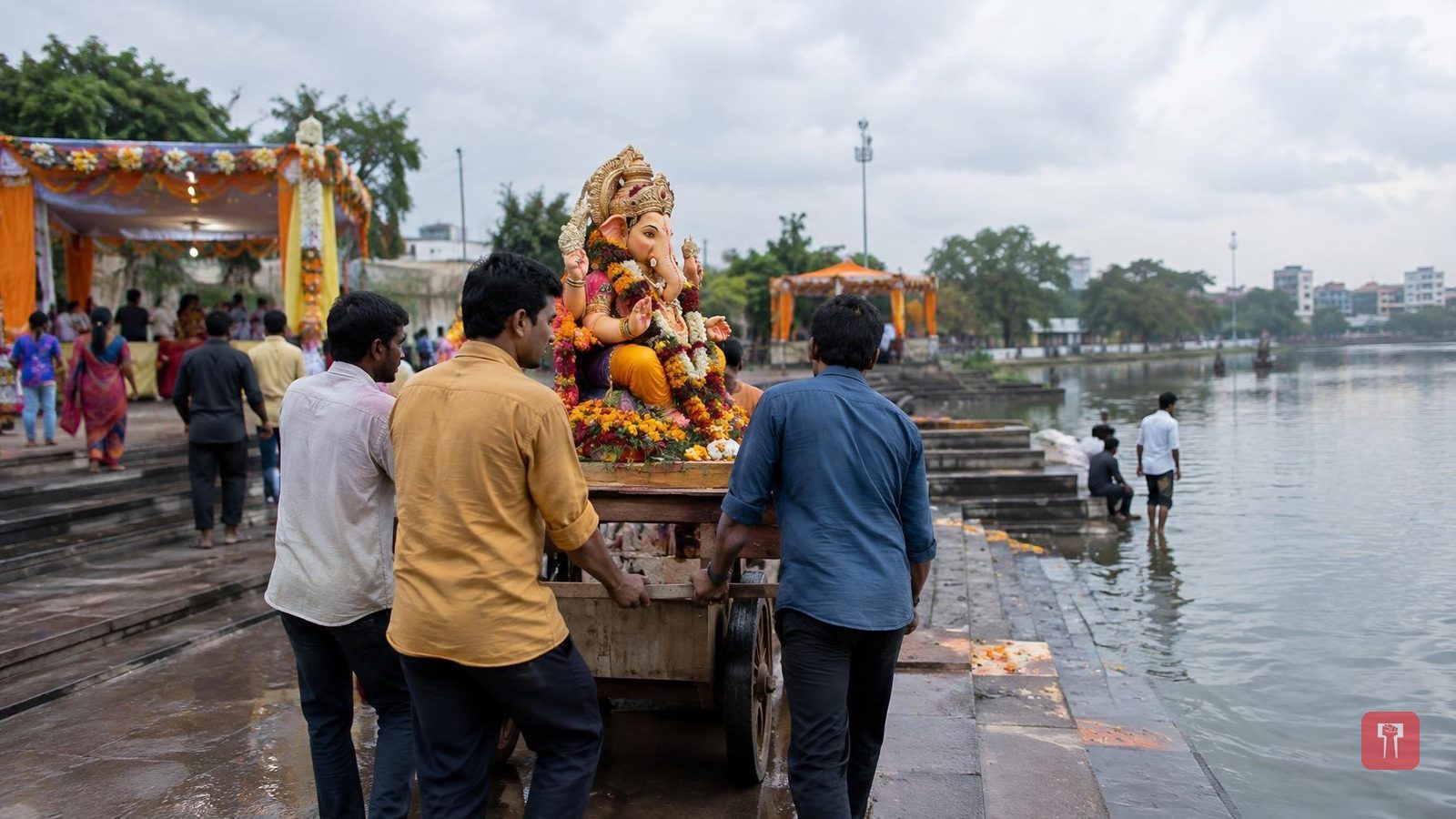
Ganeshotsav is regarded as one of the biggest Hindu festivals, dedicated to Ganpati Bappa. During the festival, devotees install an idol of Ganpati Bappa in their homes and mandaps and worship it with due rituals. The festival begins with Ganesh Chaturthi and lasts for 10 days.
This year, Ganesh Chaturthi began on Monday, September 14, while Anant Chaturdashi falls on September 25. The Chaturdashi date begins at 11:18 pm on September 24 and lasts until 11:06 pm on September 25. The morning muhurat for visarjan is from 6:28 am to 10:59 am. The afternoon muhurat is from 12:30 pm to 2:01 pm, while the evening muhurat is from 5:02 pm to 6:32 pm.
During Ganeshotsav, people often wonder whether it is necessary to immerse the Ganpati idol after Ganesh Chaturthi, or whether the idol can be kept permanently in the household shrine without immersion. The answer depends on the type of Ganpati idol installed and the tradition of worship followed in the family.
If a clay Ganesh idol has been installed at home or in a mandap, it is considered necessary to immerse it after the fixed days of worship. Devotees immerse the idol after one and a half, three, five, seven or ten days, that is, on Anant Chaturdashi, according to their tradition. However, if the Ganpati has not been formally installed and worship is being done at home in a simple manner, immersion is not considered necessary.
According to belief, a clay idol brought specially for Ganesh Chaturthi is immersed after worship. The idol stays installed at home or in a mandap for a few days and is then immersed in water according to the prescribed rituals. However, if there is a permanent Ganpati idol made of gold, silver, brass, ashtadhatu, stone or crystal in the household shrine, and it is worshipped regularly, it is not immersed. Such idols are kept in the shrine and worshipped daily.
Immersion conveys the message that everything in the world is temporary and perishable. Just as the clay idol of Ganpati dissolves in water after staying with devotees for a few days, a person should also not become overly attached to anything in life. Through the immersion, devotees bid farewell to Bappa with respect and pray for his return the following year.
According to mythology, sage Ved Vyas requested Ganpati to write down the story of the Mahabharata. Ganpati agreed on the condition that he would write continuously without stopping. Ganpati then wrote the story for 10 days. On the tenth day, after continuous writing without rest, his body temperature had risen considerably.
To cool his body and bring his temperature back to normal, sage Ved Vyas had him bathe in a pond. It is believed that day was Anant Chaturdashi itself. Based on this story, the tradition of worshipping Ganpati for ten days and then immersing the idol is believed to have begun.
According to another belief, goddess Parvati had made Ganpati from clay. This is why the immersion of the clay Ganpati idol in water is seen as a symbol of the idol returning to nature. According to religious belief, Ganpati comes to devotees' homes as a guest for a few days and returns to his abode at Kailash after accepting their worship.
