

Gandhi Jayanti: Milestones in Mahatma Gandhi's life, from Porbandar to Sabarmati Ashram
On Gandhi Jayanti, a look at the key stages in the life of Mohandas Karamchand Gandhi, born in Porbandar on October 2, 1869.
Mohandas Karamchand Gandhi was born on October 2, 1869, in Porbandar, a small coastal town in Gujarat. He went on to become more than the leader of one country: as the 'Mahatma', he showed all of humanity a new direction of peace and morality. On Gandhi Jayanti, here are the important stages of his life. In today's fast-moving digital world, where violence and tension are visible everywhere, Gandhi's ideas seem all the more valuable.
Gandhi received his early education in India. He then went to London, where he studied law. When he went to South Africa for legal work, he had a bitter experience of racial discrimination. Despite holding a first-class railway ticket, he was thrown out of the train solely because of the colour of his skin. The incident changed the course of his life. There he raised his voice against injustice and first used 'satyagraha', the non-violent weapon, with success.
He returned to India in 1915. He then toured the entire country and saw at close quarters the real poverty and suffering of the people and the oppression of British rule. He regarded Gopal Krishna Gokhale as his political mentor. Through the Indian National Congress, he became active in the freedom struggle. He began satyagraha in India with the farmers' agitations at Champaran and Kheda.
The mass movements Gandhi led against the British government cannot be seen merely as a political fight. They were cultural and social movements that brought society together. The Non-Cooperation Movement of 1920, the famous Dandi March of 1930, also known as the salt satyagraha, and the Quit India Movement of 1942 shook the foundations of British power. At a single call from Gandhi, millions of Indians came out on the streets and demanded freedom through non-violence.
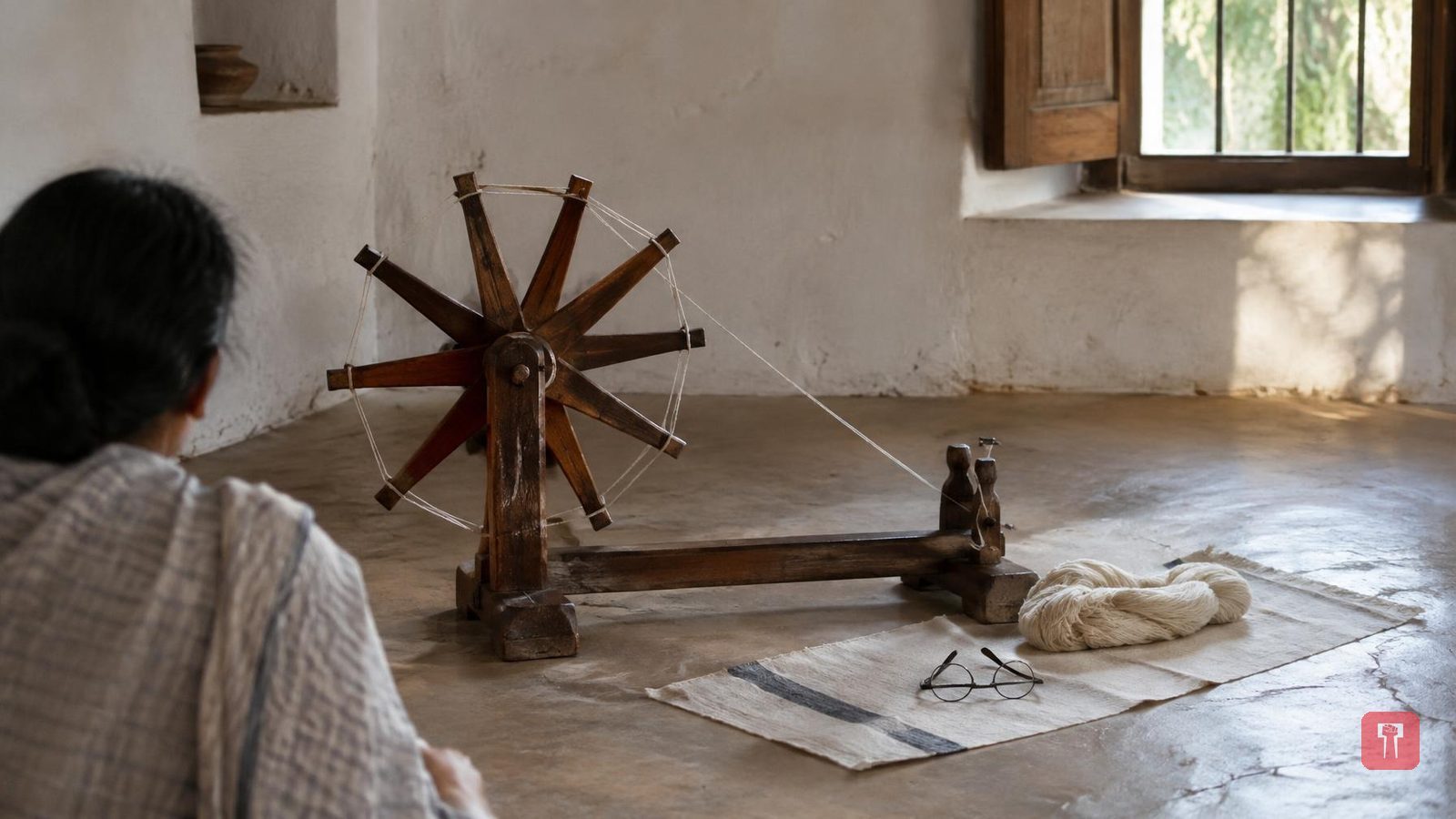
Simplicity and high thinking were the biggest hallmarks of Gandhi's way of life. He used the charkha to spin yarn. The charkha later became a symbol of Indian self-reliance and the swadeshi movement. By founding the Sabarmati Ashram, he gave a message of the dignity of labour, cleanliness and equal respect for all religions.
"My life is my message," Gandhi used to say. He never asked others to follow a principle that he had not followed in his own life. He believed that truth and non-violence were the two eyes of his life. His ideas inspired not only India but also many world leaders, such as Martin Luther King Jr and Nelson Mandela, to fight injustice.
October 2 is observed across the world as the International Day of Non-Violence. The day is a reminder that even the world's greatest power can be made to bow through moral strength and self-confidence, without a big war or violence. Gandhi's ideas are not confined to the pages of history; they are also a guide to good living for today's young generation.
