

Fadnavis hands districts the power to decide how school nutrition meals are served
Chief Minister Devendra Fadnavis said districts can now pick local options under PM Poshan Shakti Nirman so children get fresh, nutritious meals on time.
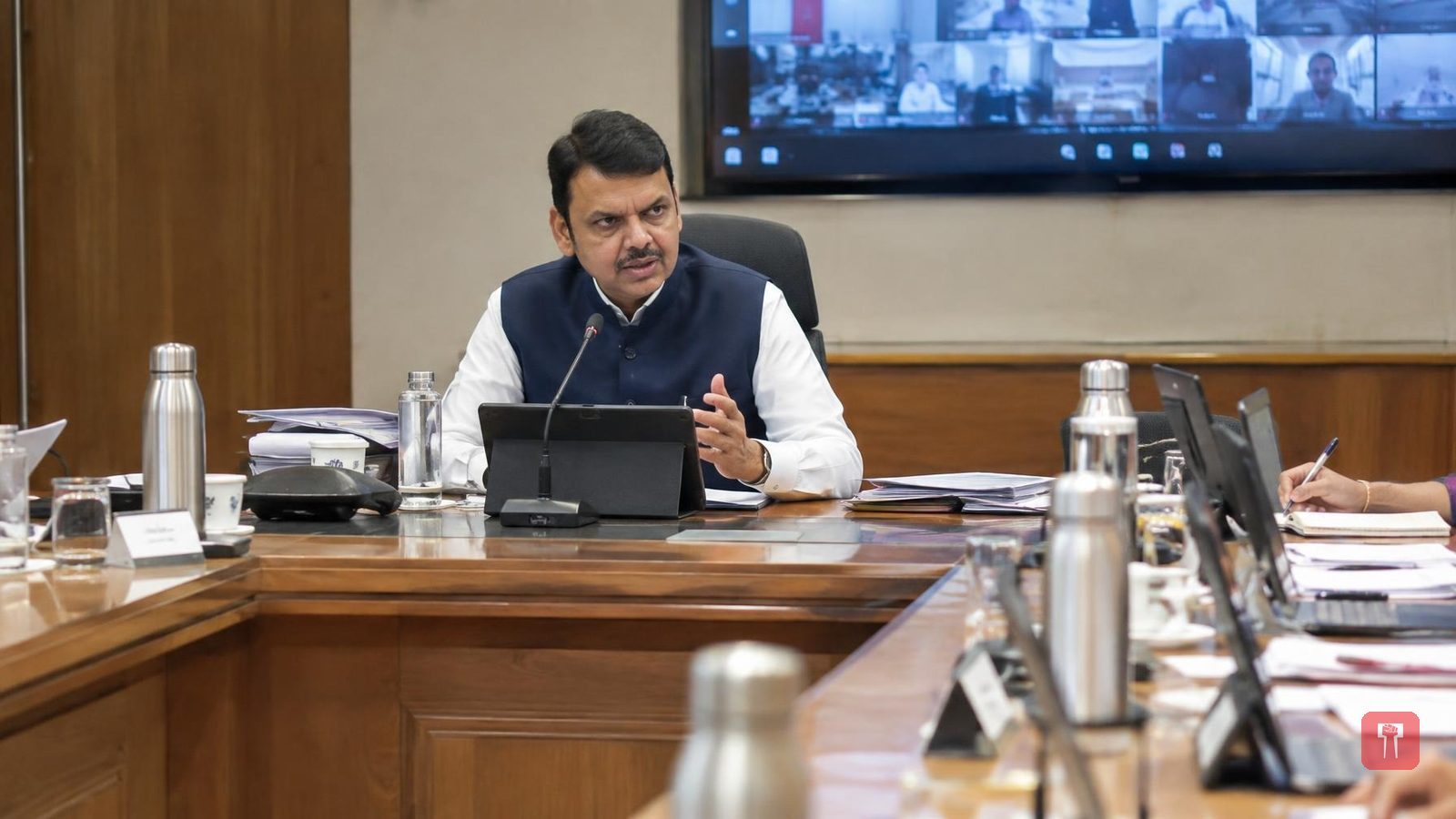
To ensure children get fresh, nutritious and good-quality meals on time under the Pradhan Mantri Poshan Shakti Nirman scheme, powers to take decisions based on local conditions have now been given to the district level. Chief Minister Devendra Fadnavis has directed the school education and women and child development departments to jointly frame a policy and issue the necessary guidelines.
At present, students up to Class 8 receive the benefit of the scheme. A proposal has been made to extend the same meal to students up to Class 10.
A review meeting on the scheme was held at the Sahyadri guest house under Fadnavis's chairmanship. To maintain meal quality, Fadnavis said, the central kitchen option should be adopted in rural areas as well as cities wherever such a kitchen is workable. He also said that for schools in remote and tribal areas, where food from a central kitchen reaches late, other options should be adopted through the gram panchayat.
Where a central kitchen is used, local authorities should check whether meals reach schools on time and fresh. Where possible, the responsibility for distributing meals should go to local women's self-help groups. The directions also say the district collector, the chief executive officer of the zilla parishad and the municipal commissioner should decide after considering local needs and feasibility, and should set clear criteria for meal quality, service and payment.
Fadnavis said collectors should hold meetings of the district-level nutrition meal committee and include protein-rich foods available in the area in the meals. The zilla parishad chief executive officers should coordinate this. He said meals with nutritional value, including millet-based dishes, should be served, keeping in mind local eating habits and students' preferences.
School Education Minister Dadaji Bhuse suggested that the central kitchen network be expanded and that gram panchayats be given funds and the responsibility of providing meals locally. He also asked that a demand be made to the Centre to reduce the share of rice and increase that of other grains. Bhuse said health cards are being prepared for schoolchildren and that, going forward, students' health check-ups will be held in the presence of parents.
Women and Child Development Minister Aditi Tatkare said the department is giving the work of supplying nutrition meals in 30 urban anganwadis to ISKCON. After the results are assessed, the number of anganwadis will be increased, she said. She suggested that the meal committee headed by the collector be given the power to decide on meal supply based on local conditions and availability. Tatkare also suggested that fresh meals be served using loose ingredients as locally needed, instead of premix or fortified products.
Through the school education department, students of Classes 1 to 8 in 85,206 eligible schools run by the state and central governments, local self-government bodies, and private aided and partially aided managements receive the benefit of the scheme. Under Centre norms, students of Classes 1 to 5 get a midday meal with 450 calories and 12 grams of protein, while those in Classes 6 to 8 get one with 700 calories and 20 grams of protein.
Twelve recipes have been fixed to bring variety to the meals, including different kinds of pulao, khichdi, usal and varan-bhaat. Commissioner Sachindra Pratap Singh made a presentation for the school education department, and Integrated Child Development Services Commissioner Madhavi Sardeshmukh for the women and child development department. ISKCON representatives also gave a presentation on the Annamrita Foundation's central kitchen.
Minister of State Meghna Sakore-Bordikar, Chief Secretary Rajesh Agrawal, school education Principal Secretary Ranjitsingh Deol, women and child development Secretary Anup Kumar and Municipal Administration Directorate Director Abhishek Krishna were also present. Commissioners of all municipal corporations, collectors and zilla parishad chief executive officers attended online.
