

Delays at NIT, RERA push up flat prices in Nagpur, builders say
Builders say sluggish approvals at the Nagpur Improvement Trust and RERA are adding months of delay and interest costs, pushing up flat prices for buyers.
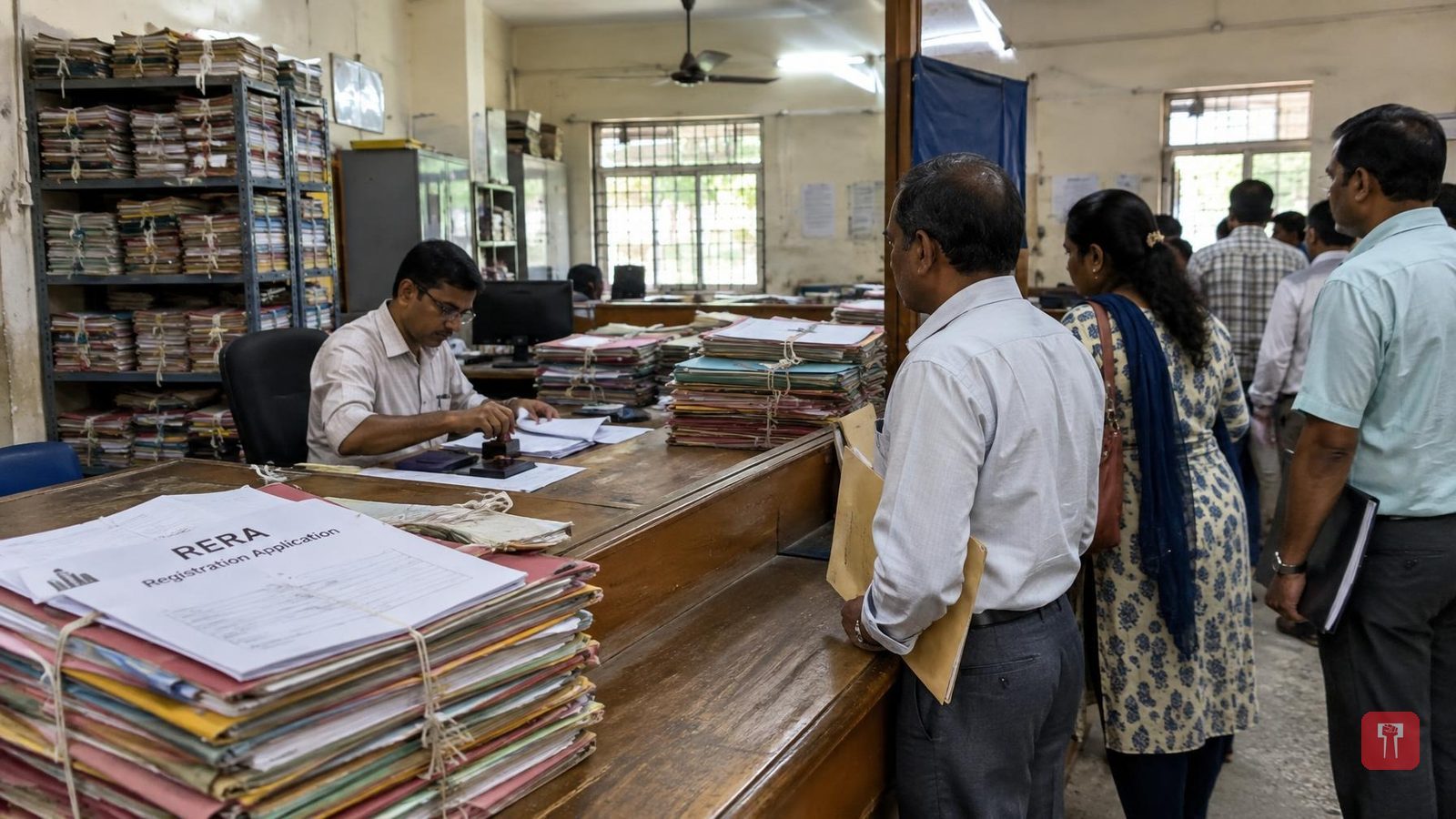
The Maharashtra government is trying to project itself as efficient, with the chief minister and guardian ministers repeatedly claiming to speed up procedures. But the situation on the ground is completely different, with the functioning of officials at the municipal corporation, the Nagpur Improvement Trust (NIT) and RERA exposing these claims.
Projects submitted for approval to these departments are taking a year or more to be cleared. This pushes up project costs on one hand, while builders have to keep paying additional interest on the other.
If the government machinery moves faster, customers could get flats at lower prices and their dream of owning a home could be fulfilled sooner. Experts say the situation at the Nagpur Improvement Trust and the municipal corporation remains unchanged even today.
If a project is submitted for approval in January, the applicant has to wait the whole year, and even then approval is not guaranteed. Builders say that for a good project today, they are depositing between 5 crore and 10 crore rupees, yet approvals still do not come on time. While the government talks about affordable housing, officials are contributing fully to raising costs through delays.
Gaurav Agrawala, former district president, says builders earlier faced trouble from only two departments, but now RERA has also become a source of difficulty. According to him, a different kind of game has begun there too, because of which project approvals now take three to four months, whereas earlier this used to happen within a month. He said that despite the process being online, brokers have become active within RERA, causing harm to the entire system.
According to Agrawala, a builder buys land for crores of rupees, then files papers with the concerned departments for project approval. Even after depositing crores of rupees, there is no telling when approval will come. If the builder is lucky, approval comes within a year, after which the builder applies to RERA. After applying, the file gets stuck there too, and the builder has to bear heavy financial loss in the form of interest. Looking at the whole process, it seems RERA does not trust government agencies, the municipal corporation and the Nagpur Improvement Trust.
Builders say that the temporary number given at the time of applying should itself be enough to permit marketing of the project. This would save builders both time and money, and the benefit would go directly to customers.
Interestingly, government departments such as MHADA, the municipal corporation and National Institute of Technology-type government institutions are also bearing the brunt of RERA's slow pace. Even after their projects are approved, it takes three to four months to get RERA registration. In short, RERA no longer seems to trust government departments, officials or employees, procedures are being deliberately tangled, and the entire property market is paying the cost.
Agrawala said that if a builder plans to launch a scheme next year around Ganpati or Navratri, that is nothing short of a dream, because builders are first caught in a web of no-objection certificates, then files pass through the tables of different departments, and finally, by the time the last approval stamp is due, the builder has himself forgotten when the project was to be launched or when marketing was to begin. This, he said, is the real picture of the city's departments.
