

Data centre boom seen creating 1 lakh engineering jobs, $300 billion investment
A New Delhi webinar heard that India's expanding data centre sector could create 1 lakh engineering jobs and draw over $300 billion in investment by 2030.
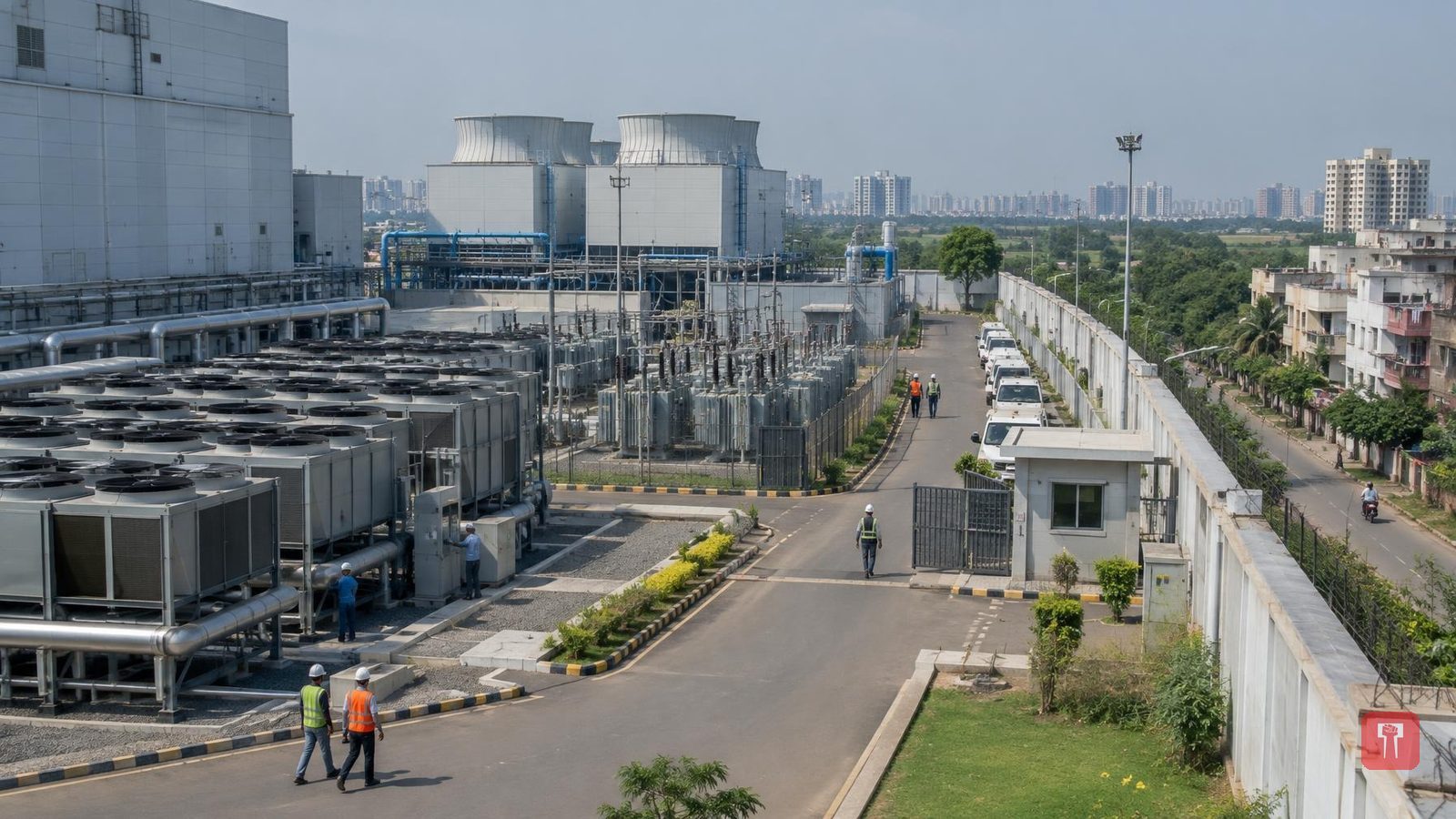
The pace at which India's data centre sector is growing will boost jobs, investment and clean energy, according to a webinar organised by the Policy Consensus Center (PCC) in New Delhi. The webinar, titled "Living Next to the Cloud: An Evidence-Based Approach to Data Centers in Residential India," brought together policymakers, industry leaders and local residents to discuss how the rapid expansion of the data centre ecosystem is driving economic growth, employment and clean energy.
Industry estimates suggest India's data centre capacity could reach 6 to 6.5 gigawatts by 2030, with a development pipeline of up to 3,860 megawatts. This will require development capital of around $29.9 billion. Data centre space is expected to expand to more than 10 crore square feet by 2030, involving investment commitments of more than $300 billion in the sector. Experts said data centres should be seen not just as digital infrastructure but as a key part of India's broader economic and sustainable transformation.
Arindam Goswami, co-founder and partner at the Policy Consensus Center, stressed the balance between technology and the environment. "Responsible development does not just mean managing outcomes, but creating a positive impact across the ecosystem. While building infrastructure for India's digital future, technology must be linked to responsible use of resources, investment and environmental care," he said.
Nirupama Soundararajan, co-founder and CEO of PCC, said, "As cities expand, areas that were once considered outside city limits are becoming part of urban centres. This makes it necessary to have a planning framework that allows data centres and residential communities to coexist responsibly alongside urban development."
Union Minister of State for Science and Technology Dr Jitendra Singh said at the webinar that the expansion of data centres could create around 1 lakh engineering jobs, including roles linked to AI infrastructure, modern cooling systems, smart grids and digital infrastructure operations.
Energy economist Dr Pankaj Sharma spoke of the importance of greenfield sites. "Data centres should be seen as part of a broader development opportunity. Greenfield sites allow data centre expansion without conflict with residential areas and can become new investment hubs," he said.
Union Minister of State for Power Shripad Naik said the additional power demand from AI data centres could reach 26.3 gigawatts by 2031-32, to be met mainly through renewable energy. Vishal Tripathi, a consultant at the Council on Energy, Environment and Water, spoke on grid coordination. "Data centres have significant potential to provide demand-response services to the power grid. Corporate procurement and Scope 2 accounting rules mean green tariffs can allow data centres to access renewable energy," he said.
Dr Ajay Ojha, co-founder of TechnoGreen Solutions, said sustainability, while complying with environmental standards, should go beyond principle to actually provide incentives, and that making this information public would make comparison and benchmarking easier among operators. Sudipto Banerjee, deputy director (public policy) at NASSCOM, said information on key resources such as water, power, land and fibre should be available in one place at the district level as "resource maps," making site selection more transparent and effective.
Sharad Agarwal, CEO of Sify Infinit Spaces, described a "six zero" policy for data centre operations, under which the industry works towards six goals: zero outages, zero resilience risk, zero security incidents, zero safety issues, zero defects and zero carbon footprint. Dr Sonia Taskande, who lives close to a data centre in Chandivali, Mumbai, shared her experience. "I live right next to a data centre. I have never faced any problem in daily life or with water availability. With the right management, data centres and residential settlements can easily coexist," she said.
