

Chembur's 'Samrat' Ganesh mandal marks 22nd year with Navagunjara tableau
Chembur's Shiv Shakti Ganeshotsav mandal, known as 'Chembur ka Samrat', is marking its 22nd year with a display on the mythological Navagunjara.
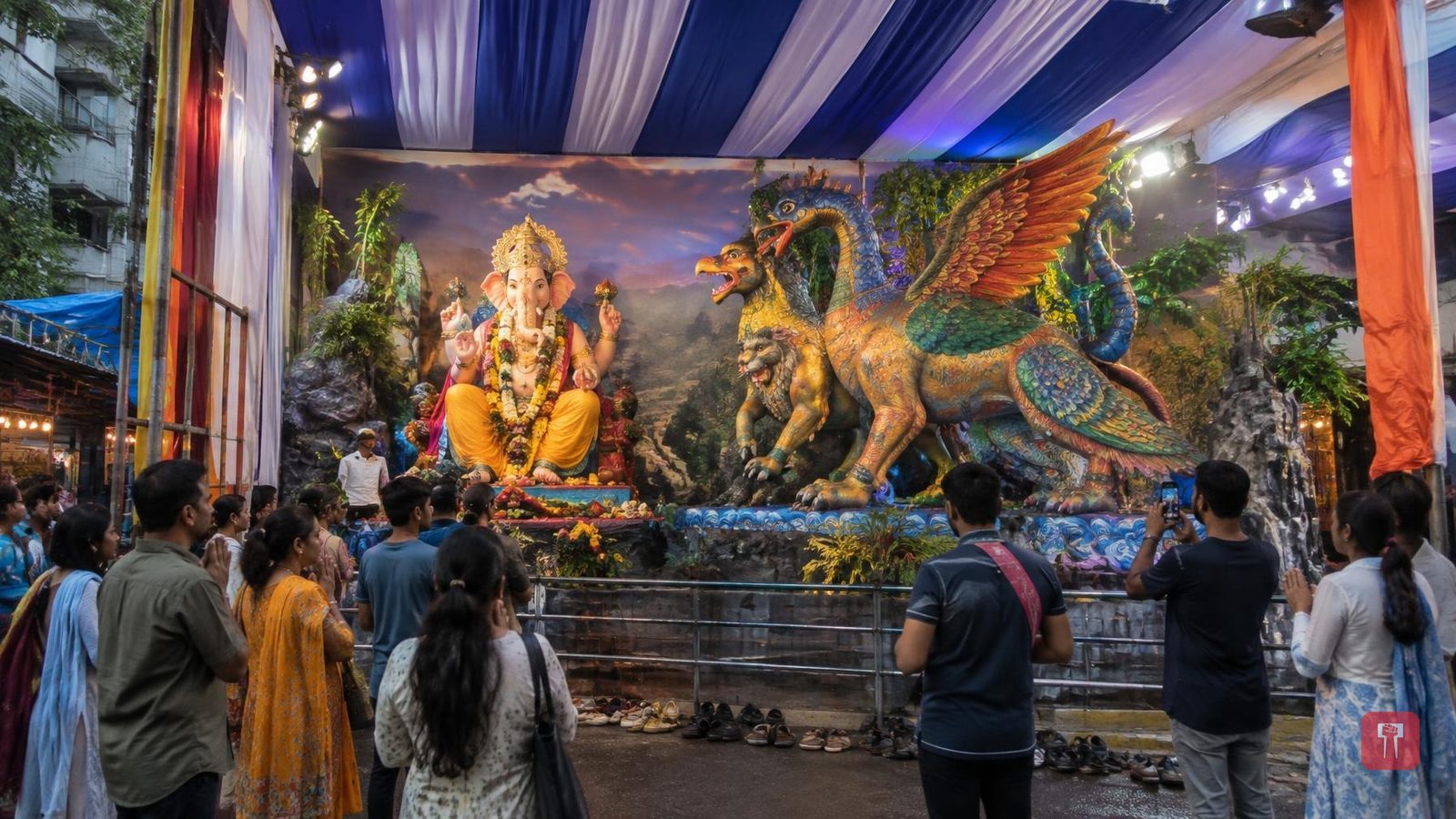
Ganeshotsav fervour is at its peak in Mumbai, and Chembur's well known Shiv Shakti Ganeshotsav mandal, popularly called 'Chembur ka Samrat', has installed its idol as well. The mandal is celebrating the 22nd year of its Ganeshotsav this time with devotion and enthusiasm. Thanks to a tradition running for the past 22 years and devotees' faith, 'Chembur ka Samrat' has become a major draw for Ganesh devotees in the area.
This year's celebration gives special place to a mythological concept called 'Navagunjara'. Navagunjara is a unique composite form mainly linked to Odisha's religious and cultural tradition. Made up of body parts of different animals and birds, this form is associated with the divine form of Vishnu-Krishna. Through this concept, the message conveyed is 'many forms, one essence' -- meaning that however different the outward forms may be, the divine essence behind them is the same.
The famous story of Navagunjara is found in the Odia poet Sarala Das's Odia Mahabharata. According to the story, when Arjuna was performing penance, a strange creature appeared before him that he had never seen before. Seeing this form, Arjuna is initially alert and picks up his bow. But when he realises that behind this unusual form lies not an ordinary creature but a divine power, he lays down his weapon and bows before the form. It is also worth noting that this story of Navagunjara is not found in Ved Vyas's original Sanskrit Mahabharata, but is associated with Sarala Das's Odia Mahabharata.
As the name suggests, the 'Navagunjara' form appears to combine the body parts of several different creatures. Details may vary slightly across depictions, but in the common Odia style it includes a rooster's head, a peacock's neck, a bull's hump, a lion's waist, a snake's tail, and the legs of animals such as an elephant, a tiger, a deer or a horse. It is also shown holding a lotus in one hand. For this reason, Navagunjara is regarded not merely as the image of a strange creature but as a symbol of a divine essence that shows through diversity.
Navagunjara holds a special place in Odisha's religious and artistic tradition, particularly in the Shri Jagannath tradition and in the region's famous Pattachitra art, where it is often depicted. There is a long tradition of rendering this divine form with colourful and intricate craftsmanship.
The Shiv Shakti Ganeshotsav mandal's 22-year journey has given the celebration a distinct identity in the Chembur area. Through darshan of the idol, attractive decoration and this religious-cultural concept, an attempt has been made to give devotees a different experience this year. The mandal's Ganeshotsav this year is being celebrated with the spirit of '22 years of devotion, 22 years of tradition and 22 years of Chembur ka Samrat'. Through 'Navagunjara', the ideas of unity in diversity, the divine presence within every form, and India's mythological and artistic tradition are being placed before devotees.
