

Centre approves E100 ethanol for flex-fuel vehicles, amends Central Motor Vehicles Rules
The road transport ministry has added E100 to Rule 115 of the Central Motor Vehicles Rules, 1989, but the fuel is not meant for ordinary petrol cars.
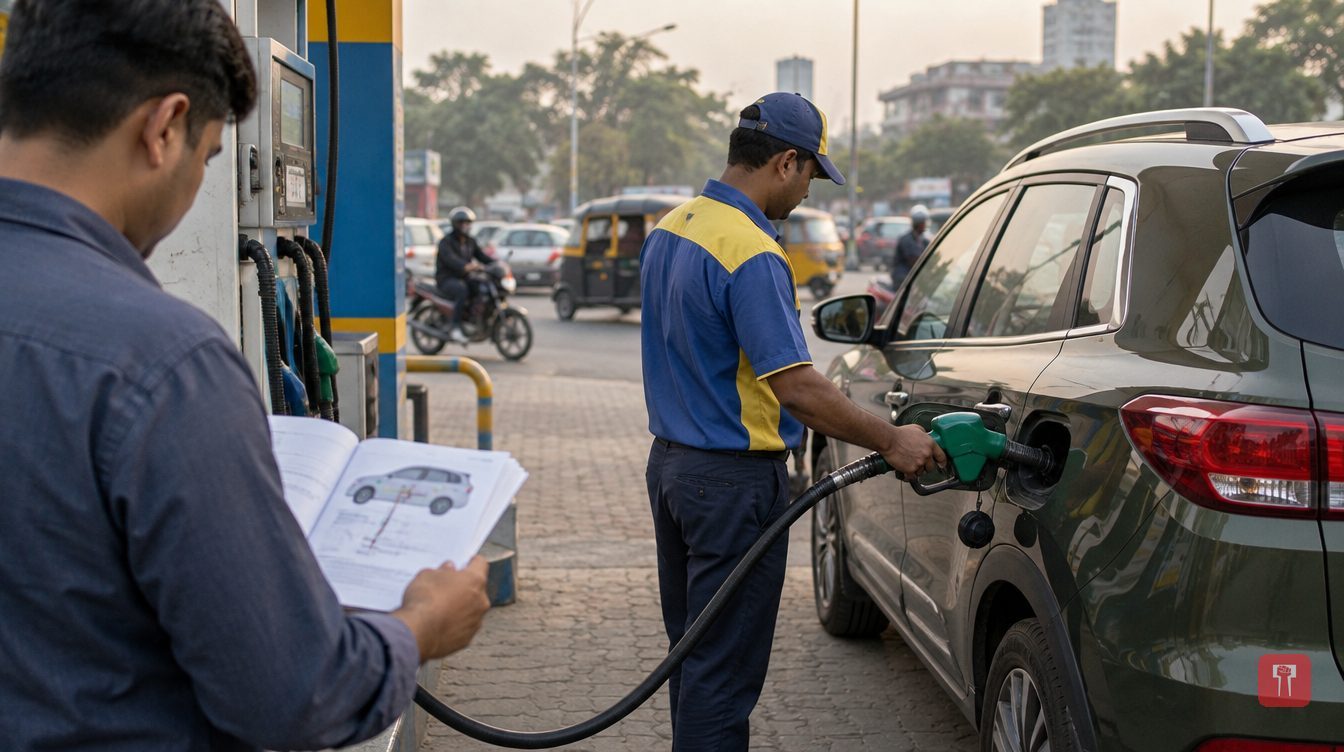 Images are not validated/verified
The Centre has formally approved E100 ethanol fuel for flex-fuel vehicles. The Central Motor Vehicles Rules, 1989, have been amended for this. The move could give momentum to efforts to increase the use of alternative fuels. But one thing is clear: E100 fuel cannot be put in every petrol car.
The Ministry of Road Transport and Highways issued a notification on the matter on October 23, 2026. It amends Rule 115. Earlier, the relevant provisions of this rule mentioned only E85 fuel. E100 has now been added alongside E85.
E100 means a fuel that runs almost entirely on ethanol. E85 contains about 85 per cent ethanol, with the rest being petrol. Vehicles with flex-fuel technology are built to run on fuel blended with varying amounts of ethanol. Depending on the manufacturer's approval, such vehicles can therefore be run on different fuels.
The most important aspect of the decision is that E100 is not for ordinary petrol cars. To use E85 or E100, a vehicle must be specially designed and certified. Putting E100 into vehicles built for ordinary petrol or E20 fuel without the manufacturer's approval can damage the engine and fuel system.
Existing vehicle owners therefore do not need to replace their vehicles or get any modifications done immediately. To find out which fuel a vehicle can run on, it would be advisable to check the company's guidelines.
According to the notification, other technical provisions of the Central Motor Vehicles Rules have also been changed along with E100. These include adding references to E10 and E20 petrol blends, raising the gross vehicle weight limit from 3,000 kg to 3,500 kg, and updating the biodiesel provision from B10 to B100. Technical changes related to hydrogen-CNG (HCNG) are also mentioned. These changes will apply according to the relevant rules and certification standards, so it would not be right to assume they will apply to all vehicles in the same way.
Regulatory approval for E100 could encourage companies that make vehicles running on higher ethanol blends to bring out new models. Flex-fuel technology is already in use in countries such as Brazil. If its reach widens in India as well, the alternative fuel market is expected to gain pace.
Ethanol is made from sugarcane as well as maize and other grains. Higher production could therefore create additional demand in the farm sector. How much farmers benefit, however, will depend on ethanol demand, raw material prices and production policies.
Greater use of ethanol could reduce dependence on petrol. If ethanol use grows in India, it could also help cut dependence on crude oil imports. With the right engine technology and fuel quality, emissions of some pollutants are likely to fall. But the environmental benefit depends on the entire process, from the production and transport of ethanol to its actual combustion inside the vehicle.
On the whole, the approval of E100 is an important step towards alternative fuels in India. But ordinary motorists will not necessarily benefit immediately. The real impact of the decision will become clear only as the availability and price of E100 and the number of certified vehicles that run on it increase.

Comments
No comments yet. Be the first.