

Canadian air ambulance flying from Bermuda to Boston crashes in Atlantic, six missing
A Canada-registered air ambulance carrying six people lost contact over the Atlantic, and the US Coast Guard has found wreckage off Nantucket.
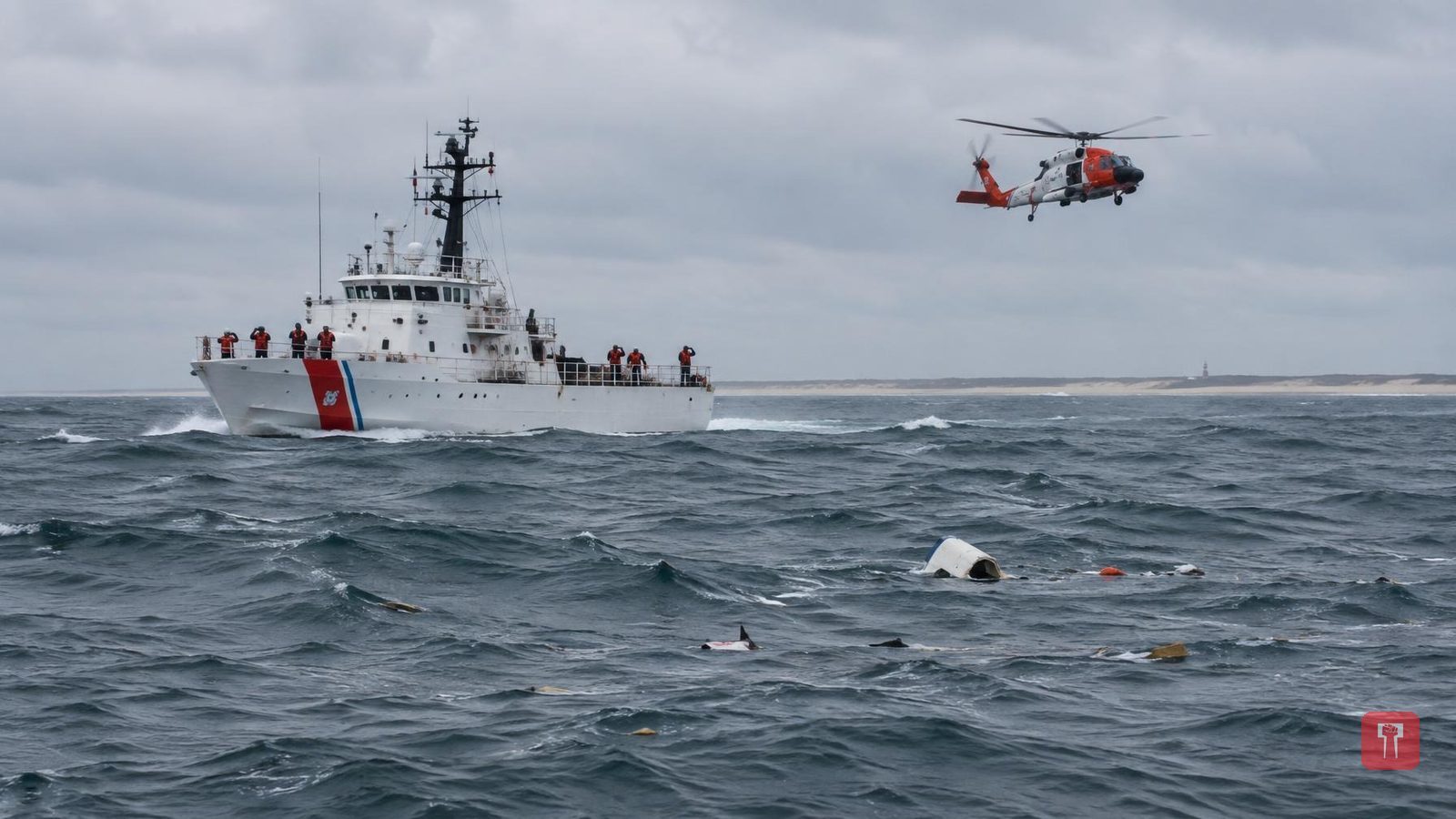
A Canadian air ambulance carrying a patient from Bermuda to Boston in the United States lost contact over the Atlantic Ocean. Soon afterwards, word came that the aircraft had gone down in the sea. During a special search operation in the sea near the coast of Nantucket in Massachusetts, the US Coast Guard located the wreckage and an area of scattered debris.
According to official information, the aircraft was registered in Canada and had six people on board: four Canadian nationals and two residents of Bermuda. Four of the six were crew and two were passengers. The aircraft took off at night from L.F. Wade International Airport in Bermuda for Boston. A severe storm over the Atlantic and a sudden technical fault created life-threatening conditions for the aircraft during the flight.
An audio clip of the last exchange between air traffic control (ATC) and the pilot before the aircraft went missing has now emerged. The recording indicates what was happening inside the aircraft at the time. On Saturday morning, during the flight, the aircraft lost power suddenly and the entire electrical system failed.
The aircraft had by then been caught in a major storm over the sea. With the power gone, all its modern navigation systems shut down. In very difficult conditions, the pilot sent a Mayday emergency message to ATC. The controller asked the pilot, "Roger, did you say you are flying by dead reckoning?" Dead reckoning means flying by estimation alone, without any digital instruments. This proved to be the pilot's last exchange, and moments later the aircraft's radar contact was lost for good.
Early data from the flight-tracking site Flightradar24 showed that the aircraft was flying at about 24,000 feet. After it was caught in the storm and lost power, it dropped about 10,000 feet within seconds. Such a steep fall in altitude points to the severity of the accident.
Mary Schiavo, a former Inspector General of the Department of Transportation and a senior aviation expert, said that when all digital and navigation instruments fail suddenly in such a severe storm, pilots face spatial disorientation. While flying in the sky or through clouds, it becomes extremely hard for the human mind to judge which way the aircraft is turning and whether it is climbing or descending rapidly. The early assessment is that this mental and technical confusion probably caused the aircraft to plunge straight into the sea.
As soon as news of the accident came in, the US Coast Guard began a large-scale search and rescue operation. Coast Guard patrol vessels and helicopters are searching the sea near the Nantucket coast day and night. Canada's Transport Minister Steven MacKinnon expressed deep grief over the incident on the social media platform X and said the Canadian government is in constant touch with US authorities.
The US National Transportation Safety Board (NTSB) is also gathering full information on the incident. An official and detailed investigation into the accident will be announced only after the rest of the wreckage and the black box are recovered from the sea. The families of all six missing people have been informed.
