

Buying something pricey this festive season? Weigh EMI against full payment
Before choosing EMI or full payment for a costly purchase, check your emergency fund, total loan cost and how stable your income is.
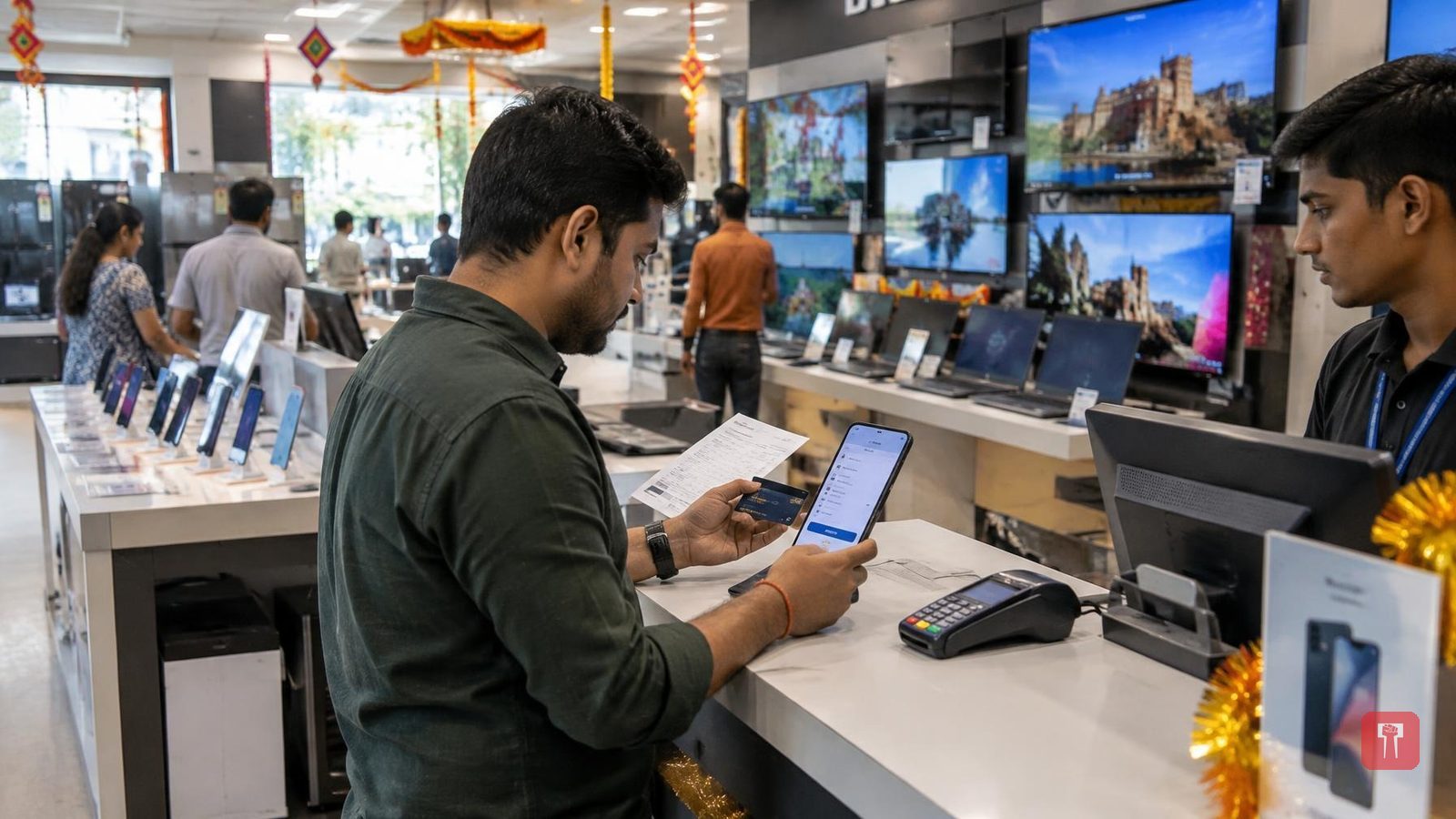
As the festive season begins, purchases of expensive items such as home appliances, electronics, mobile phones, laptops and cars tend to pick up. During this period, companies and banks come up with offers such as EMI, no-cost EMI, cashback and discounts. This often leaves people wondering whether to pay the full amount at once for an expensive item or choose the EMI route.
Both approaches have their advantages and disadvantages, so it is not a good idea to decide based only on how much EMI you will have to pay each month. Instead, it is important to look at how much savings you have, how much will be left after the purchase, how stable your income is, what the interest rate on the loan is, and what expenses lie ahead.
The EMI option should be considered only if buying an expensive item would use up almost all of your savings. For instance, suppose you have savings of 5 lakh rupees and want to buy a car, laptop or other expensive item worth 3 lakh rupees. Paying the full 3 lakh at once would leave only 2 lakh in hand. If it becomes difficult to manage emergency expenses, household needs or a sudden major expense with this remaining amount, it may be better to opt for EMI instead of spending all your savings. With EMI, you do not have to pay the entire amount at once, and you retain some cash or savings in hand.
However, looking only at the monthly instalment amount while choosing EMI can be a mistake. It is important to check the interest rate on the loan, processing fee, pre-closure charges and other charges combined, to see how much you will actually end up paying over the entire loan tenure. If you extend the loan tenure to get a lower EMI, the monthly burden may feel smaller, but the total interest paid over the longer period could be higher. So a smaller EMI does not always mean a cheaper purchase.
On the other hand, if you have sufficient savings and enough money remains for an emergency fund and other necessary expenses after paying the full price, the full payment route can be chosen. Its biggest advantage is that you save on the interest charged on a loan, and you also do not have the responsibility of paying EMI every month going forward, so there is no additional burden on your monthly income.
For example, suppose an item costs 2 lakh rupees. With full payment, you would pay 2 lakh directly. But if buying the same item on EMI, including interest and other charges, comes to a total cost of 2.25 lakh rupees, it becomes necessary to compare the final cost of both methods. In this example, choosing full payment could save around 25,000 rupees in additional cost. But whether sufficient savings remain for emergencies after paying that amount matters just as much.
There is no single answer that is right for everyone, it depends on each person's financial situation. If your savings remain secure even after making the full payment, an emergency fund is in place, and taking EMI would mean paying additional interest or charges, then paying in full could be the more beneficial option. On the other hand, if paying the full amount would reduce your savings too much, a lower-cost EMI can help manage your cash flow, especially if a big expense comes up suddenly after buying the expensive item.
During the festive season, companies and banks offer deals such as lower EMI, no-cost EMI, cashback or lower interest rates. These offers look attractive, but it is important to read their terms carefully. One should compare whether there really is no charge in a no-cost EMI offer, whether there is a processing fee, how cashback and discounts are calculated, and how much difference there is between the item's cash price and its total price under EMI. A purchase decision should not be made immediately just by looking at the small monthly EMI shown in an advertisement.
Five things should definitely be checked before making a purchase. First, the emergency fund, that is, whether enough money is left for essential expenses for a few months after the purchase. Second, the total cost of the loan, that is, not just the EMI amount but the total amount to be paid including interest, processing fee and all other charges. Third, the loan tenure, because choosing too long a tenure to get a lower EMI can increase the total interest. Fourth, how stable your income is, if your income fluctuates, more careful thought is needed before taking on an EMI responsibility for a long period. Fifth, checking whether the need is genuine or whether the purchase is being made only out of temptation for an offer, an expensive item should not be bought on EMI just because a festive offer is available, one should first assess the real need for the item and one's own repayment capacity.
Neither EMI nor full payment is automatically right or wrong. Before buying anything, always check your emergency fund. If sufficient emergency funds remain after the purchase, paying in cash can be beneficial. Certain credit card offers can also be used for this. So while taking advantage of festive offers, the decision should be based not just on how much needs to be paid today, but on the total expense involved from the time of purchase through to the end of repayment.
