

AI leaders predict cures for cancer and Alzheimer's within a decade; drug industry urges caution
 Images are not validated/verified
Anthropic's Dario Amodei, Elon Musk and Demis Hassabis are optimistic about AI in medicine, while Vertex's Jeff Leiden criticises the timelines being offered.
It is said that necessity is the mother of invention. Humans have found cures for many serious diseases, but scientists have yet to find an effective and complete treatment for ailments such as cancer, Alzheimer's, heart disease and mental illness. Artificial intelligence (AI) has now raised the prospect of a big boost to the pace of medical research. Leading figures in the field say that, used properly, AI could make effective treatments for several serious diseases available in the next decade.
Dario Amodei, chief executive officer of AI company Anthropic, has made a significant statement on the subject. According to him, if AI is used properly, cancer, Alzheimer's, heart disease and mental illness could become things of the past in less than a decade. Amodei said AI has the ability to solve problems that humanity has not been able to solve for centuries. He also said that if research proceeds in the right direction, the medical field could see an era of miracles.
Amodei is not alone in his hope. Industrialist Elon Musk and Demis Hassabis, head of Google AI, have also expressed optimism. According to Musk, AI could eventually give ordinary people access to cutting-edge medical care. He expects that the standard of medical care the President of the United States now receives could, in future, benefit all of humankind.
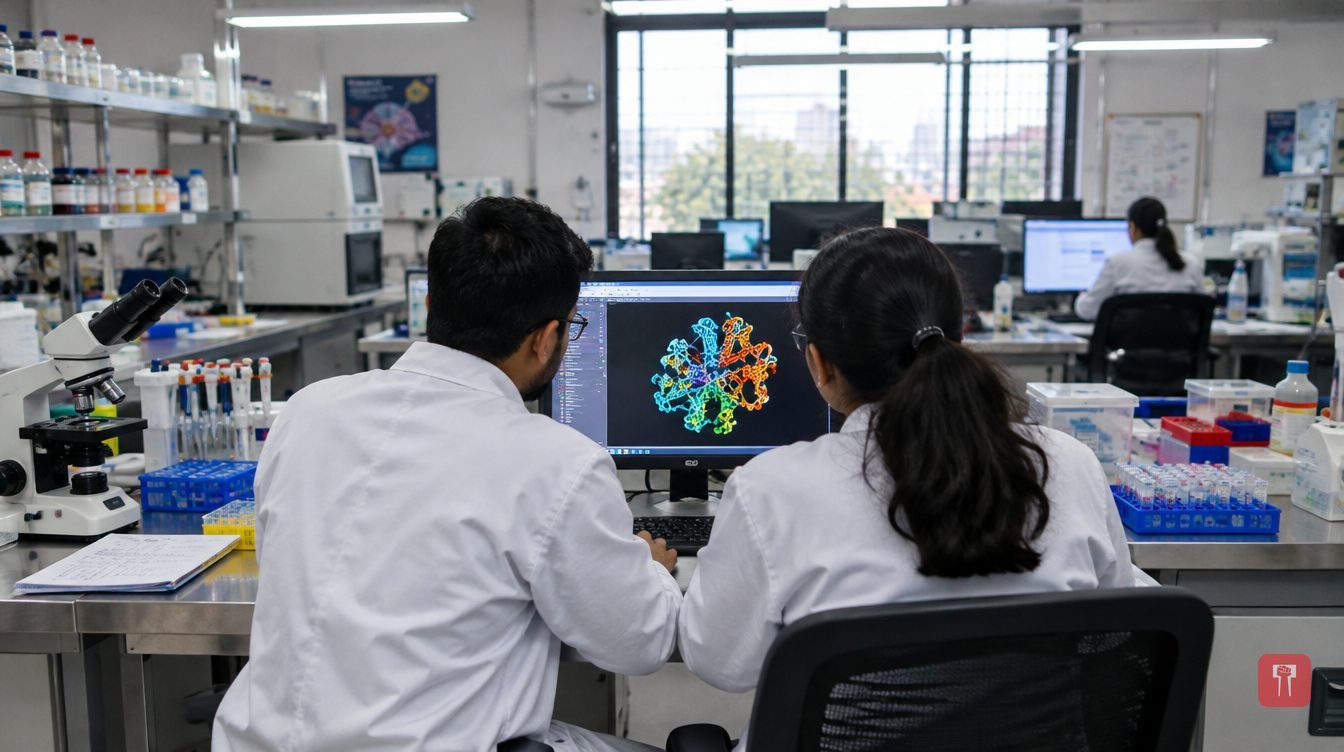
Hassabis pointed to AI's potential in drug research. In his view, the ten years it takes to discover new drugs could shrink to a few weeks because of AI. He cited Google's AI system AlphaFold as an example. With the help of this technology, the structures of more than 200 million proteins have been mapped. Understanding the three-dimensional shape of proteins is considered vital for biological research and the development of new drugs. Technology such as AlphaFold can speed up biological research.
Experts in the pharmaceutical sector are viewing these hopes from AI leaders with caution. Jeff Leiden, executive chairman of Vertex Pharmaceuticals, has criticised the timelines being given for eliminating diseases. According to him, Vertex worked with about 50 AI companies and screened roughly 10,000 drug compounds. However, none of those companies succeeded in developing an effective drug on its own. This has led drug industry experts to conclude that, although AI technology has made great progress, it is not yet fully capable of solving the complex problems of medicine.
On one side, AI experts are suggesting that effective treatments for serious diseases are possible in the next decade. On the other, pharmaceutical experts are stressing the importance of the scientific trials needed to arrive at real cures. AI could bring major changes to drug research, disease detection, the study of proteins and the development of treatments tailored to individuals. But that cancer, Alzheimer's or heart disease will be wiped out entirely within the next ten years is not a scientific conclusion that has been proven so far. AI is, however, likely to speed up medical research.
Reach readers on the ward they actually live in.
Advertise with Prime Time 24Reach readers on the ward they actually live in.
Advertise with Prime Time 24Reach readers on the ward they actually live in.
Advertise with Prime Time 24Choose primetime24.com as a preferred source on Google Google shows more stories from your preferred sources in Top Stories.
Reach readers on the ward they actually live in.
Advertise with Prime Time 24
Comments
No comments yet. Be the first.