

Nottingham researchers develop gel they say can regrow tooth enamel
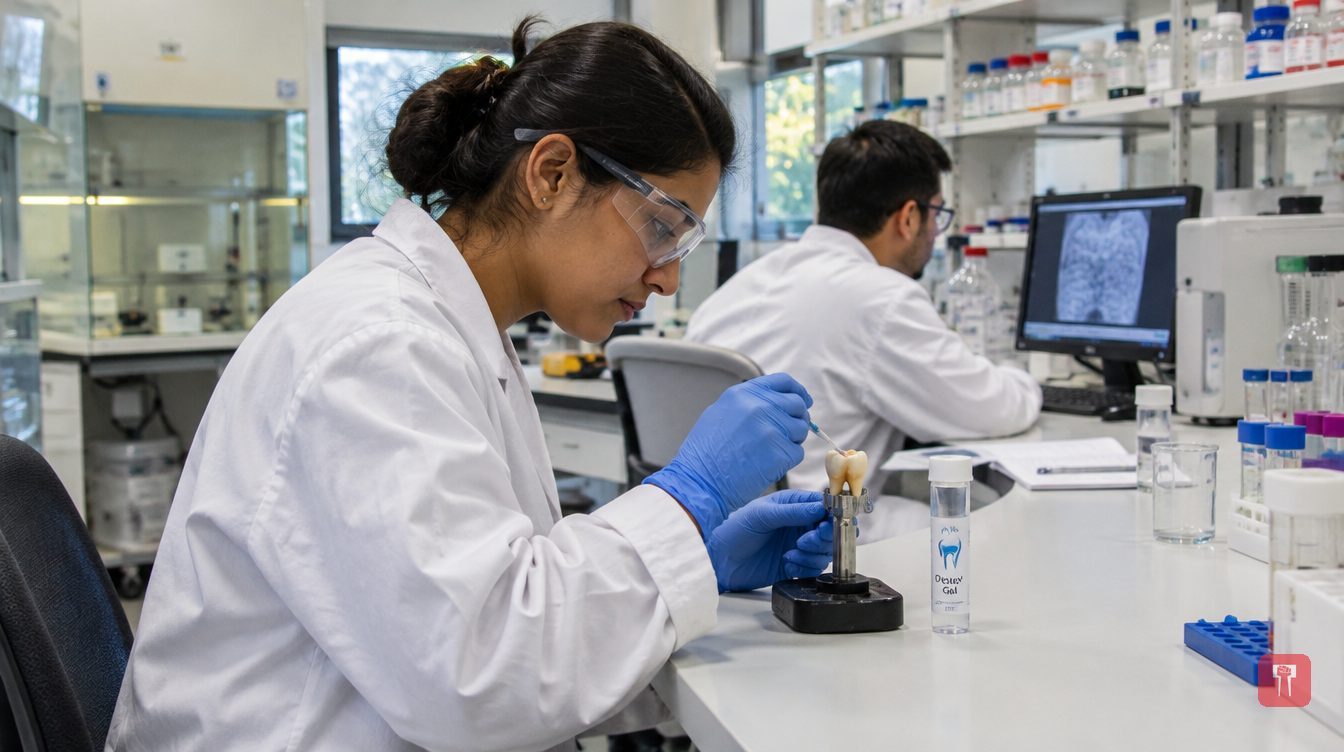 Images are not validated/verified
Researchers at the University of Nottingham say the new gel can rebuild and strengthen enamel lost to decay or heavy wear, and may help protect teeth from cavities.
Researchers at the University of Nottingham have developed a new gel that, they say, can help rebuild enamel, the outer protective layer of the tooth. The layer is lost to decay or excessive wear.
The gel was developed by researchers at the university's School of Pharmacy and its Department of Chemical and Environmental Engineering. The research has been published in the journal Nature Communications.
Most organs of the body can regenerate, but teeth do not grow back if they decay, wear down or are damaged in some other way. The researchers say the new gel can considerably help rebuild and strengthen the enamel layer on teeth. They add that it may also go on to protect teeth against cavities.
The reason behind its development has also been explained. Tooth decay is common in childhood. If the problem begins in adolescence, cavities can become a lifelong issue. The gel has therefore been designed not just to repair damaged enamel but to make it healthy and strong for good.
The researchers say the technique is fairly simple. Like a fluoride treatment, it can be applied to teeth by dentists. The gel contains no fluoride, but is made of special components that mimic natural proteins. Once applied to a tooth, it draws in calcium and phosphate minerals present in saliva. The gel then grows together with these minerals in the form of precise, well-ordered crystals. This bonds the new enamel firmly to the existing tooth.
When enamel wears away or the gums recede, the softer layer beneath, called dentin, is exposed. The sharp tingling felt when eating hot, cold or sweet food is caused by this exposed dentin. The researchers say the new gel forms a protective layer over the exposed dentin, reducing tooth sensitivity. It also considerably helps prevent further tooth decay, they say.
The researchers claim the gel will solve one of the biggest challenges in dentistry. According to them, the regrown layer works just like real, healthy enamel. This has raised hopes that treatment will become easier.
Reach readers on the ward they actually live in.
Advertise with Prime Time 24Reach readers on the ward they actually live in.
Advertise with Prime Time 24Reach readers on the ward they actually live in.
Advertise with Prime Time 24Choose primetime24.com as a preferred source on Google Google shows more stories from your preferred sources in Top Stories.
Reach readers on the ward they actually live in.
Advertise with Prime Time 24
Comments
No comments yet. Be the first.