

Agnikul Cosmos gets Rs 200 crore government support for reusable rocket
Indian space start-up Agnikul Cosmos has received Rs 200 crore in government funding to build a reusable launch vehicle under a project named Agnibaan RLV.
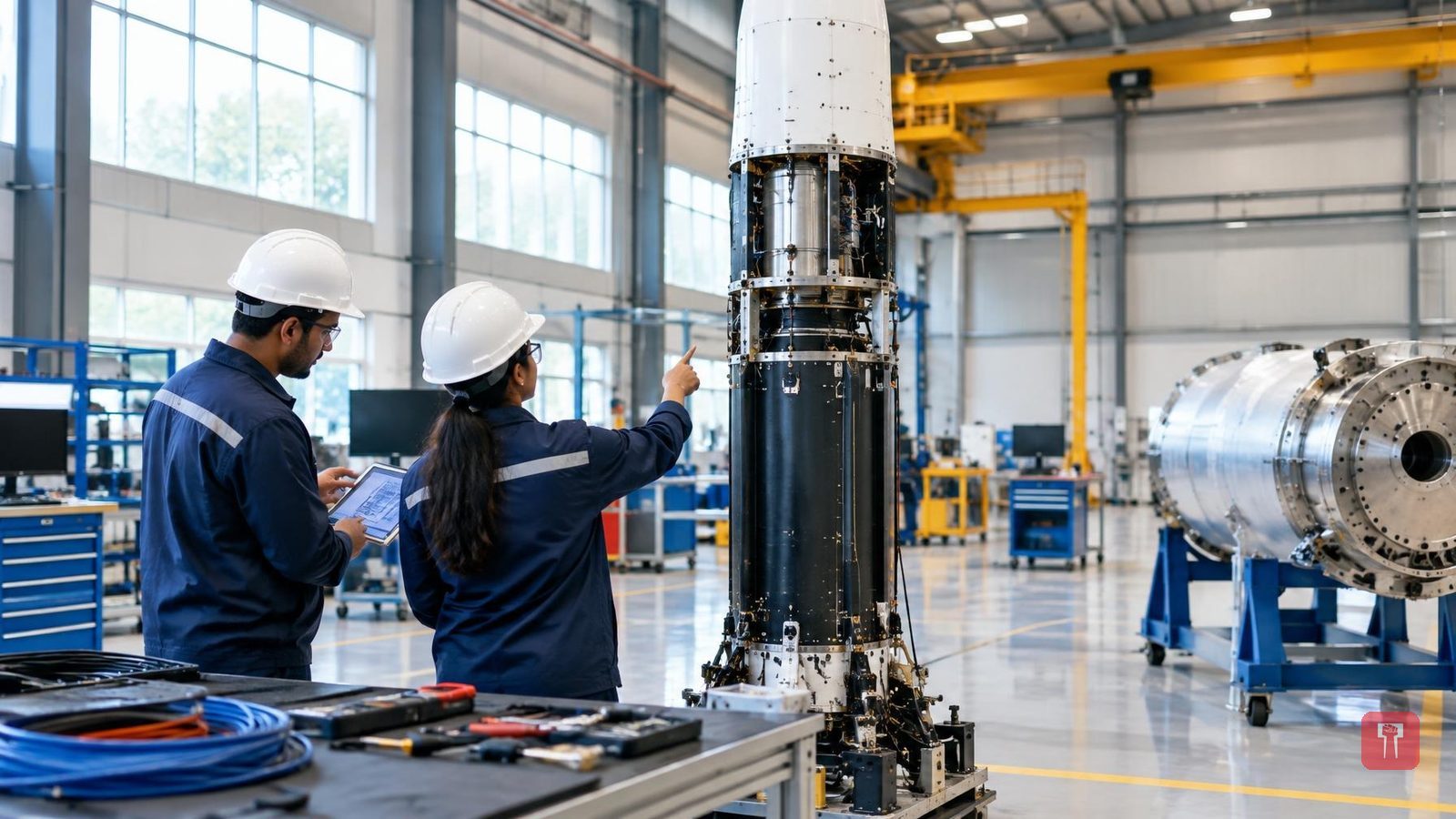
A major step is set to be taken in India's space sector. Indian space start-up Agnikul Cosmos has received Rs 200 crore in government funds to build its reusable launch vehicle, or reusable rocket. The project has been named "Agnibaan RLV". It is said that this could give foreign companies stiff competition in the global space market.
The money has been given under a Rs 200 crore agreement between the Technology Development Board (TDB) and Agnikul Cosmos. It is coming from the Research, Development and Innovation fund. The main aim is to promote indigenous technology, and the goal is also to make India a global centre for commercial space launches.
Put simply, India is moving quickly towards building a rocket like Elon Musk's SpaceX. Such a rocket would be able to put a satellite into space, return to Earth on its own and be used again for another launch.
With this government support, Agnikul will take its current technology from TRL-4 (Technology Readiness Level) directly to the advanced TRL-8 level. It will include several high-tech features: a reusable upper stage, semi-cryogenic liquid propulsion, deep throttling, restart capability and a propulsion system for precision landing.
The government has not placed this Rs 200 crore bet on a new and unknown company. Agnikul Cosmos has already shown its strength. The company designed and built an engine named "Agnilet" in its own factory, which is the world's first single-piece 3D-printed rocket engine. In May 2024, the company successfully completed the first flight of its single-stage vehicle Agnibaan SOrTeD. TDB has earlier also helped Agnikul in building small satellite vehicles.
Agnikul's project is not limited to bringing only the first stage of the rocket back to Earth. The company wants the entire launch system to be reusable as far as possible. This would, in time, multiply the number of rocket launches many times over.
