

After ethanol in petrol, biogas blending set to be mandatory in CNG-PNG too
Government makes biogas blending in CNG and PNG legally binding from 2026-27 under the Rs 23,731 crore Gobardhan scheme
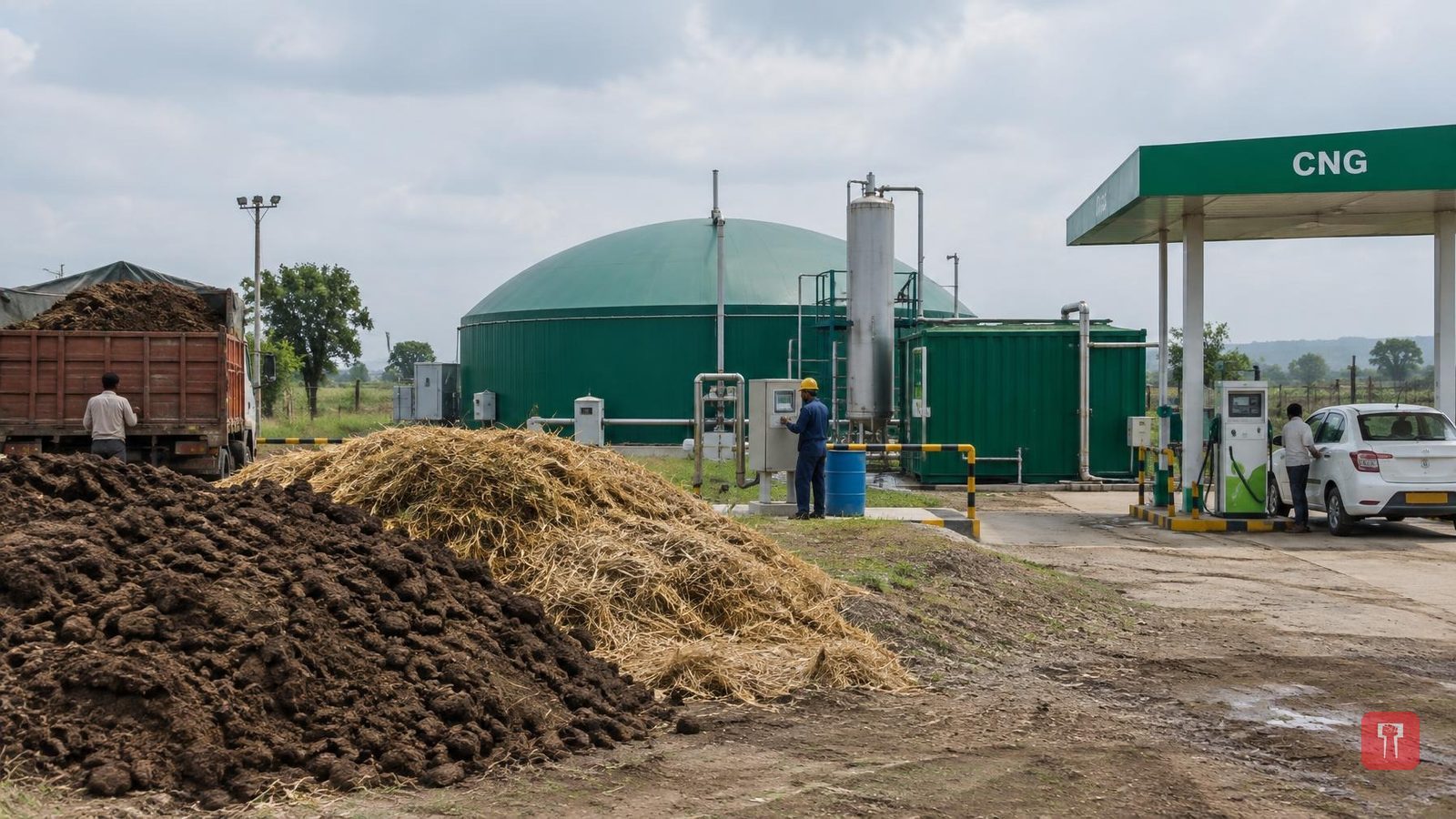
After the success of blending ethanol into petrol, the government is preparing another major move on fuel, this time targeting CNG used in vehicles and PNG used for cooking in homes.
The government has launched the Rs 23,731 crore Gobardhan scheme for Compressed Biogas, or CBG. The scheme aims to increase earnings from waste and cow dung while also cutting pollution. Under it, the government will either buy 100 percent of the gas produced by biogas plant owners itself, or have it sold to a large gas company. This means biogas producers will get a guarantee for their entire output, along with a government-fixed price and capital support for at least 10 years. Whatever the market rate for gas, the government will fix a price for the next 10 years, so plant owners will not have to compromise on their margins.
To meet the targets of the Gobardhan scheme, the government has made the Compressed Biogas Obligation, or CBO, legally mandatory. City Gas Distribution, or CGD, companies will be legally bound to blend it into their CNG and PNG networks. Initially, to give both companies and producers time to prepare, it was kept voluntary from financial year 2024-25 to 2025-26.
From financial year 2026-27, companies will be required to blend 3 percent biogas into their total gas share. This means if a major company such as GAIL or Adani Gas sells 100 tonnes of CNG annually, it will have to buy and blend 3 tonnes of biogas in 2026-27. The government will impose a penalty for failing to do so. In financial year 2027-28, the target will rise to 4 percent, and from financial year 2028-29 onward, all major gas companies will be required to blend 5 percent biogas into their CNG and PNG.
Several benefits are being cited for the decision. The biggest is that plant owners will no longer have to depend on marketing or advertising to sell their gas, since companies will come to plants themselves to buy gas to meet the government target. It is also expected to significantly cut pollution, since crop residue, whose burning in winter causes pollution, will now be used to produce gas instead. Wet waste from villages and cities will be processed directly at plants, keeping it from being dumped in the open.
In rural areas, livestock owners or farmers holding farm waste such as paddy stubble and sugarcane bagasse will be able to sell it to biogas plants for a steady monthly income. This is also expected to create jobs, since people will be needed to collect raw material such as dung and stubble, transport it to plants, and run plant operations. Besides producing biogas, these plants also produce large quantities of organic fertiliser, which will be cheaper than chemical fertilisers such as urea and DAP. This is expected to improve soil fertility, crop quality and public health.
