

6,643 posts vacant in Nagpur civic body, hitting daily operations
RTI data shows 71.26 percent of regular posts vacant in the Nagpur Municipal Corporation, affecting services and everyday work.
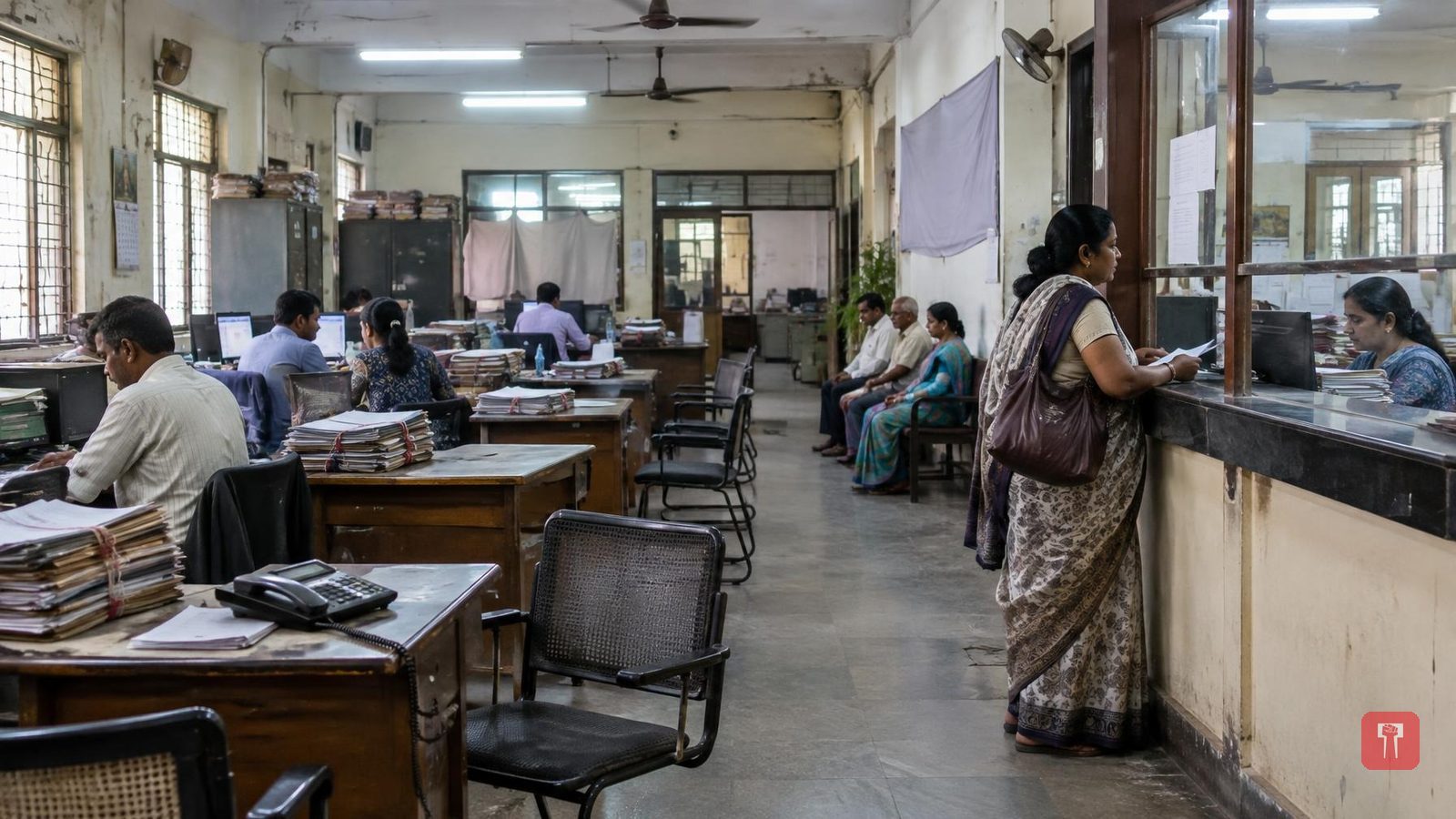
The Nagpur Municipal Corporation is facing a severe staff shortage, with 71.26 percent of its sanctioned regular posts lying vacant, a gap that is directly affecting the facilities available to citizens and the corporation's day to day functioning.
According to information obtained by social activist Sanjay Thul under the Right to Information Act, a total of 9,321 posts are sanctioned across Class 1 to Class 4, but only 2,678 employees are currently working. That leaves 6,643 posts vacant.
The figures were provided by the Public Information Officer and officials of the corporation's General Administration Department, and reflect the position as of September 1, 2026. The comparison is drawn against the corporation's staffing pattern approved on May 10, 2023.
The shortage is not confined to one level but is visible across almost the entire administrative structure, raising questions about how the corporation will deliver services for a rapidly growing city with such a depleted workforce.
The problem is worst at the senior and supervisory levels. Of 309 sanctioned Class 1 posts, 194, or 62.78 percent, are vacant, leaving only 115 officers for policy making, supervision and administration.
Class 2 is in an even worse state. Of 229 posts, 177, or 77.29 percent, are vacant. Only 52 people are working in this cadre, including 10 school teachers who have been posted there.
The Class 3 cadre, considered the backbone of the corporation's administrative, clerical, field and technical work, has 4,560 of its 6,534 sanctioned posts vacant, a vacancy rate of 69.78 percent. Only 1,974 employees are working in this cadre, including 310 teachers.
The Class 4 cadre is just as depleted. Of 2,249 sanctioned posts, 1,712 are vacant, leaving only 537 employees, a vacancy rate of 76.12 percent.
The shortage of senior and mid-level officers means individual officers are now having to juggle multiple responsibilities at once. Officers at the level of executive engineer and assistant commissioner have been given additional charge of three or four different departments, making it difficult to focus properly on any single department.
The effect is visible in everyday work. Town planning permissions, property tax corrections and development related files remain pending, and the excessive workload is also feared to be affecting scrutiny and accountability.
For ordinary citizens too, visiting the corporation headquarters and zonal offices has become more troublesome. Officers are often at field meetings or handling the work of another department, forcing people to make repeated visits to the office even for small tasks.
The issue is not limited to vacant posts on paper. A shortage of this scale directly affects the corporation's capacity to process citizens' applications, monitor projects, respond to complaints and provide services.
The shortage is not confined to administrative staff alone. Sanitation workers, who handle street cleaning, garbage collection and other field level work, are also short in number. Of 8,660 sanctioned sanitation posts, 2,162 are vacant, a shortfall of 24.96 percent.
As Nagpur continues to expand into surrounding areas, increasing the need for garbage collection, cleaning, drain clearing and desilting work, this shortage becomes even more serious.
Taking administrative staff and sanitation workers together, the corporation has a total of 8,805 vacant posts, an overall shortfall of 49.02 percent.
The RTI data brings out a stark contradiction: as the city grows, the corporation's responsibilities keep increasing, but a large share of the staff needed to carry them out is missing.
The corporation now faces the challenge not just of filling posts on paper, but of ensuring adequate and capable staff in essential departments, so that the workload eases, files do not pile up, and people receive services on time.
