

17 fund houses halt fresh investment in gold fund-of-funds; existing SIPs to continue
HDFC, ICICI Prudential, SBI, Tata and others have paused new investment in gold FoFs after a SEBI direction, just before Dhanteras and Diwali.
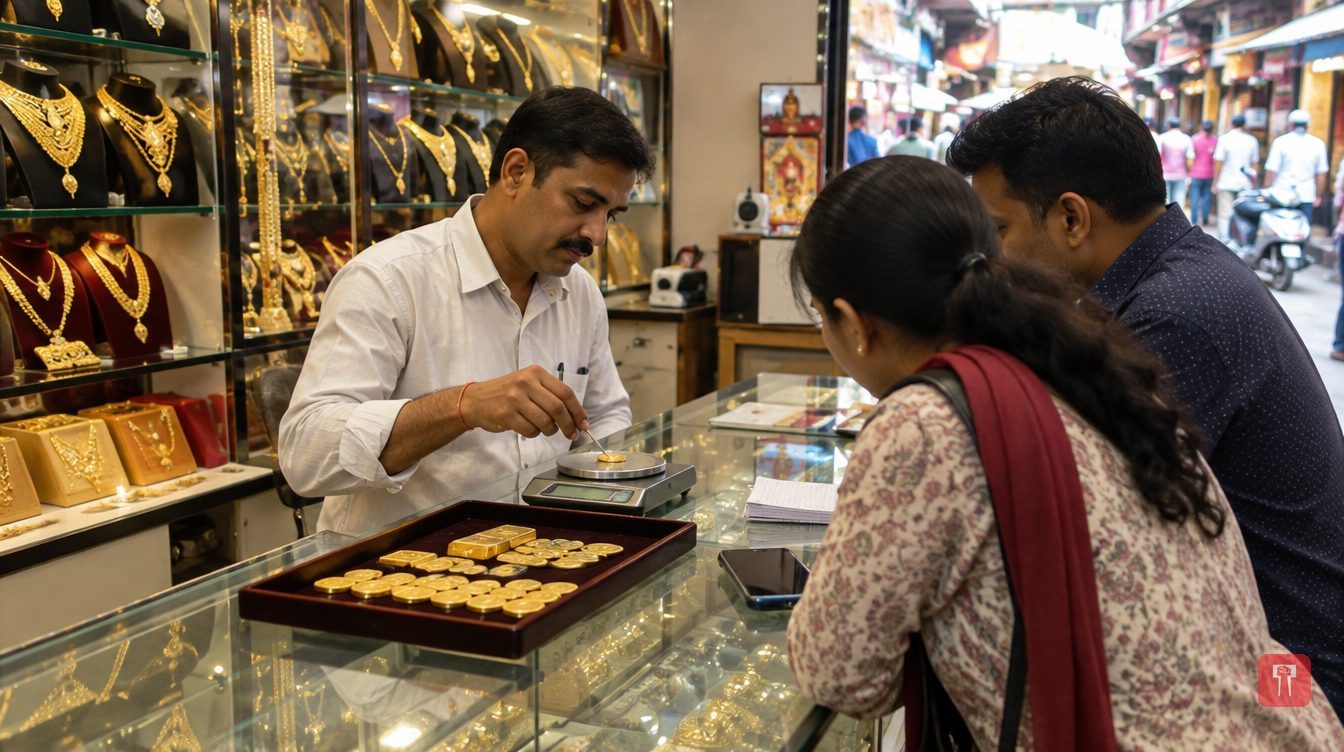 Images are not validated/verified
More than 17 major mutual fund companies, including HDFC, ICICI Prudential, SBI and Tata, have temporarily stopped new investment in all gold fund-of-funds (FoFs) and some gold-silver FoFs. The move comes just before Dhanteras and Diwali.
The mutual fund industry took the decision following a direction from the market regulator, the Securities and Exchange Board of India (SEBI). Gold demand rises suddenly during the festival season, which puts pressure on imports and raises the question of arranging foreign exchange reserves. This is why the decision is being seen as significant.
Many fund houses have restricted gold-linked schemes from October 16. All fresh lump sum investment is closed. New SIP registrations will not be accepted. Requests to increase the amount of an existing SIP, including top-ups and step-ups, will not be taken. Switch-in transactions and registration of new systematic transfer plans (STPs) have also been stopped.
Investors will find some relief: SIPs or STPs registered before October 16 will continue to be debited monthly as before. These instalments will be processed at the prevailing NAV. Redemption and switch-out facilities remain available as usual, so investors will face no difficulty withdrawing money from their units.
Several reasons have been given for the decision. Gold demand in India rises sharply during Dhanteras and Diwali, and a large amount of money flows into gold ETFs and gold funds. Under the rules, fund companies must hold 100% physical gold against digital or paper gold. Buying and holding that much gold from the market in the face of such sudden demand becomes difficult for them.
India depends heavily on imports for its gold requirement. Higher imports during festivals widen the trade deficit and put pressure on the rupee. The step has been taken to protect the national interest and foreign exchange reserves. Gold prices have also swung sharply in domestic and global markets recently, so the companies have also taken the decision as a temporary precaution.
Some time ago, the country's leadership had also urged people to avoid buying unnecessary gold, citing global economic uncertainty and the conflict in West Asia. Reducing gold imports could be an indirect aim of the decision.
The fund houses that have imposed the restrictions include HDFC, ICICI Prudential, SBI, Tata, Kotak Mahindra, UTI, Aditya Birla Sun Life, Axis, Nippon India and Mirae Asset mutual funds. HSBC, DSP, Invesco, Quantum, Zerodha, Groww and LIC Mutual Fund are also on the list.
Investors whose SIP began before October 16 need not worry. The amount will be debited from the bank account every month as before and invested in the gold fund. A new SIP cannot be started for now. The restriction is temporary and will remain in force until further orders, so investors will have to wait until the companies or SEBI issue fresh guidelines. Those wishing to withdraw existing money face no restriction on redemption; units can be sold at any time and the proceeds will be credited to the account.
There are other ways to invest afresh. Gold ETFs can be bought directly on the stock market through a demat account, though it is necessary to check first with some brokers or platforms. Sovereign Gold Bonds (SGBs) are considered the most beneficial and safe option because they pay interest in addition to the gold price, but the Government of India has closed the scheme for now. Digital gold platforms can also be considered, but security and charges must be examined carefully. Buying jewellery or gold biscuits from the bullion market remains open as usual, though security concerns and extra making charges may apply.
The decision is something of a jolt for digital gold investors, but it has been described as a temporary part of risk management for market stability. It is said that this will ease pressure on the country's foreign exchange and avoid an artificial surge in the gold market.

Comments
No comments yet. Be the first.