

Mula-Mutha microbial makeup stays altered even after monsoon flows, Pune study finds
A study by Pune's Agharkar Research Institute found sewage and pollution are changing the natural composition of microorganisms in the Mula-Mutha, and that heavy rain flows have not restored it.
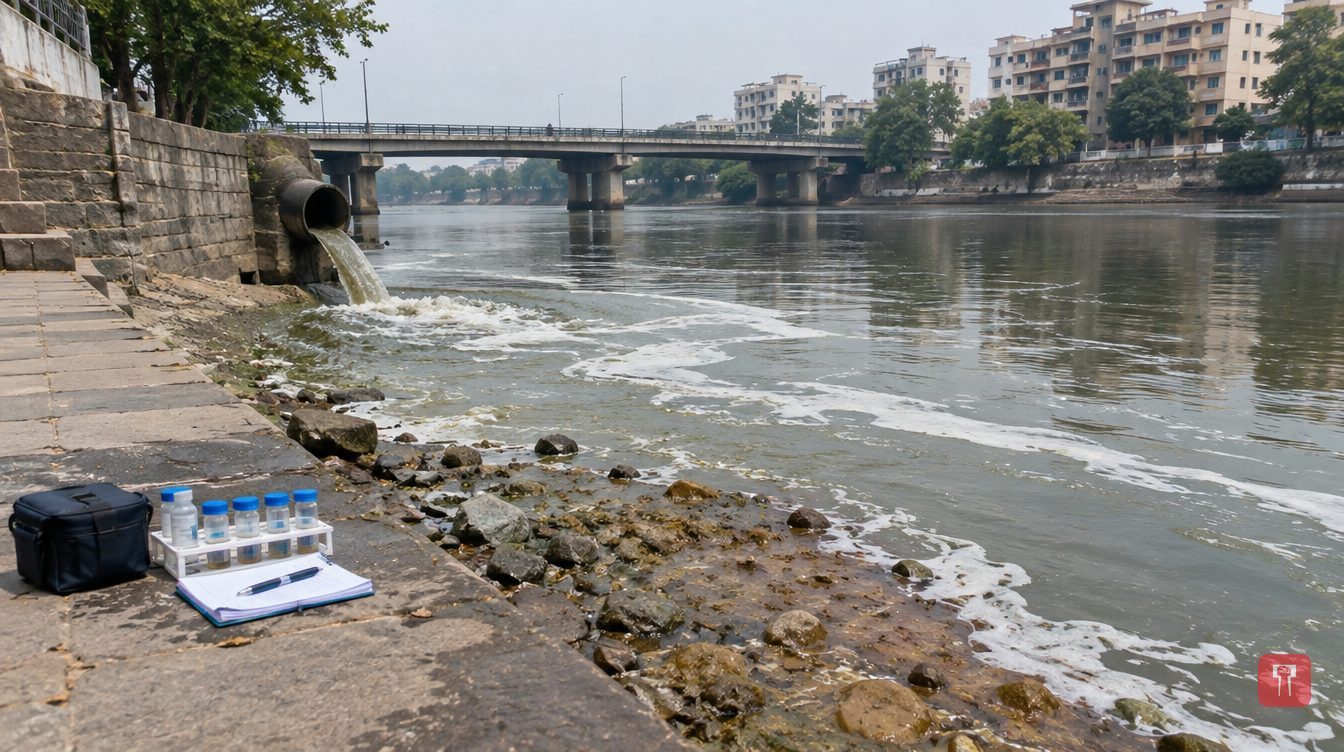 Images are not validated/verified
Sewage and pollution from Pune city are altering the natural composition of microorganisms in the Mula-Mutha river. Even after large monsoon flows, conditions are not returning to what they were. This emerged from a study by the Agharkar Research Institute in Pune, whose researchers reached the conclusion while working on the river's microalgae.
The study made it clear that natural flow washes pollutants away, yet the effect of urban pollution on the river's biodiversity persists.
Earlier research had observed that when seasonal floods come in tropical rivers, pollutants are flushed out and the natural mix of microorganism species is re-established. In the case of the Mula-Mutha, however, this study showed that the effect of heavy rain flows was limited. In flood-like conditions the composition of the river's microorganisms does change for a short time, but which species survive is decided by the level of pollution.
Researchers Pratyasha Nayak and Dr Balasubramanian Karthick took water samples from 17 locations between 2022 and 2023, from the river's source region to the urban and industrial areas. Samples of the biofilm on stones were also collected. On the basis of these samples they studied diatoms, which are single-celled microscopic algae. Each diatom cell is surrounded by a silica shell. These organisms are sensitive to environmental changes and are therefore used to assess water quality. The study of diatoms is considered important for understanding the ecological effect of pollution on the river.
The research found that the overall diversity of diatom species at any single location in the river remains almost stable across seasons. But as the river moves from the source region towards the urban area, large changes in species composition were seen. Near the source, where the water is clean and rich in dissolved oxygen, native species of the Western Ghats were found. In the urban area, as sewage and nutrients increase, the numbers of these sensitive native species fell. Pollution-tolerant species were seen increasing in their place.
Electrical conductivity of the water and the amount of dissolved oxygen were found to be the main chemical factors behind the change in the river's microbial composition. Electrical conductivity can rise if dissolved salts in the water increase, while sewage affects the oxygen content of the water. As a result, the survival of native species that are sensitive to environmental changes can be affected.
According to the study, maintaining natural flow alone is not enough to save the river. Proper treatment of the city's sewage and control over pollutants released into the river are necessary. Strict enforcement of water quality standards has also been described as important. To protect the river's native biodiversity, pollution control will have to be given first priority along with flow management. The finding that the natural composition of microorganisms is not returning to its earlier state even after heavy rain flows underlines the importance of pollution control in river conservation.

Comments
No comments yet. Be the first.