

Silt-laden water from Juhu Tara Road construction site allegedly flows onto Juhu beach, sea life at risk
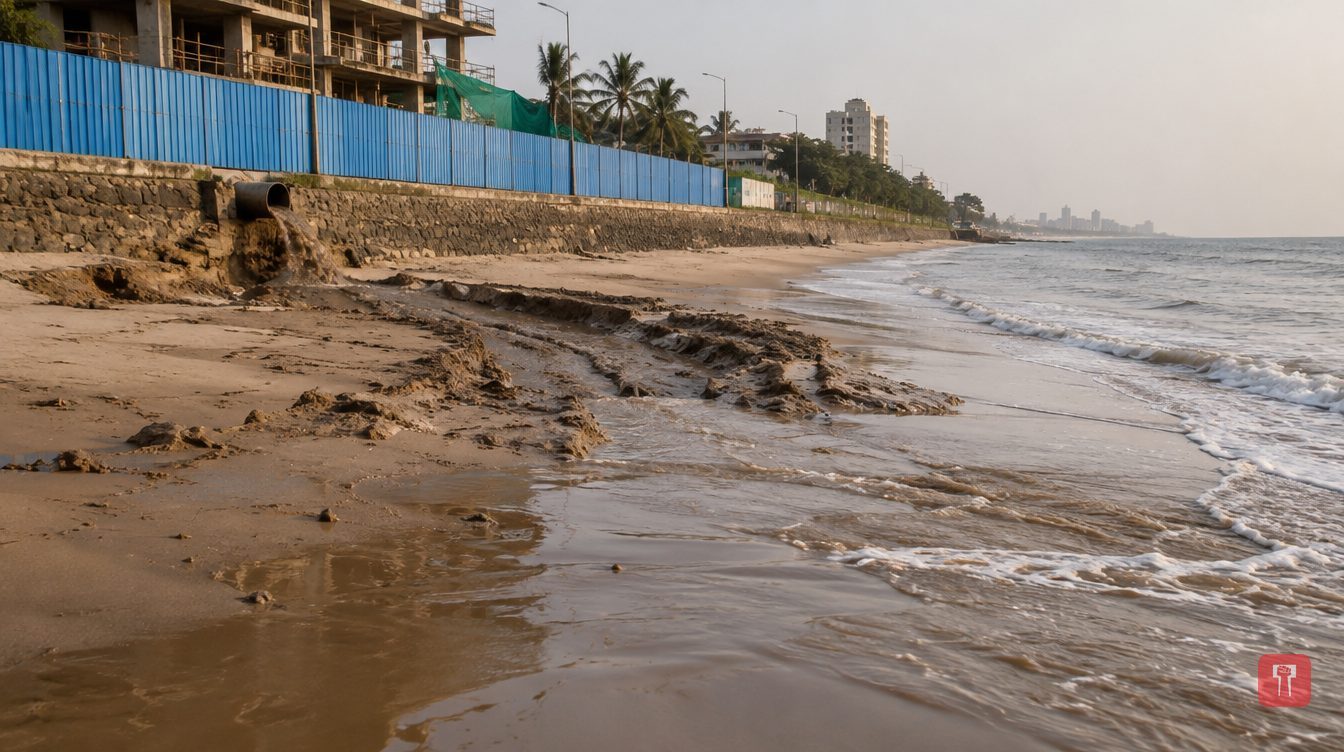
Muddy water and silt from a construction site in Juhu are allegedly being discharged for days onto the beach and into the sea, raising concern over marine life.
 Images are not validated/verified
Muddy water and silt from a construction site on Juhu Tara Road in Mumbai have allegedly been released directly onto Juhu beach and into the sea for several days. The discharge has raised concern about marine pollution and damage to the coastal ecology.
The matter was raised by marine ecology expert Shaunak Modi, director of the Coastal Conservation Foundation and founder of Marine Life of Mumbai. In a post on X on October 24, he warned that water discharged in this way could harm marine creatures and disturb the entire ecosystem of the shore.
According to the allegation, the flow has cut away more than a foot of sand from the beach, and a large stretch of the shore has been covered with fine mud. The silt can settle over creatures living on the seabed and can also reduce the clarity of the water. Questions are being raised over how water and silt are being handled at the construction site and what effect this will have on Juhu's coastal area.
On the same day, October 24, the BMC's K-West ward office replied to Modi's post. It said the complaint had been registered on the civic body's MARG portal. The reply read: "We have registered your complaint on the Brihanmumbai Municipal Corporation's MARG portal. Please check the portal for more details on the action to be taken." The complaint's registration number was given as KW_202600154276.
When Modi reached Juhu beach late on Monday afternoon, he found that water allegedly coming from the construction site was still flowing onto the beach. The discharge had not stopped. The BMC's public relations officer was asked on Monday for a response on the alleged discharge and the action taken after the complaint, but no reply had come by the time the report was written.
According to Modi, the discharge carries a very high amount of silt, which can smother creatures living on or near the seabed. It also risks silt settling in the water and increased turbidity. He said: "This is disturbing in itself, but it also coincides with the season when cephalopods (squid, octopus and cuttlefish) use Mumbai's beaches as a nursery for their eggs. A constant flow of fresh water upsets the salt balance on which intertidal species depend to survive."
Modi also said that creatures found on sandy shores, such as crabs, gastropods and sea anemones, could be affected as well, because a large volume of fresh water is entering their habitat. The flow of mud can also change the structure of the shore, increasing the threat to creatures living in the intertidal zone.
At this time of year, Mumbai's beaches serve as nurseries for cephalopods. Changes in salt levels and heavy silt deposition can affect species that depend on relatively stable coastal conditions to survive and breed.

Comments
No comments yet. Be the first.