

FDA seizes Rs 5 crore of expired food allegedly repacked for sale; new disposal order issued
 Images are not validated/verified
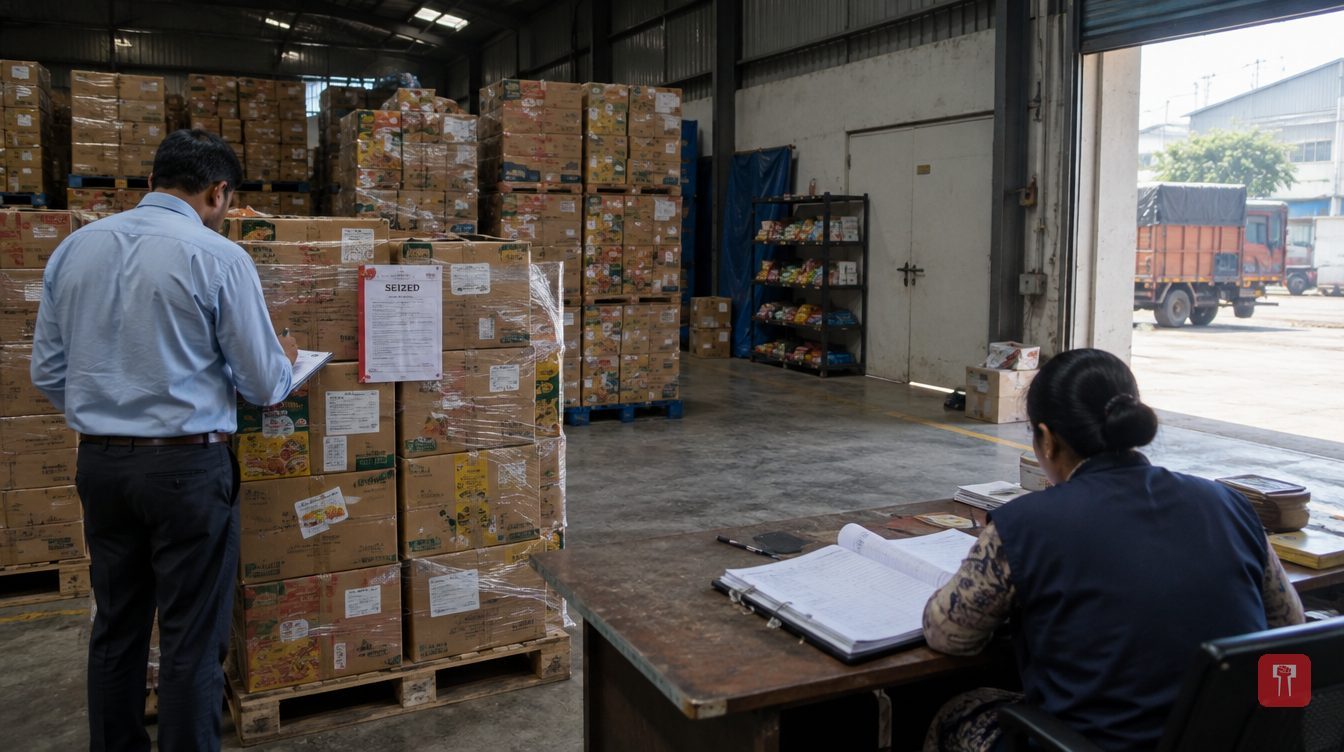
Maharashtra's Food and Drug Administration says expired and returned food was allegedly repacked and resold, and has issued a compliance order on disposal.
Expired, spoilt and customer-returned food products are allegedly being illegally repacked and sold in the market. The Maharashtra Food and Drug Administration (FDA) has launched a drive against the practice. Commissioner Tukaram Mundhe gave the details at a press conference on Friday.
"If such products re-enter the food market chain, consumers are hit the hardest. We plan to curb such practices," Mundhe said. The FDA has issued a new compliance order to control the handling and disposal of such products. Mundhe also said Maharashtra is the first state in the country to issue such an order. Appealing to businesses, "Do not run your business at the cost of people's health," he asked them to dispose of such goods properly and keep records.
According to the FDA, expired, spoilt and returned products from the warehouses of e-commerce, quick-commerce and retail companies were being handed to disposal agencies to be destroyed. However, some agencies allegedly issued disposal certificates without actually destroying the goods. The goods would then be taken to unlicensed warehouses, where the packaging or date stamps were changed. They would then go to brokers and retailers and often reached consumers at discounted prices. The FDA said such goods are more likely to reach small shops, eateries and economically weaker sections.
"In the name of disposal, expired food that left large warehouses was returning to the market and reaching the ordinary consumer's plate," Mundhe said. The department has traced the chain from retail shops to warehouses and to the companies from which the goods came. He also made clear that handing expired stock to a disposal agency does not end the responsibility of manufacturers or businesses to ensure it is destroyed. "We have found gangs across Maharashtra that keep false disposal records without actually destroying the goods," he said.
Between June and October 2026, the FDA seized stock worth a total of Rs 5,00,14,040 across the state. The largest seizure, worth Rs 4,12,53,300, was at Turbhe in Navi Mumbai. The licence of the establishment there was suspended and 32 samples were taken for testing.
In Bhiwandi, the department acted at several places. At Gulzar Nagar, stock worth Rs 80,575 was seized under Section 38 of the Food Safety and Standards Act. At Chavindra, an establishment was found operating without a licence; stock worth Rs 86,825 was seized and it was directed to stop work. At Khoni and Kamba, stock worth Rs 26,60,792 was seized because of discrepancies and deficiencies in records, and further action is under way. At two establishments in Vadpe, stock worth Rs 4,91,848 and Rs 51,264 was seized. Both licences were suspended on October 15, 2026.
At Pagaon, stock worth Rs 32,71,774 was seized. The licence there was suspended on October 22 and an FIR (0817/2026) was registered. At Padgha, stock worth Rs 6,88,042 was seized, the licence was suspended on October 26 and an FIR (0454/2026) was registered. Outside Bhiwandi, at Usatane in Ambernath, stock worth Rs 7,80,620 was seized and the licence was suspended on October 15. At Chakan and Nighoje in Pune district, stock worth Rs 6,49,000 was seized and orders have been issued to suspend the licence.
The FDA said seven cases linked to these actions name 34 accused, including individuals and institutions. Directors of large companies, warehouse managers, disposal agencies, brokers and sellers are part of the investigation. All seven cases are under investigation. The department said the action will not be limited to retailers who sold the goods but will extend to the warehouses and companies from which the goods came.
During inspections, the FDA found several serious lapses in the disposal process. There was no separate, locked quarantine area for expired and returned goods. The quantity declared expired did not match the quantity actually destroyed. Some businesses had appointed agencies without the permission of the Maharashtra Pollution Control Board (MPCB), while others had handed goods to unlicensed entities. In some cases the sender and the receiver were found to be the same, and goods were reportedly recorded as destroyed on the same day they were moved from one state to another. Carton counts and recorded weights did not match. In one case, a bill was found to have been issued in the name of an entity that does not exist.
Businesses could not provide independent proof that the goods were destroyed, such as vehicle movement records, weighbridge receipts, e-way bills or video recordings. The department said disposal certificates without evidence cannot be treated as credible proof of destruction.
The new order will apply to warehouses, fulfilment centres, dark stores, depots, cold storage units and distributors handling food products across the state. Expired, spoilt and returned food must be kept in a separate, locked quarantine area under CCTV surveillance. A sign reading "unfit for human consumption" must be displayed there, and a daily register of stored goods must be kept. Packets must be torn or crushed before being sent for disposal so that they cannot be resold or used again. Disposal must be done only through facilities authorised by the Maharashtra Pollution Control Board. Disposal contracts must be submitted to the designated officer and will be verified every six months.
For disposal of 50 kg or more of food stock, a notice must be given to the food safety officer seven days in advance. E-way bills, GPS records and weighbridge receipts must also be provided to prove the movement and quantity of the goods. The destruction must be recorded on geo-tagged video in the presence of two independent witnesses. The destruction certificate must carry details matching the quantity and batch numbers of the goods destroyed. Monthly reconciliation records showing expired stock and the stock actually destroyed must also be kept. Giving false information can attract a fine of up to Rs 10 lakh under Section 61 of the Act.
Under the order, responsibility has been fixed on the designated officers at each warehouse and at the company headquarters. Erasing the expiry date, reprinting over it, or hiding or changing it with a sticker will be prohibited. Food altered in this way will be treated as unsafe and can lead to prosecution under Section 59. For enforcement, food safety officers will physically verify at least 10 per cent of disposal consignments every month and check the goods from the warehouse to the destruction facility.
The FDA said that if expired food is found circulating in the market, licences will be suspended, penalties imposed and cases filed. The action may extend beyond the retailer to the warehouse and the company from which the goods were released. All companies have been directed to submit, within 30 days, details of their disposal contracts and information on the expired stock they currently hold. Licences of seven establishments have been suspended and FIRs registered against the officials concerned. Licences will be restored only after the FDA is satisfied that the prescribed conditions are fully met.
Citing Rule 2(1)(u) of the Food Safety and Standards (Labelling and Display) Regulations, the department said food cannot be presumed safe after its expiry date. It also warned that damaged packaging can expose food to the risk of contamination. Samples taken during inspections have been sent to laboratories, and further action will follow according to the reports. The seized stock will be destroyed scientifically in line with the FSSAI guidelines of November 3, 2025. The destruction will take place with the consent of the investigating officers, under video recording and in the presence of witnesses.
The FDA said the drive will be carried out in other districts of Maharashtra too. All designated officers have been ordered to prepare registers of warehouses and disposal facilities and to conduct regular inspections.
The department has urged consumers to check the manufacturing date, the "best before" or "use by" date, the batch number and the condition of the packaging before buying packaged food. It advised against buying products whose date stamps are erased, unclear or covered by a sticker. Complaints can be lodged on the FDA's toll-free helpline 1800-222-365 or on the online portal https://complaints.mahafda.in.
Reach readers on the ward they actually live in.
Advertise with Prime Time 24Reach readers on the ward they actually live in.
Advertise with Prime Time 24Reach readers on the ward they actually live in.
Advertise with Prime Time 24
Comments
No comments yet. Be the first.