

World Okapi Day: Congo's forest giraffe relative with zebra-like stripes faces threat from poaching
World Okapi Day, marked every year on October 18, draws attention to the endangered animal of the Democratic Republic of Congo's rainforests.
 Images are not validated/verified
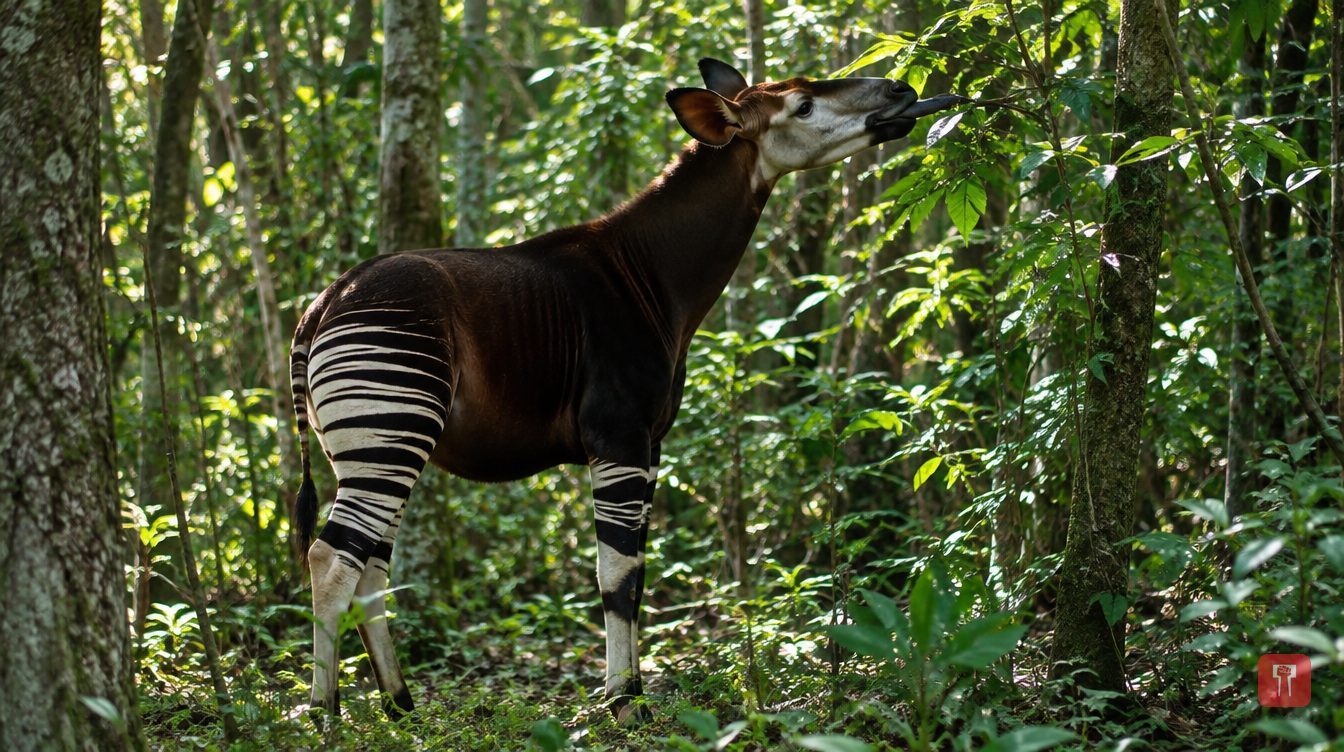
Nature has created many strange, beautiful and mysterious animals on this planet. One of them is the okapi. At first sight, nobody can quickly say what animal it is. Its hindquarters and legs carry black and white stripes like a zebra's, but its face and the rest of its body look like those of a horse or a giraffe.
World Okapi Day is observed across the world every year on October 18 to promote the conservation of this unusual and rare animal. The main aim of the day is to make people aware of the animal and to remove the threats to its survival.
The okapi lives in the dense rainforests of Ituri in the Democratic Republic of Congo (DRC) in Central Africa. It is not found naturally anywhere else in the world. Until the early twentieth century, the world knew nothing about it. The local African tribal people called it the "forest giraffe".
When Western scientists learned of the animal in 1901, they thought it might be a type of zebra. But after detailed scientific research, it was established that the okapi is not a zebra. It is the only living member of the giraffe family (Giraffidae).
Its physical features are striking. The zebra-like stripes on its legs and back help it hide in the dappled sunlight and behind trees in the dense forest. This gives it natural protection from predators.
The okapi's tongue is dark blue or purple. It is about 14 to 18 inches long, so long that the animal can use it to clean its own ears and eyes. With this long tongue it easily plucks and eats tender leaves, pomegranates and fruit from tall trees.
World Okapi Day is not only meant to celebrate the beauty of the animal. It also aims to draw the world's attention to the serious danger it faces. The International Union for Conservation of Nature (IUCN) has placed the okapi on its list of endangered species.
Over the past few decades, the Congo forest has been disappearing fast because of illegal logging, mining, armed conflict and human encroachment. Illegal hunting for skin and meat has become the biggest threat to the animal's survival.
The survival of every animal, big or small, is necessary to maintain the Earth's environment and the balance of biodiversity. The loss of a rare animal like the okapi would mean the breaking of an important link in Congo's unique rainforest.
For this reason, wildlife organisations, schools, colleges and environmentalists around the world hold awareness programmes on this day. Through the Okapi Conservation Project, efforts are under way to protect the animal and its habitat together with local communities in Congo. We too should resolve to preserve this priceless wealth of nature.

Comments
No comments yet. Be the first.