

Who pays for wall repairs when a tenant vacates? What the rules say
 Images are not validated/verified
Landlords must bear the cost of ordinary wear and tear, but tenants pay for damage they cause, and deductions from the deposit must follow set rules.
Every landlord wants a rented home to stay in good condition. But tenants sometimes leave behind large nail holes, stains or damaged paint on the walls when they vacate. The question then arises of who will bear the repair cost, and whether the landlord can deduct money from the security deposit. Understanding the legal rules is important.
First, ordinary wear and tear. If a tenant has lived in a house for a long time, it is natural for wall paint to fade or for some dirt to collect over time. In legal terms this is treated as "normal wear and tear". In such cases the landlord must bear the full cost of repainting the walls. The tenant is not responsible for this expense.
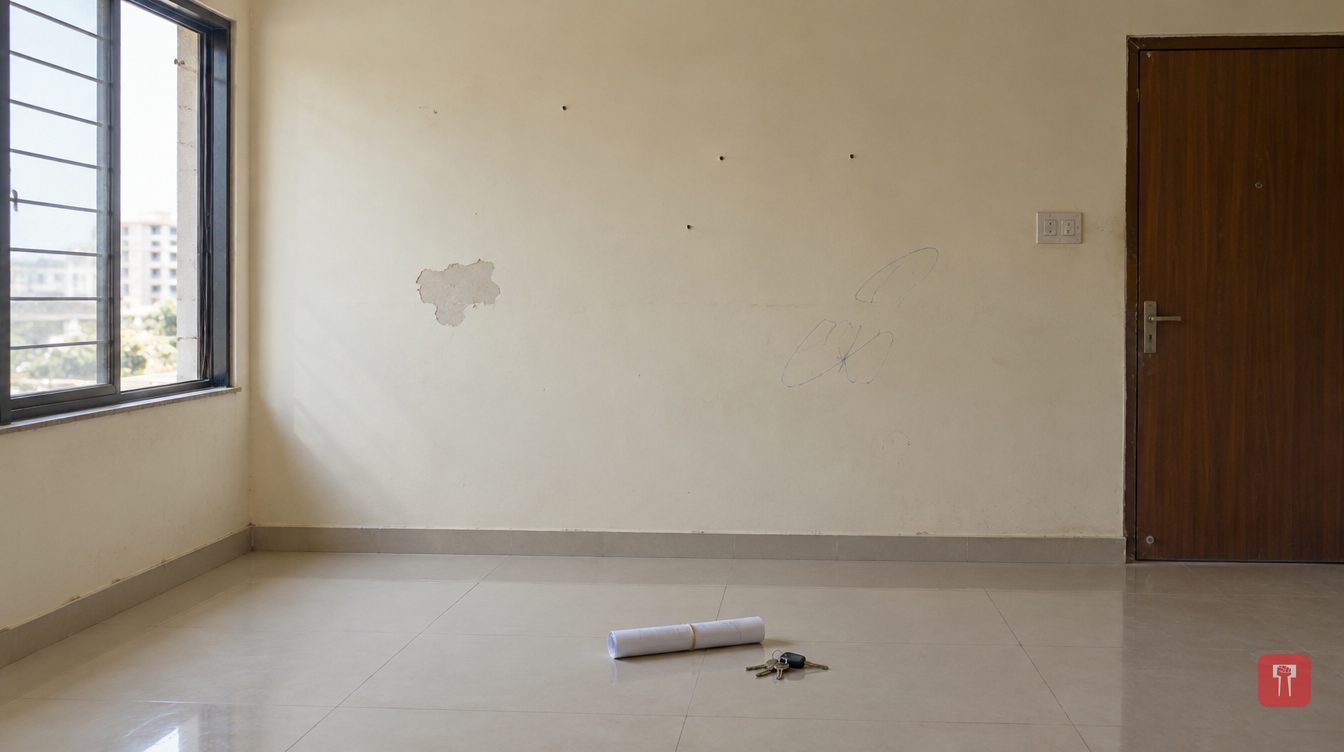
Damage is a different matter. If a tenant has carelessly drilled large holes in the walls in many places, broken the walls, or let children cover them with pen and pencil drawings, this is not counted as normal wear and tear. The tenant must pay the compensation or repair cost for such additional damage out of their own pocket.
In an old building, if plaster is peeling off on its own or cracks have appeared in the walls by themselves, the full responsibility for the repairs remains with the landlord.
Now the question of the deposit. The security deposit taken when a house is rented out must be returned when the tenant vacates. But if the tenant has broken the agreement and damaged the house or walls beyond what is reasonable, the landlord may deduct the necessary expenses from the deposit, as per the prescribed rules and on the basis of evidence such as a repair bill. Quietly deducting money at will, without any prior notice, is considered wrong.
On the law, the relationship between landlord and tenant in India is governed by Section 108 of the Transfer of Property Act, 1882. The terms of the rent agreement between the two parties play the main role. To avoid disputes, it is therefore useful for both sides to take and keep photographs of the house's earlier and current condition when taking it on rent and when leaving it.
Reach readers on the ward they actually live in.
Advertise with Prime Time 24Reach readers on the ward they actually live in.
Advertise with Prime Time 24Reach readers on the ward they actually live in.
Advertise with Prime Time 24Reach readers on the ward they actually live in.
Advertise with Prime Time 24
Comments
No comments yet. Be the first.