

What to check before buying Lakshmi-Ganesh idols on Dhanteras for Diwali puja
 Images are not validated/verified
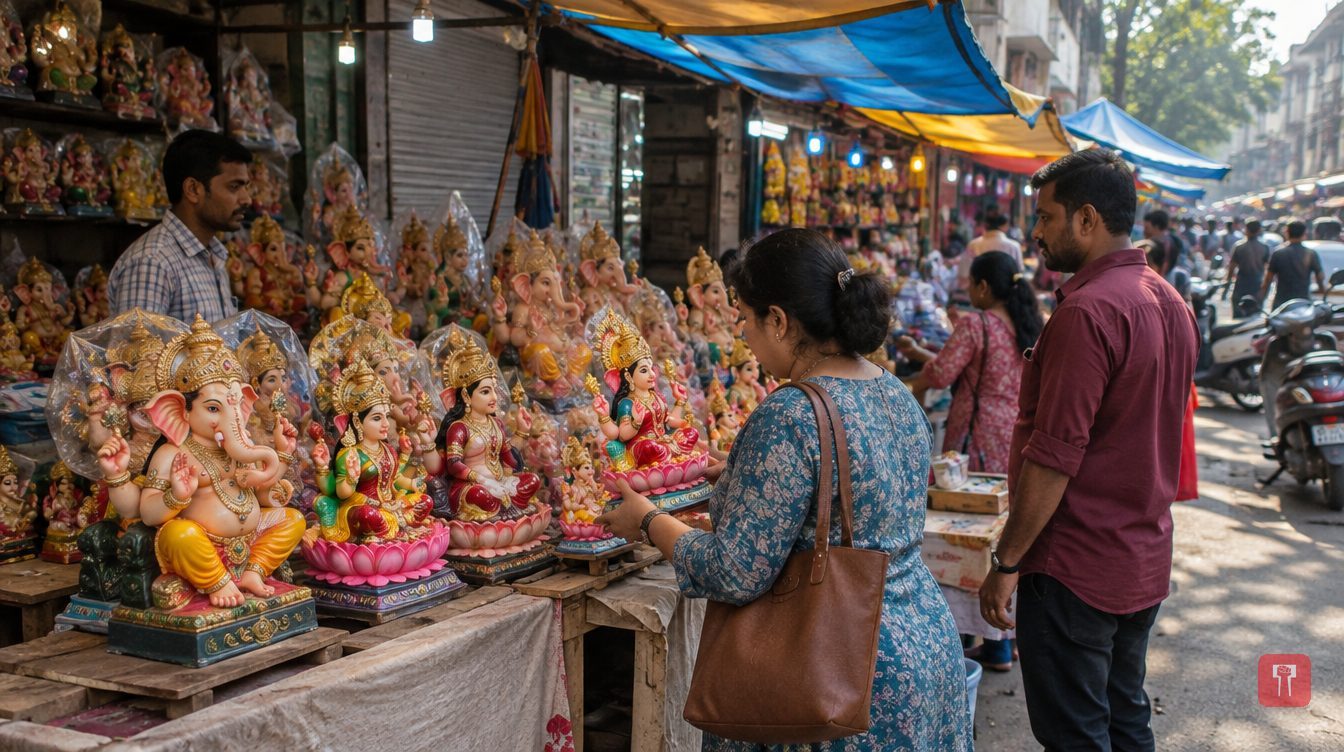
As Diwali preparations begin, buyers are advised to look at the idol's form, the trunk direction, the material and any damage before bringing it home on Dhanteras, 6 November 2026.
As preparations for Diwali puja begin, crowds of people buying idols of Lakshmi and Ganesh grow in the markets. Dhanteras (Dhanatrayodashi) is being observed this year on 6 November 2026. In many homes it is a tradition to bring new idols home on the auspicious day of Dhanteras and worship them on Diwali. But it is not enough to buy an idol only for its looks or price. The form of the deity, the direction of Ganesh's trunk, the seated posture and the material used to make the idol should also be checked.
For the idol of Goddess Lakshmi, it is said that an idol seated on a lotus is considered auspicious on Dhanteras. The lotus is described as a symbol of purity, prosperity and wealth. One can choose an idol in which the goddess holds a lotus in her hand, a shower of gold coins falls from one hand and the other hand is raised in blessing. The goddess's face should show contentment and calm. It is not right to say that a standing idol of Goddess Lakshmi should not be kept at home, since religious traditions have a place for both standing and seated forms. Even so, for Diwali worship at home, the idol seated on a lotus is the one most often chosen.
The direction of the trunk is considered important when buying a Ganesh idol. For daily worship at home, the Vamamukhi Ganesh idol, with the trunk curving to the left, is common. An idol with the trunk curving to the right is called Dakshinamukhi Ganesh, and some religious traditions prescribe special rules for worshipping this form. It is considered good if Ganesh holds a modak or laddoo and a mouse is beside him. The idol's face should be cheerful and its posture calm.
The market offers separate idols of Lakshmi and Ganesh as well as combined idols made on a single base. Separate idols are convenient for worship at home, as the two deities can be given separate seats. A combined idol can also be bought, provided the form of each deity is clearly visible. No idol should be damaged or broken.
On material, a clay idol is a good choice for the annual Diwali puja, and better still if it is decorated with natural colours. A brass idol is durable and can be cleaned and reused every year. A silver idol can be kept safely for a long time and can also be used in daily worship. Clay or eco-friendly material should be preferred over Plaster of Paris idols. Plaster of Paris does not dissolve easily in water, so water bodies can be harmed during immersion.
While buying, check whether the idol's hands, feet, crown, face and base are intact. There should be no crack or broken part. The colours should be clean and of good quality; avoid those with a strong smell or of poor quality. The size should be such that the idol fits comfortably in the home shrine or on the puja platform. If buying a large idol, also consider whether there is space and arrangement for its care.
On bargaining, some families follow a tradition of not haggling when buying idols of deities. However, this is not a compulsory rule in all Hindu traditions. One can ask the shopkeeper the price and buy according to one's choice and budget. When buying from local idol makers, it is important to pay a fair price for their effort and craft.
When bringing the idol home, carry it to the puja spot wrapped in a clean cloth. Before the Diwali puja, clean the platform, spread a red or yellow cloth on it, and then install Lakshmi and Ganesh in the proper place. Flowers, akshat, roli, sandalwood paste, sweets and fruit are offered in the puja. A lamp is lit and aarti is performed for both deities. Ganesh can be offered modak or laddoo, and Goddess Lakshmi khil-batasha or sweets. Every step, from buying the idol to installing it, should be completed with devotion and proper care.
Families and traditions may differ on the form of the Lakshmi-Ganesh idol, the direction of the trunk and the method of worship. The decision on which idol to buy should therefore be made according to one's own faith, family tradition and preference.
Reach readers on the ward they actually live in.
Advertise with Prime Time 24Reach readers on the ward they actually live in.
Advertise with Prime Time 24Reach readers on the ward they actually live in.
Advertise with Prime Time 24Reach readers on the ward they actually live in.
Advertise with Prime Time 24
Comments
No comments yet. Be the first.