

Washim collector orders curbs on hoarding of soybean and tur crop residue meant for cattle fodder
The district magistrate has issued revised orders reserving crop residue mainly for animal fodder and limiting its sale to biomass briquette and pellet industries.
 Images are not validated/verified
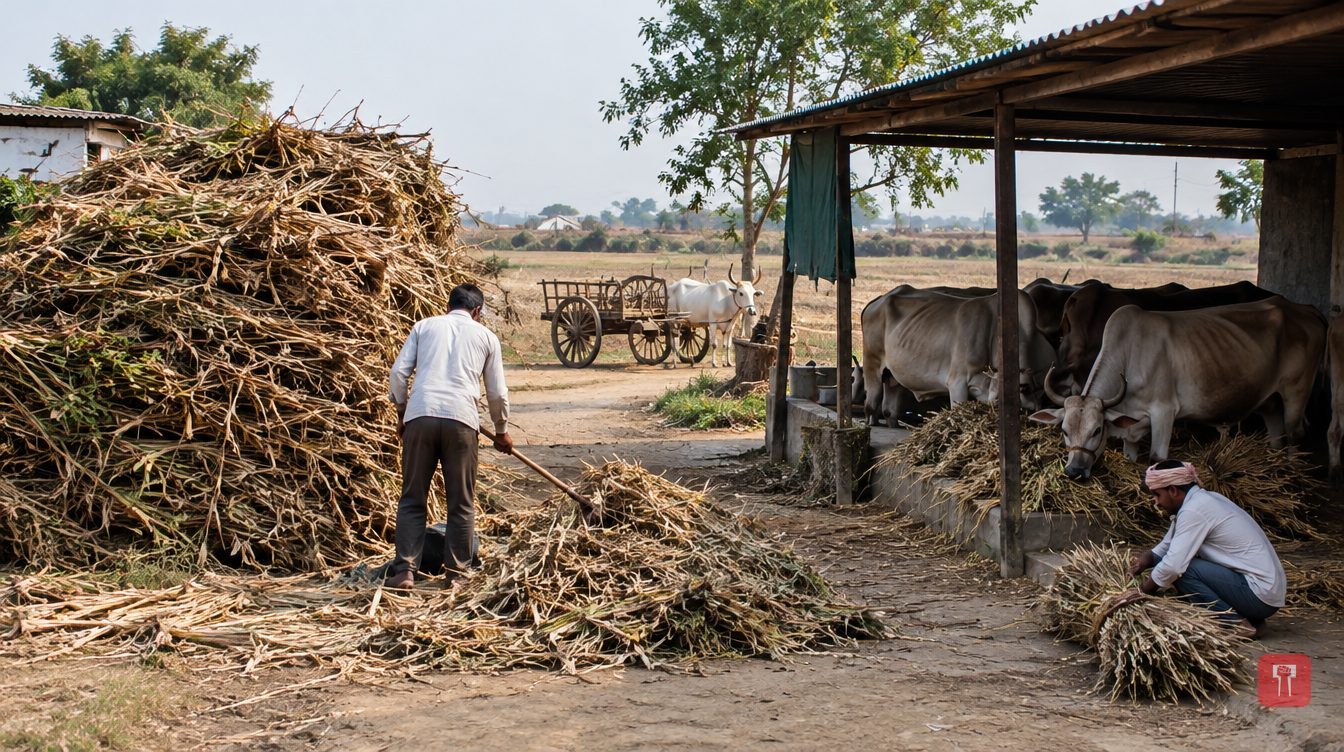
The Washim district administration has turned vigilant to ensure the district's livestock continue to get enough fodder and that any shortage ahead can be dealt with. The district collector has issued orders along with an appeal. As a result, steps to conserve fodder for livestock have begun in the district.
District Magistrate Yogesh Kumbhejkar has issued revised orders on the use and sale of kutar (fodder) from the soybean and tur crops. According to the orders, the district's kutar is reserved mainly for animal fodder. Industries making biomass briquettes and pellets will be able to buy and use kutar only under the administration's guidance.
Farmers who do not have their own animals have been told that, when selling kutar, they should first give preference to livestock-rearing farmers in their area as fodder. Only the kutar that remains should be given to industries making biomass briquettes and pellets, or to other traders.
Farmers who have their own animals must first make firm arrangements for a full year's fodder for them. Only then can the remaining kutar be kept for sale. Farmers who sell such fodder will later be subject to the restrictions of the government's fodder distribution scheme. For this, a certificate in the prescribed format must be submitted to taluka officials.
Farmers who sell their kutar and fodder to biomass briquette makers or other industries will not get the benefit of the government's fodder and fodder distribution scheme in future. Industries have also been required to keep a 50 per cent stock reserve.
Industry groups making biomass briquettes and pellets must keep at least 50 per cent of the kutar they receive each day in reserve for farmers, as per the government's requirement. Details of this reserve stock must be given every week to the tehsildar concerned and the taluka animal husbandry and dairy development officer.
The order also makes clear that if a fodder shortage develops in the district, the reserve held by briquette industries and the fodder and kutar available with them will be taken over for the administration's fodder shortage plans. Action will be taken against those who illegally hoard kutar in the district or create an artificial shortage.

Comments
No comments yet. Be the first.