

Putin rejects new deal after four-hour Moscow meeting with Trump envoys Kushner and Witkoff
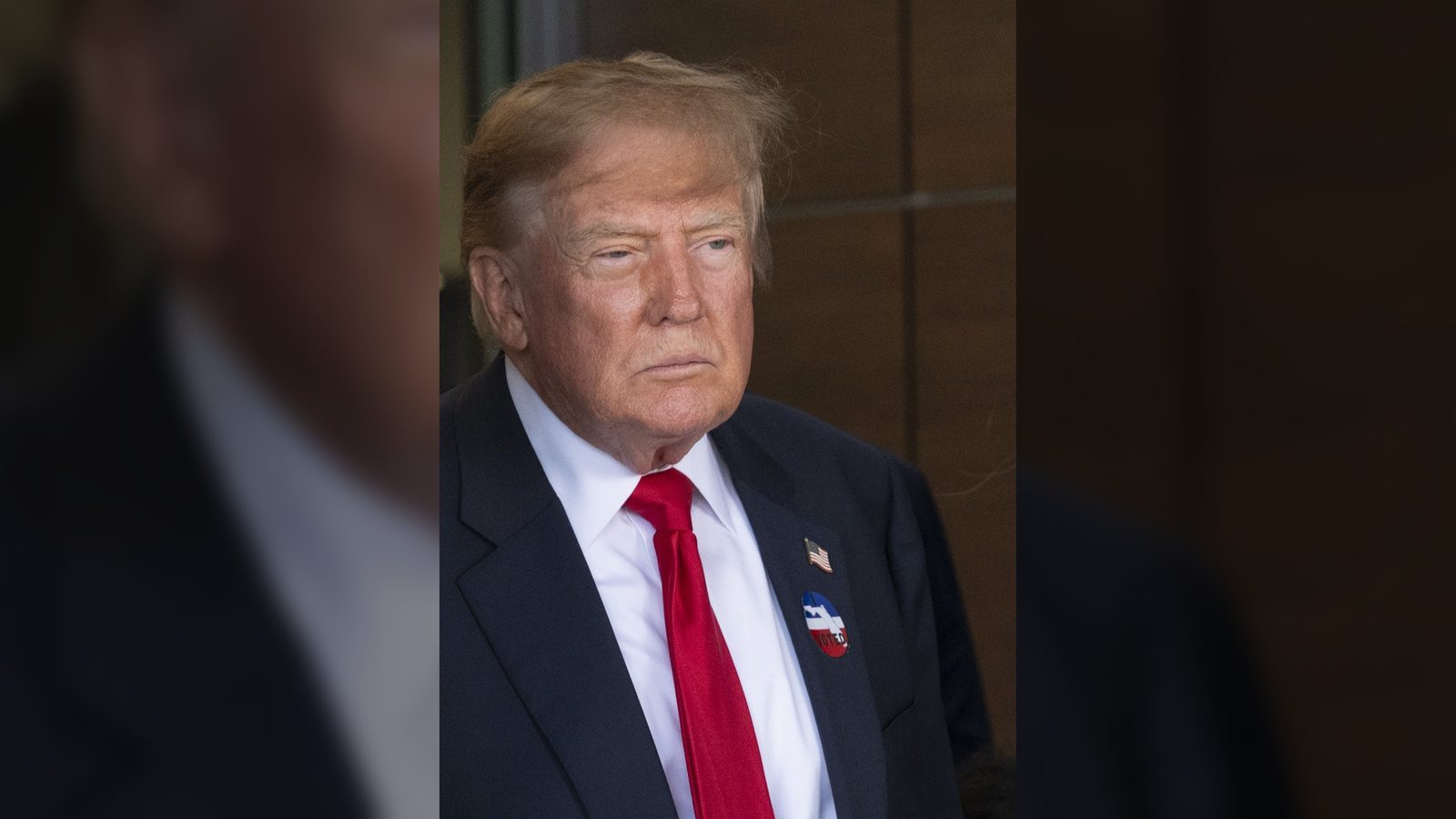
Russian President Vladimir Putin refused to soften his demands on Ukraine at the Kremlin, after which the US envoys met Volodymyr Zelenskyy in Dublin.
As the Russia-Ukraine war nears its fifth year, efforts to end it have intensified around the world. US President Donald Trump has put full weight behind bringing the war to a close. On Thursday, November 12, 2026, his special envoys, son-in-law Jared Kushner and businessman Steve Witkoff, met Russian President Vladimir Putin at the Kremlin in Moscow. The meeting lasted more than four hours and was watched closely across the world. But after such a long discussion, Putin flatly refused to agree to any new settlement on Ukraine or to soften his old demands. The refusal is a major blow to hopes of peace.
Earlier, Russian and Ukrainian representatives held two days of direct talks in Abu Dhabi after a gap of nine months. They agreed only on an exchange of prisoners of war, and no concrete path to a ceasefire emerged. The American envoys then went straight to Moscow to try to persuade Putin. Immediately after the Moscow meeting, Kushner and Witkoff travelled to Dublin, the capital of Ireland, where they met Ukrainian President Volodymyr Zelenskyy and briefed him in full on their talks with Putin.
At the Kremlin, the American envoys put forward several options for ending the war, but Putin was not ready to give any ground. There are mainly two reasons for his refusal. First, Putin is completely opposed to giving up control of the four areas of Ukraine that Russia has claimed. Second, he strongly opposes the deployment of "peacekeeping troops" of any country or of NATO in Ukraine to guarantee its security after a ceasefire.
According to Putin, stationing foreign troops on Ukrainian soil would not end the war but prolong it indefinitely, and such troops would be a "legitimate target" for Russia. Russia also continues to insist on its old conditions: that the eastward expansion of the NATO military alliance stop and that Western countries halt arms supplies to Ukraine.
Russia has declared the Ukrainian regions of Donetsk, Kherson, Luhansk and Zaporizhzhia to be part of its territory. On the ground, however, Russian forces do not yet have full control of all four. Even so, Putin insists that Ukraine hand over these four regions to Russia before any peace agreement.
Ukrainian President Zelenskyy and Western countries, on the other hand, regard this occupation as wholly illegal. Ukraine is utterly unwilling to accept any peace deal that involves giving Russia its territory. This rigid stance on both sides remains the biggest obstacle to a settlement.
During the meeting, Putin also offered the American envoys a temporary ceasefire and humanitarian aid in the eastern Ukrainian city of Kostiantynivka. By Putin's claim, about 400 to 500 civilians are trapped in the embattled city and the aid is necessary to evacuate them. Russia has earlier claimed to have captured the city, but according to Ukraine, heavy fighting is still under way there.
Ukraine has expressed deep suspicion of the proposal. Zelenskyy's adviser Dmytro Lytvyn gave a stern warning that Russia could use humanitarian aid as cover to bring fresh troops and military supplies to the front. Trusting the proposal could therefore prove dangerous for Ukraine, he said.
Speaking at the European Political Community (EPC) summit in Dublin, Zelenskyy disclosed a startling development. He said new technical restrictions had once again been imposed on the Starshield satellite internet service of Elon Musk's company. The restrictions have capped internet speeds at a limit of 161 kilometres per hour.
The problem directly affects the communication system of the Ukrainian military. Ukrainian forces are finding it very hard to intercept fast Russian Shahed jet drones in the air, and Ukrainian soldiers are being killed in Russian attacks as a result. The European Commission has also taken the matter seriously and demanded that the satellite service be restored immediately to defend Ukraine.
After talks with Zelenskyy, Kushner and Witkoff, who had come to Dublin from Moscow, gave a positive signal. Kushner made it clear that representatives of European countries will now be formally included in the next round of peace talks with Russia. Zelenskyy welcomed the decision and said bluntly that Europe cannot be left out of matters concerning European security. The Kremlin, however, has not so far officially confirmed European participation.
Meanwhile, European leaders have strongly opposed the demand by Russia and the US that Europe's entire security architecture be rethought. European Council President Antonio Costa said plainly that there is no need to rebuild Europe's security arrangements, because it was Russia that damaged them by attacking Ukraine. French President Emmanuel Macron appealed to all European countries to stay united in these difficult times. At the Dublin summit, 39 countries signed a joint declaration and warned sternly that no decision on European security can be taken without the consent of European countries.
Reach readers on the ward they actually live in.
Advertise with Prime Time 24Reach readers on the ward they actually live in.
Advertise with Prime Time 24Reach readers on the ward they actually live in.
Advertise with Prime Time 24Choose primetime24.com as a preferred source on Google Google shows more stories from your preferred sources in Top Stories.
Reach readers on the ward they actually live in.
Advertise with Prime Time 24
Comments
No comments yet. Be the first.