

Nagpur CBI court acquits railway engineer in brake shoe supply bribery case
A special CBI court in Nagpur has acquitted Rakesh Kumar Sharma, a railway senior section engineer, of corruption charges linked to the supply of locomotive brake shoes by a Kolkata firm.
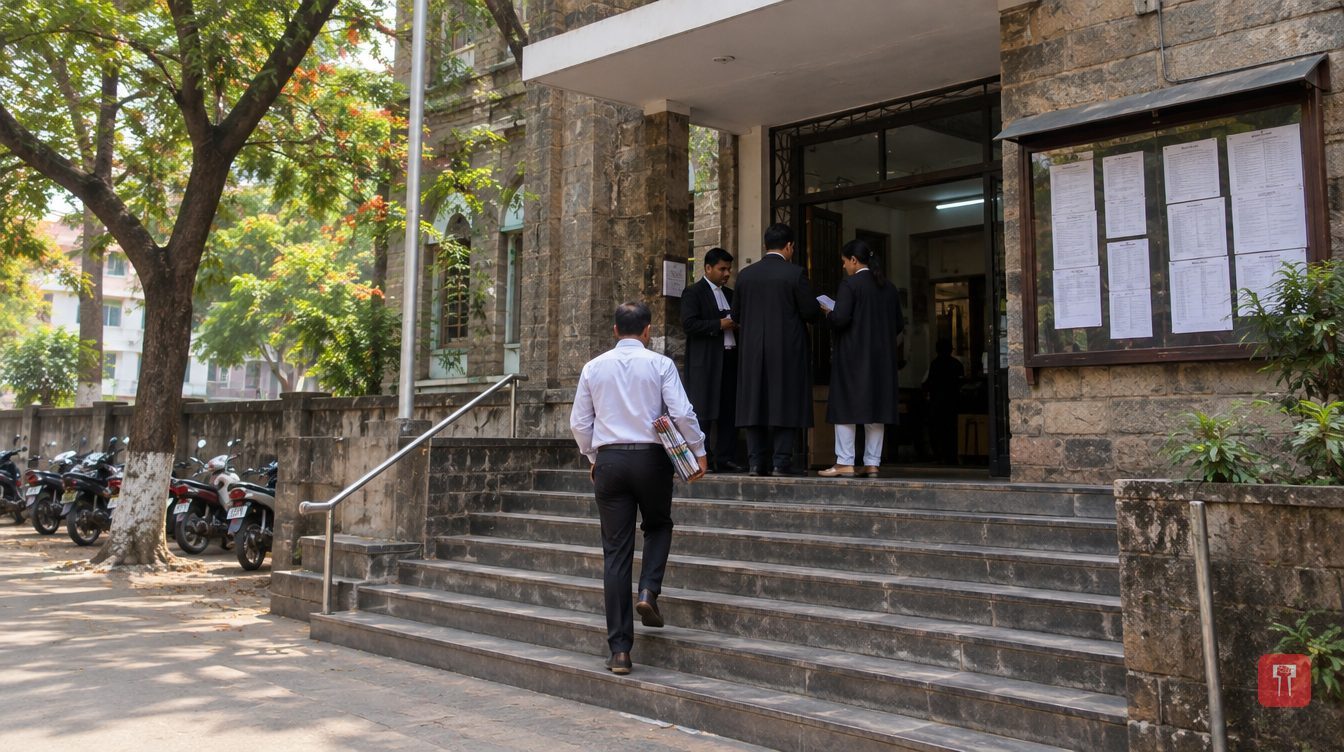 Images are not validated/verified
A special court of the Central Bureau of Investigation (CBI) in Nagpur has acquitted Rakesh Kumar Sharma, a railways senior section engineer (LOCO), in a corruption case. The case concerned alleged bribery linked to the supply of locomotive brake shoes by a Kolkata company.
The court of Special Judge Shrikant Padmakar Gondhalekar acquitted Sharma of charges under Sections 7, 12 and 13(2) read with Section 13(1)(d) of the Prevention of Corruption Act. The prosecution had alleged that Sharma was part of an arrangement to take bribes from officials of Riddhi Siddhi Udyog Limited in return for inspection certificates for railway brake shoes.
The prosecution examined 22 witnesses during the trial. The defence challenged three things: the legality of the phone tapping, the reliability of the electronic evidence, and Sharma's alleged link to the financial transactions cited by the CBI.
According to the prosecution, Riddhi Siddhi Udyog Limited of Kolkata had received a work order to supply brake shoes for railway locomotives. Acting on confidential information, the CBI alleged that the company's representatives had discussed a bribe with Sharma over the inspection certificate for the goods supplied.
The agency claimed it had obtained permission from the Central government to intercept calls and messages between the company's representatives and the accused. The CBI alleged that the recorded conversations discussed illegal payment. The prosecution also claimed that, after these conversations, an amount equal to one per cent of the transaction value was deposited in an alleged bank account of Sharma's son. The CBI then prosecuted Sharma and two officials of the company under the relevant sections of the Prevention of Corruption Act and Section 120B (criminal conspiracy) of the Indian Penal Code.
Advocate Prakash Naidu, appearing for Sharma, argued that the prosecution's reliance on intercepted phone conversations raised serious questions about the fundamental right to privacy under Article 21 of the Constitution. The defence said phone interception must follow the provisions and safeguards of law, and that the statutory conditions relating to public emergency or public safety cannot be bypassed.
According to the defence, the CBI could not prove that the mandatory procedure for phone interception was followed. It also questioned whether the mobile phones and SIM cards used in the alleged conversations were firmly linked to the accused. The defence said that without proving ownership and use of the phone connections, the recordings cannot reliably establish the accused's involvement.
The defence also challenged the alleged deposit in the bank account. Advocate Naidu said the prosecution failed to prove the necessary connection between the account holder and the accused, including proof that the account holder was Sharma's biological son. The defence said that, without evidence linking the deposit to Sharma and the alleged conspiracy, it does not establish criminal liability.
A key argument at the trial concerned Sharma's alleged role in the inspection or certification of the brake shoes. Citing the cross-examination of railway employees and investigating officers, the defence said the evidence did not establish that Sharma had any authority over the inspection or certification process. According to the defence, RITES (Rail India Technical and Economic Service), an independent agency appointed by the railways, was responsible for checking the quality of the goods supplied.
The defence said that after RITES issued its certificate, 95 per cent of the payment due to Riddhi Siddhi was released. The company then had to deliver the goods to the railways' stores department, where the store manager checked the quantity and related documents, after which the remaining five per cent was released. On this basis, the defence said Sharma had no role in issuing the quality certificate or in getting the company paid.
The defence also questioned how the investigating agency handled the electronic devices and recordings. Advocate Naidu said the procedure did not meet legal requirements, and that the alleged conversations cannot be relied upon without establishing their legal validity and reliability as evidence. After considering the evidence and arguments in the trial, the special CBI court acquitted Sharma of the charges.
Advocates Prakash Naidu, Surabhi Naidu (Godbole), Mitesh Singh Bais, Homesh Chauhan, Dhruv Sharma, Nupur Agrawal, Bhagyashree Parate, Jagriti Patil and Ananya Chandak appeared for the accused. Advocate Sumedh Wankhede appeared for the CBI. With the acquittal, the trial against Sharma in this case has ended. The exact findings and legal grounds of the court's decision will emerge from the detailed written judgment.
