

Nagpur has 32.42 lakh vehicles, with about 475 new ones added every day
Registrations across Nagpur's three RTOs rose about 86% in six years, putting growing pressure on roads, parking and traffic management.
 Images are not validated/verified
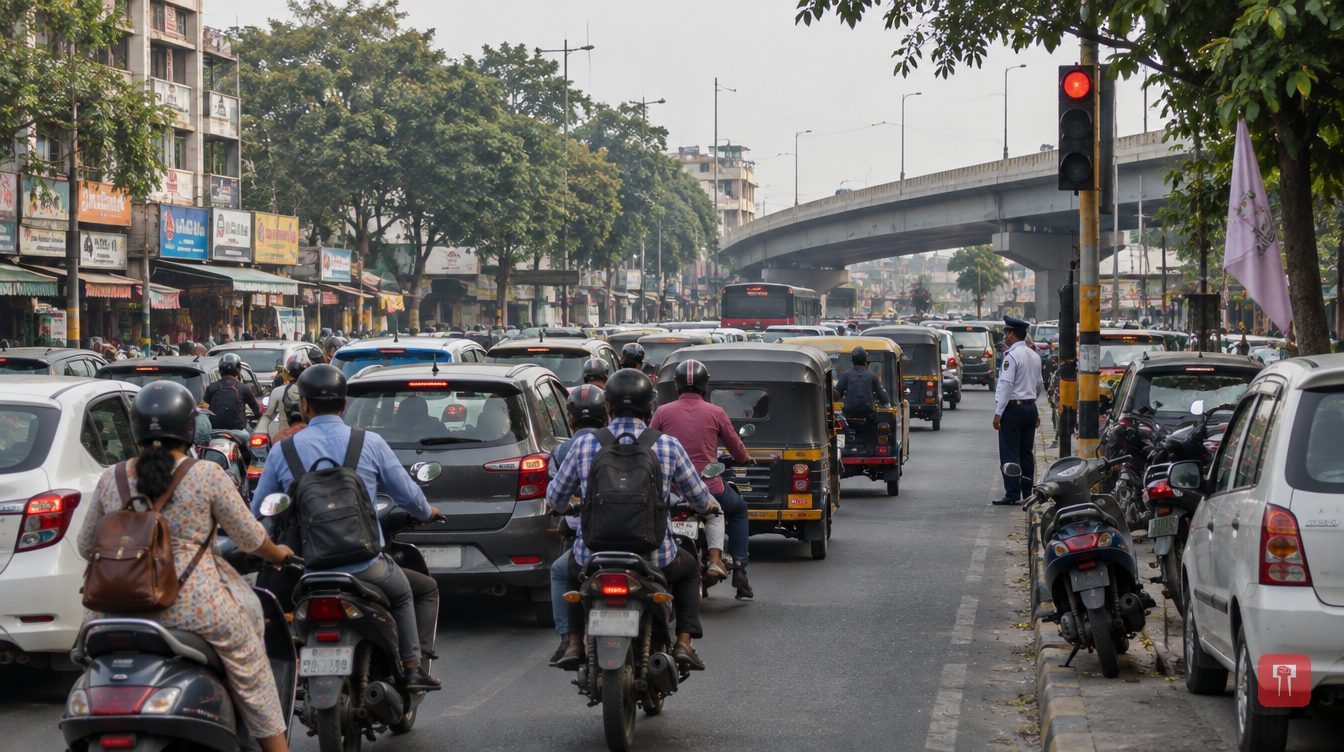
Nagpur, known for its wide roads and easy traffic, is increasingly in the grip of congestion. The number of vehicles in the Orange City has risen to 32.42 lakh. Pressure on the roads is mounting, and traffic jams have become a daily trouble for motorists.
Registration figures from the district's three regional transport offices (RTOs) show the extent of the problem. The City RTO (MH-31) has the most vehicles on record, 15.08 lakh. The Rural RTO (MH-40) has 9.19 lakh vehicles registered and the East RTO (MH-49) has 7.83 lakh.
Even more worrying than the total is the pace at which vehicles are increasing. The figures show a sharp jump in annual registrations over the past six years. This is adding to the demand on road space, parking and traffic management arrangements.
New registrations rose about 86 per cent in six years. In 2025-26, the three RTOs together registered 1,75,282 vehicles, against 94,286 in 2020-21.
Annual registrations at the East RTO grew from 38,272 in 2020-21 to 70,673 in 2025-26, a rise of about 85 per cent. The City RTO showed an even bigger proportionate increase, with registrations going from 16,790 to 35,492, more than double in six years. At the Rural RTO, annual registrations rose from 39,224 to 69,117.
The pace has continued in the current financial year. In the first six months of 2026-27 alone, the three RTOs registered 86,648 vehicles. This means an average of about 475 new vehicles are hitting the roads every day. The question being raised is whether the city's roads, parking and traffic control arrangements can keep up with this growing demand.
Vehicles from outside add to the pressure. These figures cover only vehicles registered in Nagpur district. They do not include the thousands of vehicles that enter the city every day from neighbouring districts and other states.
Nagpur draws people from across Vidarbha and beyond for jobs, education, healthcare, trade and business. Many settle here, and many commute daily for work. Their vehicles add to the burden on roads where local vehicles are already growing fast. There is competition for road space especially in market areas, at major intersections, around educational and other institutions, and on main routes.
DCP (Traffic) Aditya Mirkhelkar acknowledged that the rising number of vehicles is one of the major causes of congestion. He also said Nagpur's traffic is still better than that of other cities of similar size. Mirkhelkar said, "If you compare with other cities of the same size, Nagpur's traffic is still better. Besides the rising number of vehicles, people coming from outside and settling here, infrastructure work and the lack of proper parking are behind this problem. Along with proper traffic management, greater use of public transport can reduce the city's congestion."
Road construction and infrastructure work cause temporary obstructions. Vehicles parked haphazardly along busy roads reduce the space for moving traffic. New residents and daily commuters put further pressure on existing roads.
Complaints of congestion are now frequent on main roads, busy intersections and market routes. Even outside peak hours, motorists have to contend with slow traffic, which adds to travel time, fuel costs and frustration. Flyovers and road widening have improved connectivity in many places, but the continued addition of vehicles risks cancelling out these gains.
Traffic experts say Nagpur must think beyond simply building more roads and adopt a more comprehensive approach to urban mobility. Better public transport can reduce dependence on private cars and two-wheelers. Better coordination of signals and strict action against wrong parking can make existing roads work more effectively. Officials need to identify permanent bottlenecks, assess traffic flow at major intersections and ensure that infrastructure projects are built with links to parking and public transport.
The rising number of vehicles has made these steps all the more necessary. Without managing demand, even new roads and flyovers will not provide lasting relief. For a city that once took pride in its easy traffic, the challenge now is to keep congestion from becoming part of everyday life. With about 475 new vehicles being registered every day in the first half of 2026-27, Nagpur's traffic strategy will have to change as fast as its vehicle population.

Comments
No comments yet. Be the first.