

Nagpur Congress welcomes back estranged leaders, but some key faces skip SIR protest
As city Congress chief Praful Gudadhe tries to win back disgruntled workers, the absence of some prominent leaders from the anti-SIR march has revived talk of factionalism.
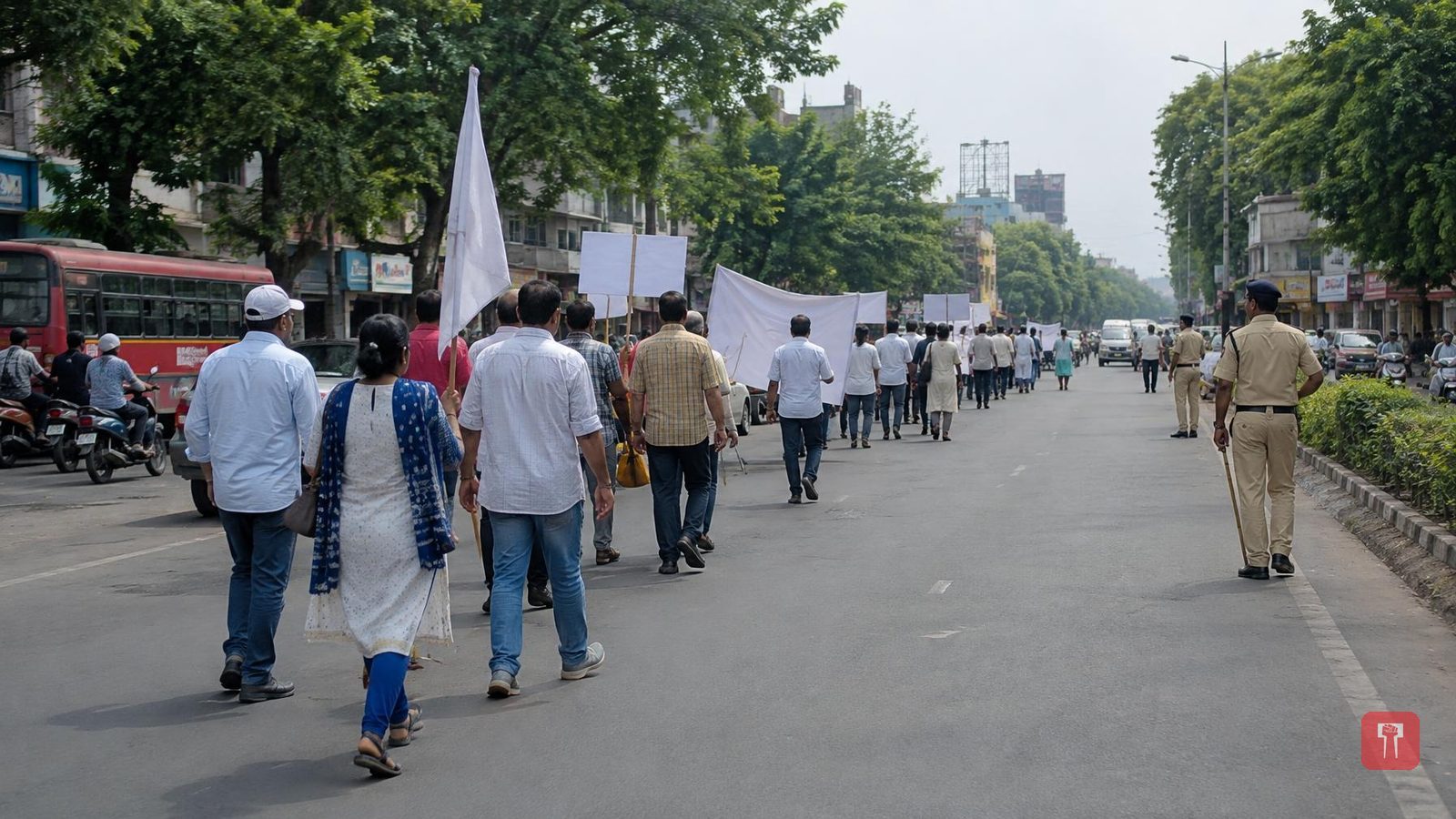 Images are not validated/verified
Factionalism in the Nagpur Congress is nothing new, but shifting political equations within the party in the city are in discussion once again. Since Praful Gudadhe took charge of the city Congress, efforts to strengthen the organisation and bring back disgruntled workers have gathered pace.
Some Congress members who were upset at being denied tickets in the corporators' elections are returning to the party. Meanwhile, another question is being raised within the party: when the Congress is busy reconnecting with old disgruntled leaders, why are some prominent party leaders and their supporters keeping away from agitations?
A march was held against the SIR (special intensive revision of electoral rolls), demanding the resignation of Chief Election Commissioner Gyanesh Kumar. Senior leaders such as former ministers Sunil Kedar and Anil Deshmukh were present. However, the absence of some prominent faces of the party and their supporters became a talking point in political circles.
The presence of Narendra Jichkar, who has been expelled from the Congress, also fuelled discussion. Once active within the Congress, Jichkar joined the agitation this time under the banner of the Bahujan Vichar Manch. Talk about old and new political equations within the Congress has since intensified.
The biggest question is why, even as the Congress under Praful Gudadhe tries to bring back disgruntled leaders and workers, some of the party's old and influential figures appear to be staying away from agitations. Are these merely personal political equations, or is the tussle between factions in the Nagpur Congress still continuing?
The march against the SIR was meant as a platform to show opposition unity, but in Nagpur it has sparked a fresh debate on the Congress's internal politics.
Another discussion concerns the party's organisational structure. Within the party and in political circles, it is being said that at Congress agitations held in Nagpur city, workers from rural areas are more visible than local workers.
The question is, when an agitation is held in the city and the issue concerns the politics of Maharashtra and the country, how strongly are the city Congress's local leaders and workers seen on the ground?
On one side there is an effort to bring back old disgruntled leaders, and on the other there is the distance kept by some of the party's prominent faces and their supporters. These two pictures have raised several questions about the Nagpur Congress's organisation, leadership and coordination.
Does internal distance still persist in the Nagpur Congress despite the reconciliation efforts? This is the question being discussed in political circles at present.
