

Nagpur air quality worsens before Diwali, AQI hits 207 on Thursday
 Images are not validated/verified
Air quality in several parts of Nagpur has crossed 200 on the AQI even before Diwali firecrackers, raising fears of worse pollution during the festival.
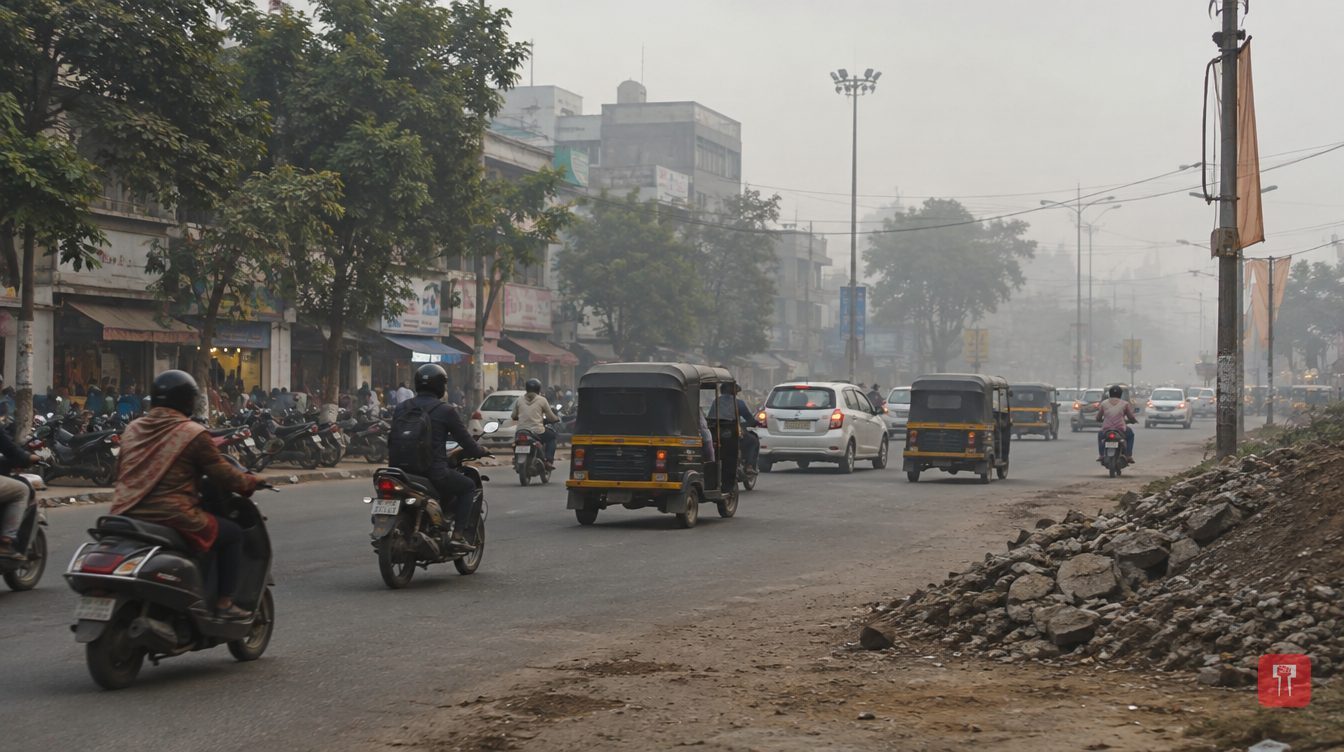
Air quality in Nagpur has begun to deteriorate even before Diwali. Firecrackers have not yet started going off, but the Air Quality Index (AQI) has crossed 200 in some large parts of the city. Residents are troubled by worsening air in areas such as Mahal, Ambazari, GPO and Ramnagar. There is a fear that pollution could rise further if firecrackers are burst on a large scale during the festival.
Until Wednesday the city's air was reasonable, with the AQI recorded below 100. On Thursday pollution rose suddenly and the AQI reached 207. There was no significant improvement on Friday, when the AQI was recorded at 198. Air quality has thus fallen sharply within a few days, even though the effect of Diwali fireworks has yet to show.
Under standards set by the Central Pollution Control Board (CPCB), the AQI is divided into six categories: 0 to 50 is good, 51 to 100 satisfactory, 101 to 200 moderate, 201 to 300 poor, 301 to 400 very poor and 401 to 500 severe. By this measure, Thursday's 207 falls in the poor category. Friday's 198 was in the moderate category, but only just below the limit of the poor category. Pollution at this level persisting is a matter of concern.
Nagpur is regarded as a green and open city. Even so, a growing number of vehicles, construction dust, soil accumulated on roads and open burning of garbage are worsening the air. At many sites, adequate measures to control dust during construction are not taken. Firecracker smoke could now make the problem more serious. During Diwali, firecrackers are burst on a large scale in different parts of the city, releasing smoke, toxic gases and very fine particles into the air. According to experts, if wind speed stays low and pollutants have no room to disperse, smoke and fine particles can linger in the air for long. The effect is likely to be felt more in densely populated areas with heavy traffic.
PM 10 and PM 2.5 particles in the air are considered very harmful to health. PM 10 particles are relatively large, while PM 2.5 particles are so small that they can reach deep into the lungs through breathing. Prolonged exposure can cause cough, breathing difficulty, sore throat and irritation of the eyes. People with asthma or other respiratory illnesses may suffer more, and polluted air can also harm heart patients. Children and the elderly are at greater risk, because children's lungs are still developing and the existing illnesses of the elderly can worsen the effects of pollution.
Some precautions have been advised. When pollution is high, avoid going out unnecessarily. Keep children and the elderly away from smoke and dust. Asthma and respiratory patients should take their medicines regularly and follow their doctor's advice. Check the AQI before exercising outdoors or going for a morning walk. Stay away from places where firecrackers are being burst and from smoke-filled areas. If needed, wear a well-fitting N95 mask. See a doctor in case of breathing difficulty, chest tightness or a persistent cough.
Environmental activist Amit Deshmukh said activities such as vehicle exhaust, dust and garbage burning are affecting the city's air. According to him, raising environmental awareness among people is necessary to tackle this. He stressed planting more trees, not burning garbage in the open and reducing unnecessary use of private vehicles. Deshmukh said protecting the environment is not only the administration's responsibility and that every citizen's participation is needed, adding that even small efforts can help keep Nagpur's air clean.
If people in the Sub-Capital keep firecrackers limited, avoid noise and air pollution and celebrate the festival in an eco-friendly way, the risk of pollution can be reduced considerably.
Reach readers on the ward they actually live in.
Advertise with Prime Time 24Reach readers on the ward they actually live in.
Advertise with Prime Time 24Reach readers on the ward they actually live in.
Advertise with Prime Time 24Reach readers on the ward they actually live in.
Advertise with Prime Time 24
Comments
No comments yet. Be the first.