

Mobile skill lab from Lend A Hand India reaches over 900 schools across 16 states and 3 UTs
The 'Skills on Wheels' initiative has taken hands-on skills education to schools in 16 states and 3 Union Territories, reaching over 5 lakh stakeholders.
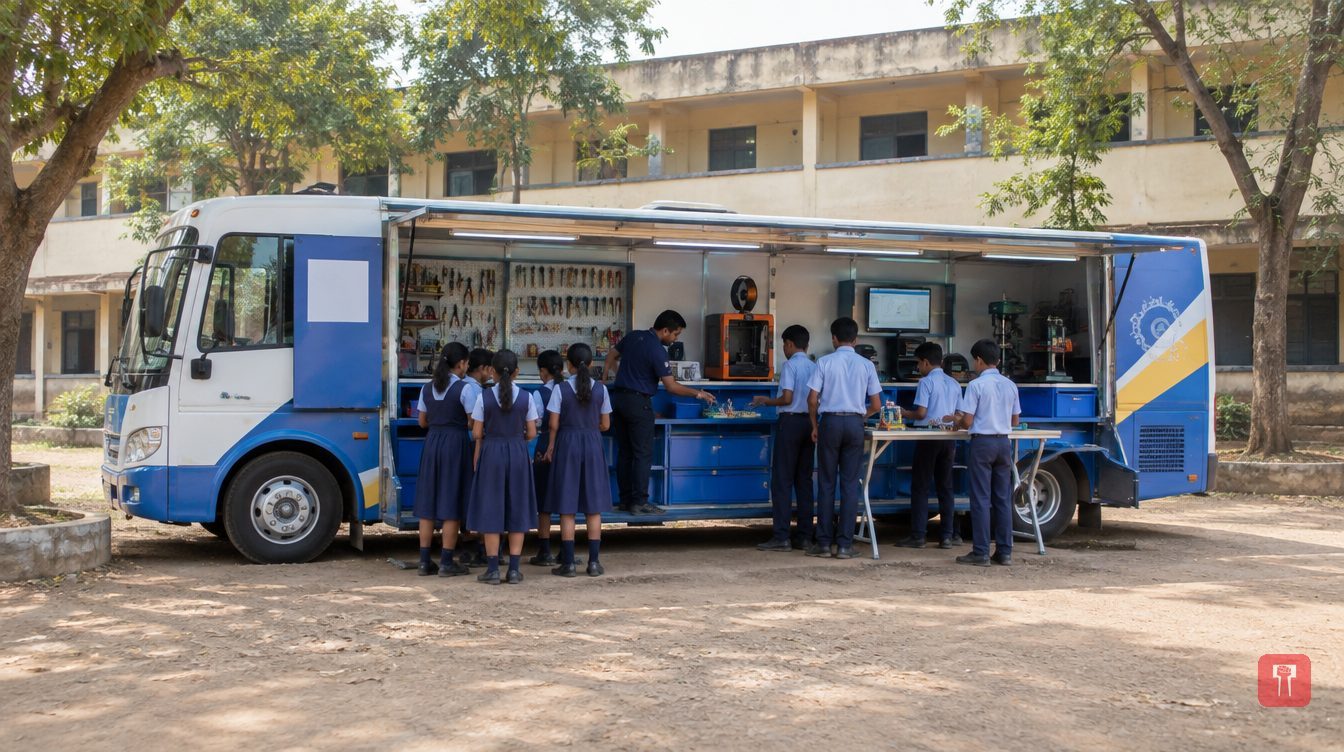 Images are not validated/verified
Bookish knowledge alone is no longer enough. Children also need hands-on skills, creativity, problem-solving ability and a positive attitude to work. With this thinking, Lend A Hand India is running an initiative called 'Skills on Wheels', which gives children first-hand experience of skills education.
The aim is clear: a fully equipped mobile skill lab travels to schools and introduces children to different vocational skills.
So far the initiative has reached more than 900 schools in 16 states and 3 Union Territories of India. Awareness of skills education has been taken to more than 5 lakh stakeholders, including students, teachers, parents and people connected with the government system.
In many schools across the country, children get few opportunities to learn about different professions, industries, technology and the nature of real work. Geographical distance, a lack of resources and the absence of facilities needed for skills-based education keep many children away from such experiences.
The 'Skills on Wheels' idea was developed to bridge this gap. The mobile skills laboratory is equipped with the necessary materials, tools and demonstration facilities, and visits different schools, educational institutions and communities. Instead of merely being given information, children get the chance to try things themselves, ask questions, experiment and learn new things.
The National Education Policy 2020 gives importance to vocational education, experiential learning and the all-round development of children. The initiative plays a significant role in helping children become familiar with different professions from an early age and in linking learning to real life.
Lend A Hand India works to narrow the gap between education and livelihoods. Supporting state governments on policy, technology and management is an important part of its work.
Through 'Skills on Wheels', children are introduced to six major skill areas. The first is agriculture and horticulture, covering farming, plant care, farm-related work and the concepts of sustainable farming. The second is mechatronics, which gives a basic understanding of mechanical and electronic systems, equipment and technology-based work. The third is healthcare, which introduces health services and the various skills in the sector.
The fourth area is fashion, where fashion design, creativity, texture and skills related to making clothes are taught. The fifth is finance, which explains money transactions, money management and the basics of the financial sector. The sixth is coding and artificial intelligence (AI), which offers an initial introduction to computational thinking, technology, coding and modern digital skills.
Demonstrations in these areas help children understand their interests, their abilities and future career possibilities. In traditional schooling, children often have to learn by reading or listening, whereas skills education places special emphasis on doing, seeing, experimenting and experience.
Implementing skills education effectively requires more than reaching children. The participation of teachers, school administrators, parents, education officials and the local community is also necessary. With this in view, the initiative works to build awareness of skills education among different stakeholders. Reaching more than 5 lakh stakeholders is significant for spreading the message of skills education on a large scale.
Through the initiative, which has so far reached more than 900 schools in 16 states and 3 Union Territories, efforts are being made to expose children to vocational skills and make school education more experience-based.

Comments
No comments yet. Be the first.