

Mira-Bhayandar civic body issues SOP requiring passes for citizens and journalists at general body meetings
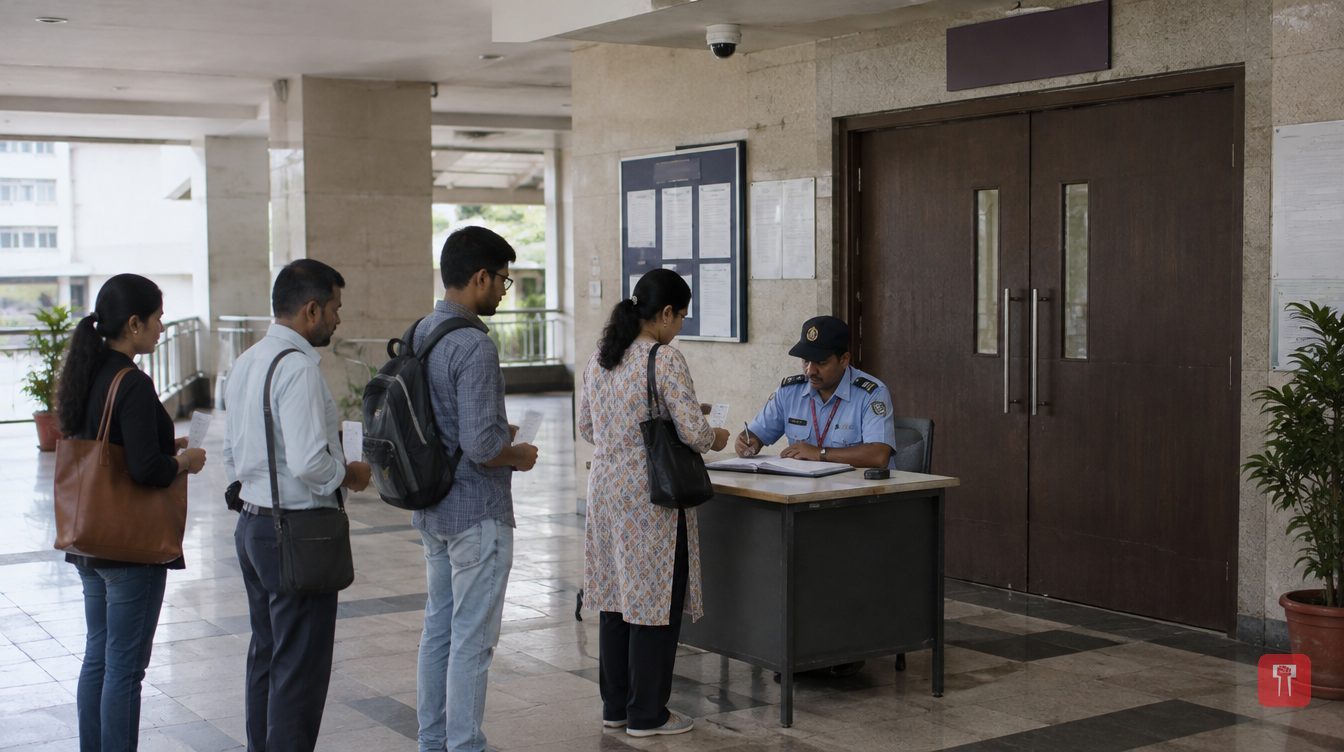 Images are not validated/verified
The Mira-Bhayandar Municipal Corporation has framed a new SOP on entry, security and conduct at general body meetings, issued on November 8, 2026.
The Mira-Bhayandar Municipal Corporation has drawn up a new standard operating procedure (SOP) to stop disorder, unauthorised entry and security lapses at general body meetings. The aim is for the proceedings to run peacefully and for citizens, journalists, elected representatives and officials to remain safe. The corporation's establishment department issued the SOP on November 8, 2026.
It sets out detailed rules on entry control, security arrangements, crowd management, the process of issuing passes to journalists and citizens, CCTV surveillance and action to be taken in case of disorder.
According to the SOP, some people entered the visitors' gallery during the general body meeting on October 16, 2026 and created a ruckus, disrupting the proceedings. Following that incident, and on the mayor's instructions of October 22, a separate SOP for entry and security at the general body was sought. The SOP also records that the minutes of the meeting already carry a direction that no live broadcast or filming be done without permission. It also mentions applications from citizens and journalists for permission for videography and live broadcast.
Citizens who wish to sit in the general body must now submit a written application in person to the municipal secretary at least three days before the scheduled meeting. Passes will be issued only after prior permission from the mayor, who is the presiding officer. For special and adjourned meetings, applications must be made at least 48 hours in advance. The power to approve or reject applications rests with the mayor or presiding officer and the municipal secretary.
The number of passes for citizens will depend on the available seating capacity of the hall, and each pass will carry a separate serial number. A pass cannot be transferred: one issued in a person's name cannot be used by anyone else.
The general body works in two sessions, before and after lunch. Applicants must therefore state which session they wish to attend. Depending on seating capacity, passes for the first session will be given priority. Those who do not get a place in the first session will be given passes for the second. If seats remain in the second session, citizens on the first session's waiting list can be admitted there.
Journalists too will have to obtain separate passes. Their entry will be processed through the head of the public relations department. A journalist's official identity card will be checked, and the concerned newspaper or media organisation will be contacted for confirmation. Passes will then be issued in coordination with the mayor, the presiding officer. The number of journalists' passes will also be capped, each journalist's entry will be recorded in a separate register, and entry will be allowed only as per the seating capacity of the press room.
During meetings, the system analyst of the CCTV department has been made responsible for keeping the headquarters' CCTV system fully operational. The analyst must also preserve the recordings of the proceedings, keep records of footage from the entrances to the press room and the citizens' room, and give technical help to competent authorities when required. In case of any disorder, the footage can be used to examine the sequence of events.
The deputy commissioner (headquarters) has been made ex-officio nodal officer to coordinate the entire administrative arrangement. They will be responsible for coordination among the municipal secretary and the public relations, security, CCTV and other departments. They must confirm that all necessary arrangements are in place before a meeting and will have the power to direct departments. Department heads will give detailed reports of incidents at the general body to the nodal officer, who will submit them to the commissioner.
The security department has been given special responsibility for preventing unauthorised entry, disruption, threats, gestures, taunting, provocation or obstruction of official work. It must keep the main gate, exit routes and emergency exits open. No more people than the approved capacity will be allowed into the rooms designated for journalists and citizens.
The SOP warns of action under the applicable provisions of the Maharashtra Municipal Corporations Act and the Bharatiya Nyaya Sanhita against anyone doing unlawful filming or photography, creating a disturbance or causing obstruction in the citizens' or press room. It also provides for barring such persons from attending the general body again. The security department has also been directed to file a complaint at the police station as an eyewitness, as needed.
The chief legal officer has been tasked with examining the legal validity of the SOP's provisions, guiding on the laws applicable to entry control and security, and advising on proposed action and complaints in case of violations. The SOP clarifies that it will not limit any statutory rights given to citizens or journalists under law. It also states that the process of applying in advance for entry will not be treated as restricting any statutory right of public access.
Reach readers on the ward they actually live in.
Advertise with Prime Time 24Reach readers on the ward they actually live in.
Advertise with Prime Time 24Reach readers on the ward they actually live in.
Advertise with Prime Time 24Choose primetime24.com as a preferred source on Google Google shows more stories from your preferred sources in Top Stories.
Reach readers on the ward they actually live in.
Advertise with Prime Time 24
Comments
No comments yet. Be the first.