

Latur households hit by costlier pulses, vegetables and edible oil ahead of festivals
Inflation in Latur district has risen from 4.63 per cent to 5.48 per cent, with 41 of 42 monitored essentials costing more than a year ago.
 Images are not validated/verified
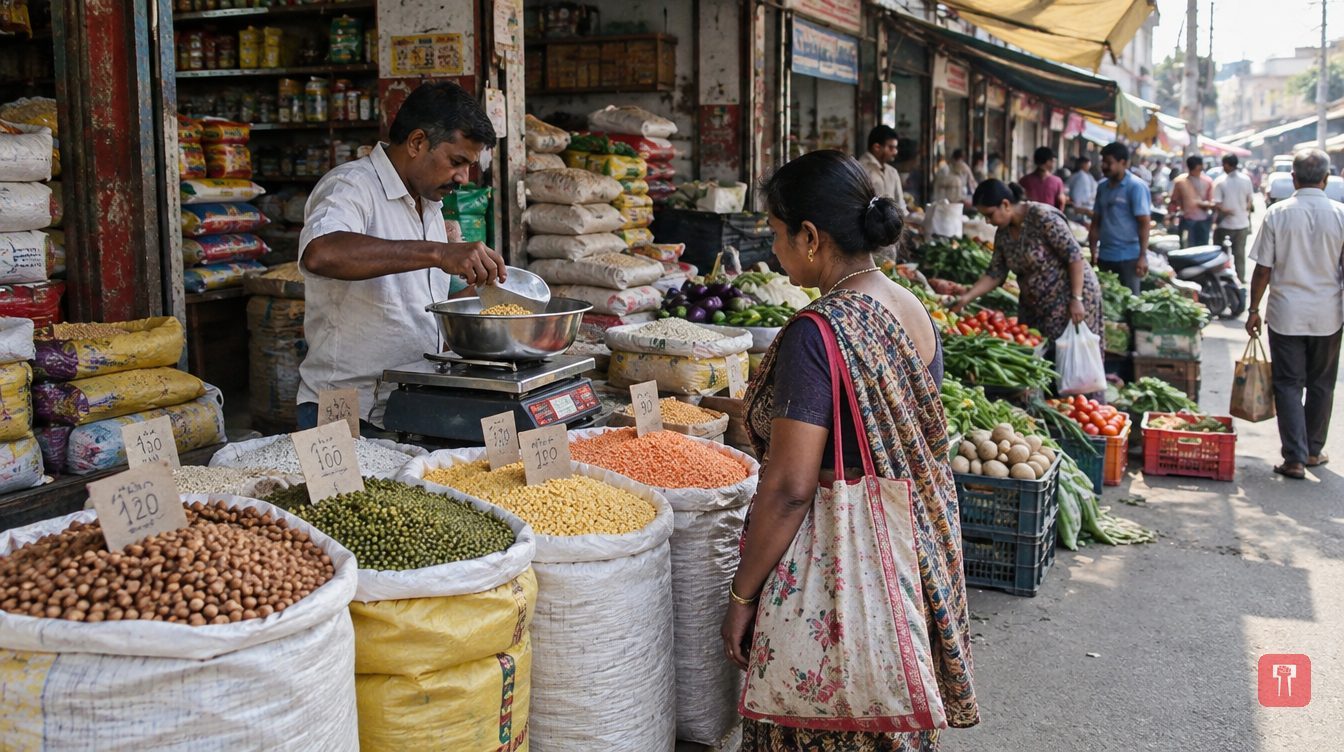
Drought-like conditions already persist in Latur district, and rising prices are now adding to the strain on ordinary people. Higher prices of cereals, pulses, edible oil and vegetables have thrown household budgets into disarray. Families face a shortage of rain and a crisis in farming on one side, and the burden of rising prices on the other. The effect on the pockets of ordinary families is plain to see.
According to figures, the inflation rate has risen from 4.63 per cent to 5.48 per cent. The increase in the prices of vegetables and cereals is considered the biggest reason.
Notably, of the 42 essential items kept under government monitoring, 41 have become costlier over the past year. The higher prices of pulses in the market have come as the biggest shock to customers. Chana dal has reached Rs 100 a kg, moong dal Rs 130 and tur dal Rs 150. Lobia dal is reported to have reached Rs 140 a kg and masoor dal Rs 100.
Along with pulses, the prices of jowar, bajra, rice and wheat have also gone up, pushing up the cost of everyday meals. Wheat and Lokwan wheat are priced at around Rs 35 a kg, so the monthly grocery bill of families is also rising.
Prices of onions, sunflower oil, mustard oil, palm oil and soybean oil have also risen, adding to kitchen costs. There is also concern that sugar prices may rise ahead of Diwali.
Navratri is under way, and demand for fruit and fasting foods has risen. With items such as sabudana, groundnuts and samo rice becoming costlier, those observing fasts also have to pay more. Higher fruit prices have made it hard to manage festival-season expenses.
The drought-like conditions in the district have affected crop yields. People fear that prices could rise further if yields fall. Low- and middle-income families are bearing the brunt of inflation. More money is going on household expenses, groceries, vegetables, education, health and other needs, so savings are also affected.

Comments
No comments yet. Be the first.