

Kavya Maran and Anirudh Ravichander marry in self-respect ceremony in Greece, without priest or mantras
 Images are not validated/verified
The couple married on November 11 in Greece in a ceremony without a priest or Sanskrit mantras, a form of marriage rooted in Tamil Nadu's social reform movement.
Weddings usually bring to mind haldi, mehndi, a priest's mantras and the seven vows taken before the sacred fire. But not every wedding is the same. South India has a marriage tradition that challenges social conventions followed for centuries. Anirudh and Kavya chose this path.
Kavya Maran and Anirudh Ravichander were married in Greece on November 11. Their wedding was not held according to traditional Hindu rituals. When pictures of the wedding went viral, talk began that the couple had opted for a self-respect marriage.
As the pictures spread on social media, Dr TRB Rajaa, secretary of the DMK's IT wing, said that Anirudh Ravichander and Kavya Maran had chosen a self-respect marriage. Such a marriage needs no priest, Sanskrit mantras or traditional religious rituals. The questions are what exactly this form of marriage is, when it began and how it won legal recognition in India.
A self-respect marriage is called "Suyamariyathai Thirumanam" in Tamil, which literally means a marriage conducted with self-respect. In it, two people take each other as life partners without a priest, religious mantras or a large religious ceremony.
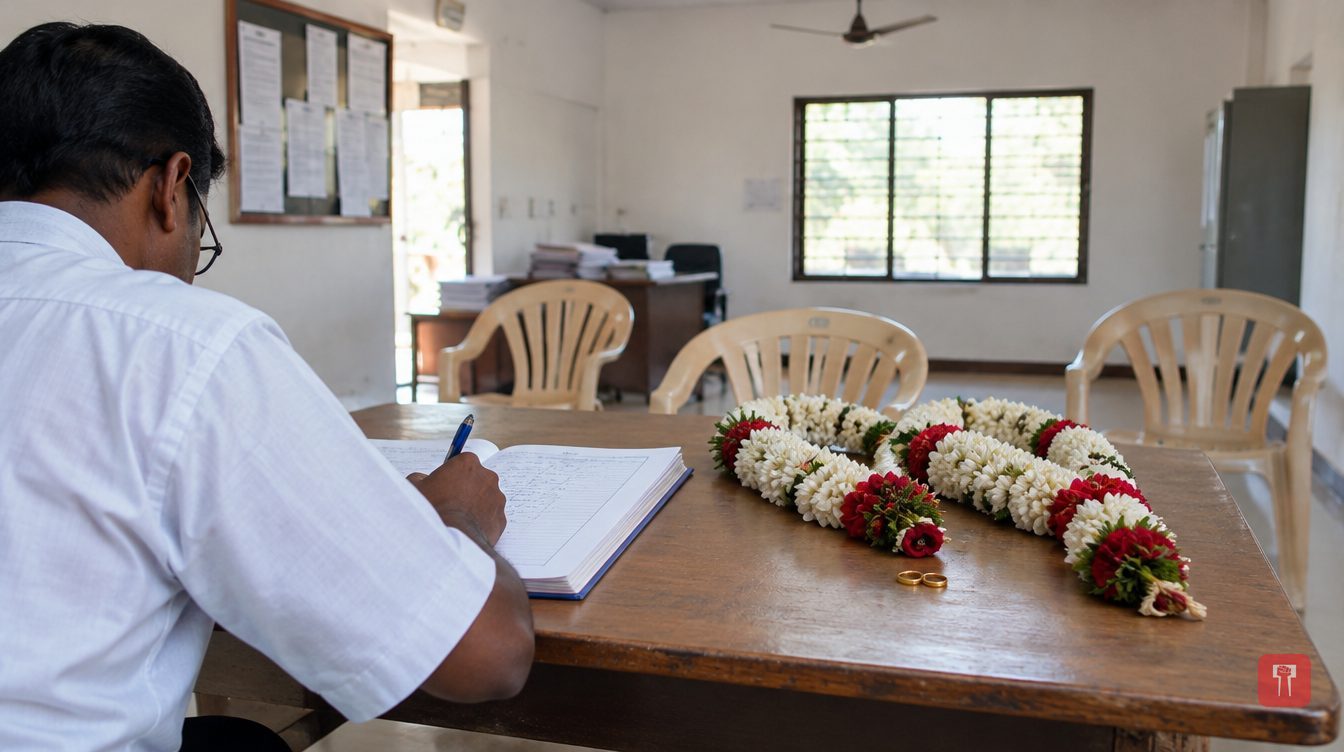
The couple may perform symbolic rituals of their choice, such as exchanging garlands, exchanging rings or tying a mangalsutra. No specific religious ritual is required. Its main basis is the consent of both and their acceptance of each other as husband and wife.
Anirudh and Kavya did the same. They exchanged garlands in the presence of family and friends. Rajinikanth and former Tamil Nadu Chief Minister M K Stalin also attended the wedding.
The roots of the self-respect marriage lie in Tamil Nadu's social reform movement. It was started in 1925 by the social reformer E V Ramasamy, known as Periyar. He spoke out against the caste system and religious rituals prevalent at the time, when caste played a major role in decisions such as marriage.
Many Hindu weddings were conducted by Brahmin priests, who recited Sanskrit mantras. The problem was that many of those marrying did not even understand the meaning of the mantras. Periyar held that a priest or the sanction of religious rituals should not be necessary for two people to marry. In his view, marriage should rest on mutual consent, equality and respect.
Periyar's movement was not limited to changing the manner of marriage. It also aimed to give women and men equal rights. He promoted inter-caste marriage and supported widow remarriage. He also opposed the dowry system and caste discrimination. He believed women should have complete freedom to choose their life partner and that no woman should be pressed into marriage under social or family pressure. This thinking gave impetus to the self-respect marriage. In the beginning, however, such marriages had no legal recognition.
The DMK government in Tamil Nadu played a key role in securing legal recognition for them. In 1967, the government led by C N Annadurai amended the Hindu Marriage Act by adding Section 7-A, which gave such marriages legal recognition in Tamil Nadu. The law came into force in January 1968. Under it, a priest or traditional religious rituals are not needed for a marriage. The couple accept each other as husband and wife in the presence of relatives, friends or other witnesses. They may express their consent in a language both understand.
The marriage can be solemnised in any one of three ways: first, exchanging garlands; second, putting a ring on each other's finger; third, the groom tying a thali around the bride's neck. Any one of these is enough. Taking the seven rounds or marrying around the sacred fire is not required. The other essential conditions of marriage must, however, be met.
In 2023, the Supreme Court also gave an important ruling on self-respect marriages. In the Ilavarasan versus Superintendent of Police case, the court clarified that a public ceremony or public declaration is not necessary for such marriages. Some couples want to keep their marriage private because of opposition from family or society.
Many fear for their safety. In such cases, a requirement of public declaration of the marriage could create difficulties for them. With this in mind, the Supreme Court said a public declaration is not necessary in every case for a self-respect marriage.
Reach readers on the ward they actually live in.
Advertise with Prime Time 24Reach readers on the ward they actually live in.
Advertise with Prime Time 24Reach readers on the ward they actually live in.
Advertise with Prime Time 24Choose primetime24.com as a preferred source on Google Google shows more stories from your preferred sources in Top Stories.
Reach readers on the ward they actually live in.
Advertise with Prime Time 24
Comments
No comments yet. Be the first.