

GST officers told to use data analysis, not strictness, to catch tax evasion; arrest provision proposed to go
At a Nagpur feedback meeting, CBIC chairman Vivek Chaturvedi said GST officers must now rely on data analysis and cooperate with traders.
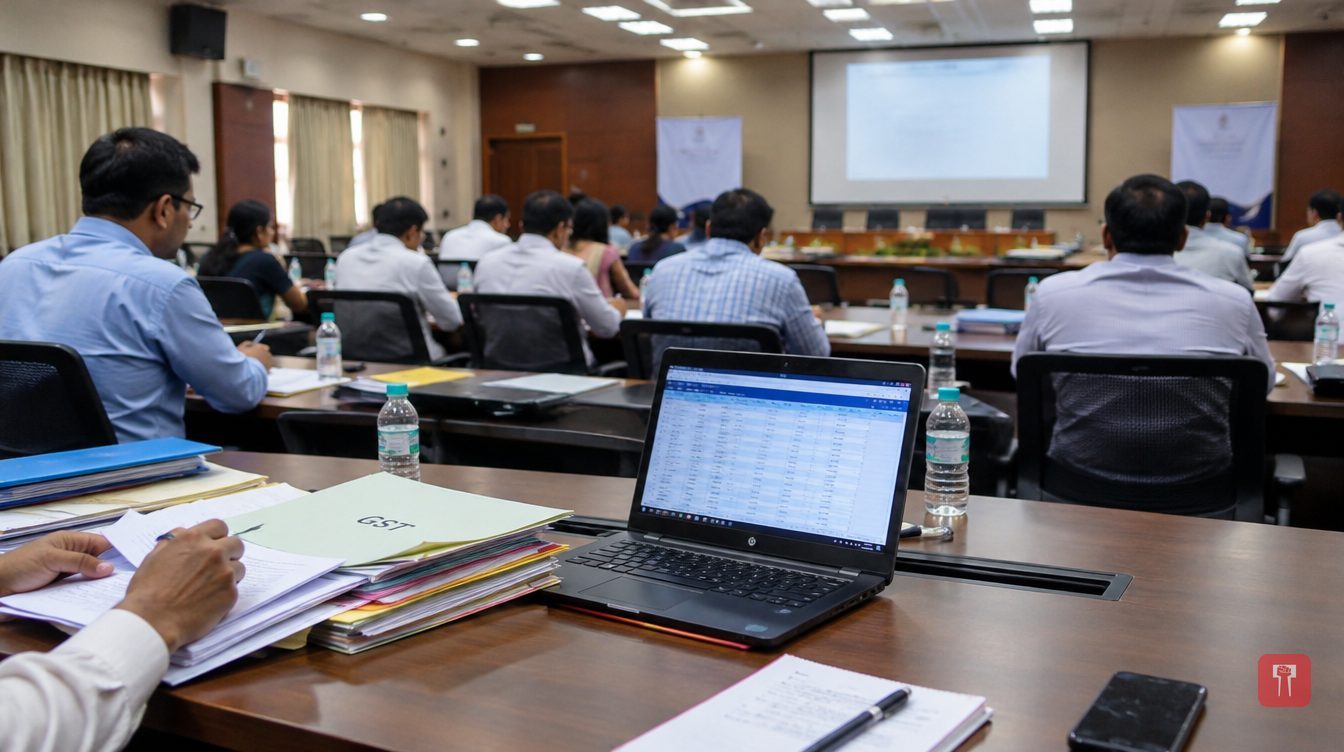 Images are not validated/verified
Nine years after the rollout of GST, the government is focusing on widening the base of taxpayers and raising cash tax collection. Central and state GST officers have been clearly instructed to use modern data analysis and intelligence, rather than the old strictness, to catch tax evasion.
It was stated that tax collection has stabilised at growth of 14-15 per cent, so it can rise further only if more taxpayers are brought in. The GST Nagpur zone had organised a feedback meeting to hear the views of trade and industry.
At the meeting, Central Board of Indirect Taxes and Customs (CBIC) chairman Vivek Chaturvedi and member Sanjay Mangal interacted with traders. Prominent entrepreneurs, traders and heads of organisations from the city were present. Nagpur zone chief commissioner Sandeep Puri and additional commissioner Mukul Patil were also there.
Chaturvedi said several changes were made at the recent GST Council meeting. Their direct aim is to advance ease of doing business. People are to be given the simplest possible law so that more of them come into the tax net and revenue can grow.
Mangal said the GST department will now work on the lines of the Income Tax department's campaign to encourage voluntary compliance. Officers have been told not to interfere in traders' work more than necessary. GST rates and procedures have largely stabilised, so the officers' job will no longer be only to collect tax. They will act as "helpers" for traders and adopt a "cooperative attitude" instead of applying needless pressure, so that mutual trust is built. Directions to this effect have been issued.
Prashant Mohta, Malpani Nirbhay Sancheti, Ajay Gupta, Deepen Agrawal, Shashikant Kotharkar, Kishor Malviya, Zulfesh Shah, Swapnil Ahirkar and Hemant Sarda were also present at the event.
For tax offences, a recommendation has been made to end the provision for arrest under GST. The minimum threshold for prosecution has been raised from Rs 1 crore to Rs 5 crore. The compulsory minimum punishment has also been removed. In cases where no specific penalty applies, the general penalty has been cut from Rs 25,000 to Rs 10,000.
Changes have also been made on refunds. The time limit for acknowledging a refund claim has been cut from 15 days to 10 days. Under risk-based assessment, 90 per cent of eligible refund claims will be approved and refund orders issued within 3 working days of the acknowledgement.
Chaturvedi said no one is talking about GST rates now. People want a simple law, so they have begun to talk about processes from GST registration to refunds. According to him, the Council has understood this too, and work is going on accordingly.
He said traders across the country are being consulted and their suggestions sought. A report on these suggestions will be prepared in 3 months, and further reform steps will then be taken.
