

GST officials told to use data and intelligence, not pressure, as Nagpur trade meet hears of easier rules
Nine years after GST began, officials have been told to act on data analysis and intelligence, with arrest provisions and penalties eased and refunds sped up.
 Images are not validated/verified
Nine years after the Goods and Services Tax (GST) was introduced, the Centre has signalled a change in how it intends to raise tax collection. Central and state GST officials have been directed to act on the basis of data analysis and intelligence, rather than take direct action against traders or exert undue pressure on them to catch tax evasion.
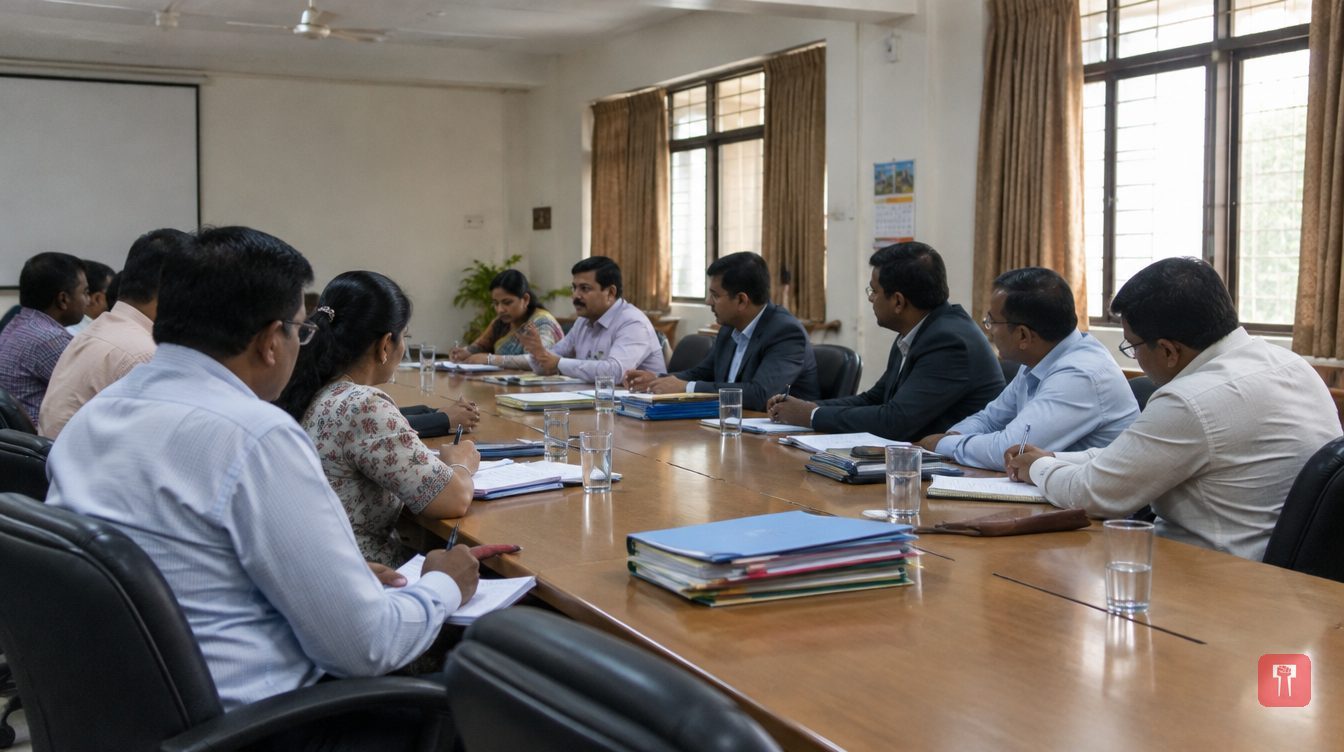
The government says tax collection is growing at 14-15 per cent and has reached a stable level. In its view, the next route to higher revenue is to bring more taxpayers into the tax net. The GST Nagpur Zone held a feedback meeting to hear the problems, suggestions and expectations of trade and industry.
Central Board of Indirect Taxes and Customs (CBIC) Chairman Vivek Chaturvedi and member Sanjay Mangal spoke directly with traders and industrialists at the meeting. Leading industrialists and traders of the city and office-bearers of various organisations attended. Nagpur Zone Chief Commissioner Sandeep Puri and Additional Commissioner Mukul Patil were also present. Chaturvedi said the policy now is to further promote the tax system. The simpler the law, the more people will join the tax system of their own accord.
Mangal said the GST department will now work in line with the Income Tax Department's approach of encouraging compliance with love. Officials have been given clear instructions not to interfere unnecessarily in traders' day-to-day work. They will act as "helpers" who show taxpayers the way and resolve their difficulties. Those present at the meeting included Prashant Mohta, Malpani Nirbhay Sancheti, Ajay Gupta, Deepen Agrawal, Shashikant Kotharkar, Kishore Malviya, Zulfesh Shah, Swapnil Ahirkar and Hemant Sarda.
Among the proposed changes in GST, the arrest provision brings relief. It has been recommended that the provision for arrest under the GST law be scrapped. The minimum threshold for prosecution has been raised from Rs 1 crore to Rs 5 crore. The penalty amounts have been reduced and the provision making a minimum sentence mandatory has been removed.
In cases where no specific penalty is fixed, the general penalty has been cut from Rs 25,000 to Rs 10,000. The refund process is also being speeded up. The time limit for acknowledging a refund claim has been cut from 15 days to 10 days. Under the risk-based assessment process, 90 per cent of eligible refund claims will be approved and refund orders issued within 3 working days of receipt.
The discussion is now about process, not tax rates. The emphasis is on simplifying the process from GST registration to receiving refunds. The Council has also kept these expectations of traders in mind. Suggestions are being taken after talking to traders and industry representatives across the country. A report will be prepared in 3 months after studying the suggestions, after which the reform process will be given further momentum.
