

Gandh or haldi-kumkum first? A guide to the order of offerings in daily puja
Many devotees wonder whether to apply gandh or haldi-kumkum first; the order varies by deity, method of worship and family tradition.
 Images are not validated/verified
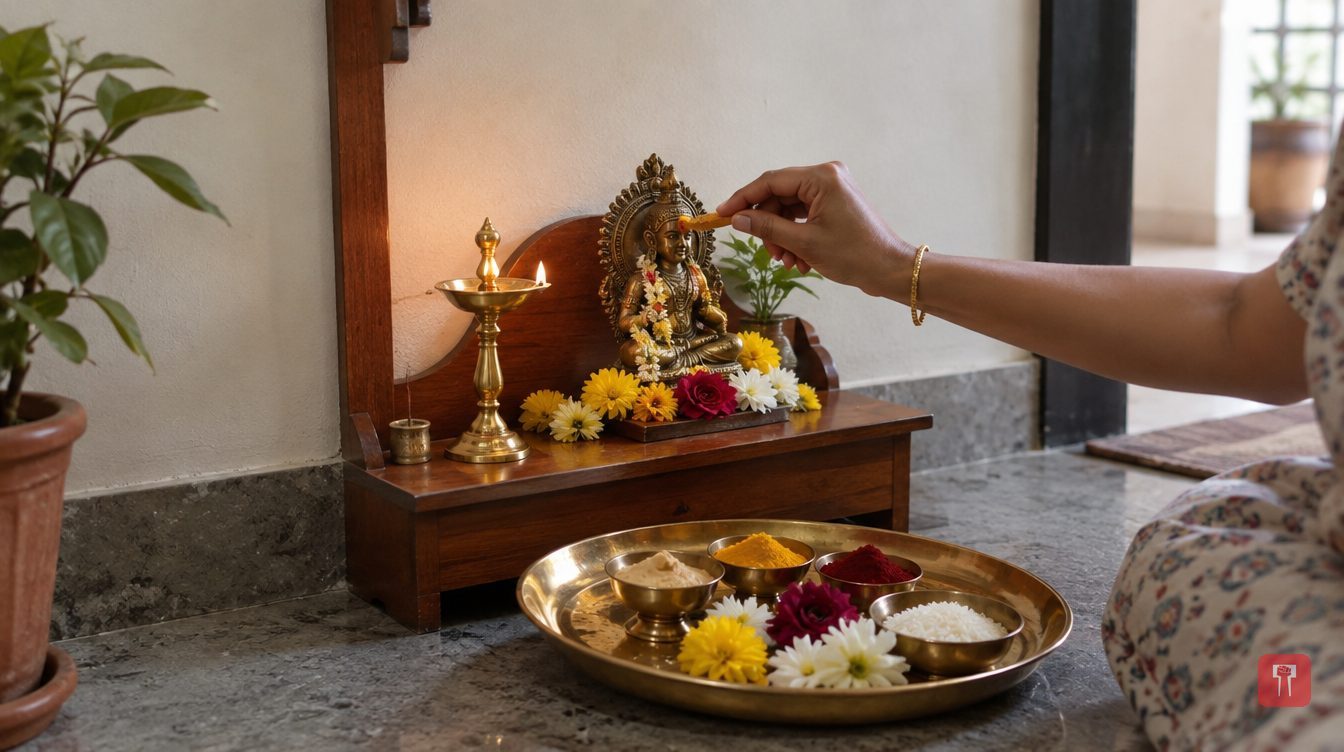
In Hinduism, worship of deities is not merely a religious tradition. It is also an important way of expressing faith, devotion and surrender. During daily puja, people apply gandh (fragrant paste) to the deity, offer haldi-kumkum (turmeric and vermilion), present akshata (unbroken rice grains) and pray with flowers. Many wonder whether gandh or haldi-kumkum should come first, what the correct order is, and whether haldi-kumkum is offered to every deity.
The different rites of worship carry religious and cultural significance. Gandh is regarded as a symbol of auspiciousness, coolness and purity, while haldi-kumkum is a symbol of good fortune.
In ordinary household puja, gandh is often applied to the deity first, followed by haldi-kumkum. Akshata and flowers are offered after that. But it cannot be said that this is the one fixed order for all deities and all traditions. The order can vary with the deity, the method of worship and the family tradition (kulachar).
One commonly followed household order is this: first apply sandalwood gandh, or the gandh prescribed for the puja, to the deity. Then offer turmeric according to the deity's method of worship, followed by kumkum. After haldi-kumkum, offer akshata, and finally offer flowers that the deity likes and that are fit for worship. If the worship method for a particular deity prescribes a different order, the puja should be done accordingly.
Sandalwood gandh is an important rite in Hindu worship. Sandalwood is regarded as a symbol of coolness, purity and cheerfulness. In offering gandh, the devotee honours the deity with faith and respect. Behind this lies not only religious tradition but also the intent of focusing the mind during worship. Remembering the deity while offering gandh makes the puja more heartfelt.
Depending on the form of the deity, sandalwood, saffron-based gandh or other prescribed gandh is used. Worship of some deities requires bhasma (sacred ash), sindoor or a special paste. While applying gandh, care should be taken about the make of the idol, any coating on it and the method of worship. Be especially careful when applying anything to metal, stone or painted idols.
Turmeric is regarded as a symbol of auspiciousness in Indian culture. It is used in weddings, religious rites, auspicious occasions and many pujas. It is associated with good fortune, prosperity and auspicious beginnings. Turmeric has a place in many religious rites, including worship of the goddess and of Ganesha. Even so, there is no universal rule that every deity must be offered turmeric in every puja. Worship of some deities gives priority to particular items, while some traditions avoid using certain items.
In Hindu culture, kumkum is regarded as a symbol of marital good fortune, auspiciousness and well-being. It has special importance in worship of the goddess, and in many homes kumkum is also offered in the worship of Ganapati, the goddess and other deities. But it is not necessary to apply kumkum to the idol of every deity. Some deities are traditionally offered gandh, bhasma or special puja materials. Where there is no tradition of applying kumkum to the idol, it can be offered near the idol.
Different religious traditions give different indications on which finger to use for applying gandh. In many places the common practice is to use the ring finger, the one next to the little finger. Some special tilak or puja rites call for different fingers. So it should not be assumed that one rule applies to all deities and every kind of gandh. Apply gandh according to the worship method followed in your own home. Keep the deity in mind while applying it, and let the puja be conducted calmly. Using the finger correctly is part of the rite, but faith and purity matter too.
In the worship of Lord Shiva, sandalwood, bhasma and bilva leaves have special importance. Many Shiva devotees offer bhasma or sandalwood on the Shivalinga. Local and family traditions differ on the use of haldi-kumkum in worship of the Shivalinga. In many prevalent methods of worship, applying haldi-kumkum on the Shivalinga is avoided, and sandalwood, bhasma, water and bilva leaves are offered instead. What to offer on the Shivalinga should be decided according to one's own tradition, keeping in mind the make of the Shivalinga and the puja materials.
In the worship of Lord Ganesha, gandh, durva grass, red flowers and sindoor have special importance. In many places there is a tradition of offering sindoor to Ganapati. It is linked to devotion, the start of auspicious undertakings and the traditional rite of worshipping the remover of obstacles. In Ganesha puja, gandh can be applied first, followed by sindoor, akshata, durva and flowers according to the method of worship. While applying sindoor or other items to the idol, keep in mind the type of idol and the tradition of the temple or home.
In worship of the goddess, gandh, haldi, kumkum, akshata and flowers are used extensively. Offering haldi-kumkum has a special place particularly during Navratri, Mangalagauri, Haritalika and other fasts linked to the goddess. Kumkum applied to the goddess is regarded as a symbol of shakti, auspiciousness and devotion. In the worship of some goddesses it is customary to offer sindoor, senduur or flowers of particular colours. In many homes, goddess puja involves offering gandh first, then haldi-kumkum, followed by akshata, flowers and naivedya (food offering). But the method of worship can vary with the particular form of the goddess and local tradition.
Information on subjects such as religion, astrology, Vastu and Feng Shui is meant only for readers' information. Experts should be consulted before trying any practice related to them.

Comments
No comments yet. Be the first.