

SC: Parents' salary alone cannot decide OBC creamy layer status; Centre's plea for two more years rejected
 Images are not validated/verified
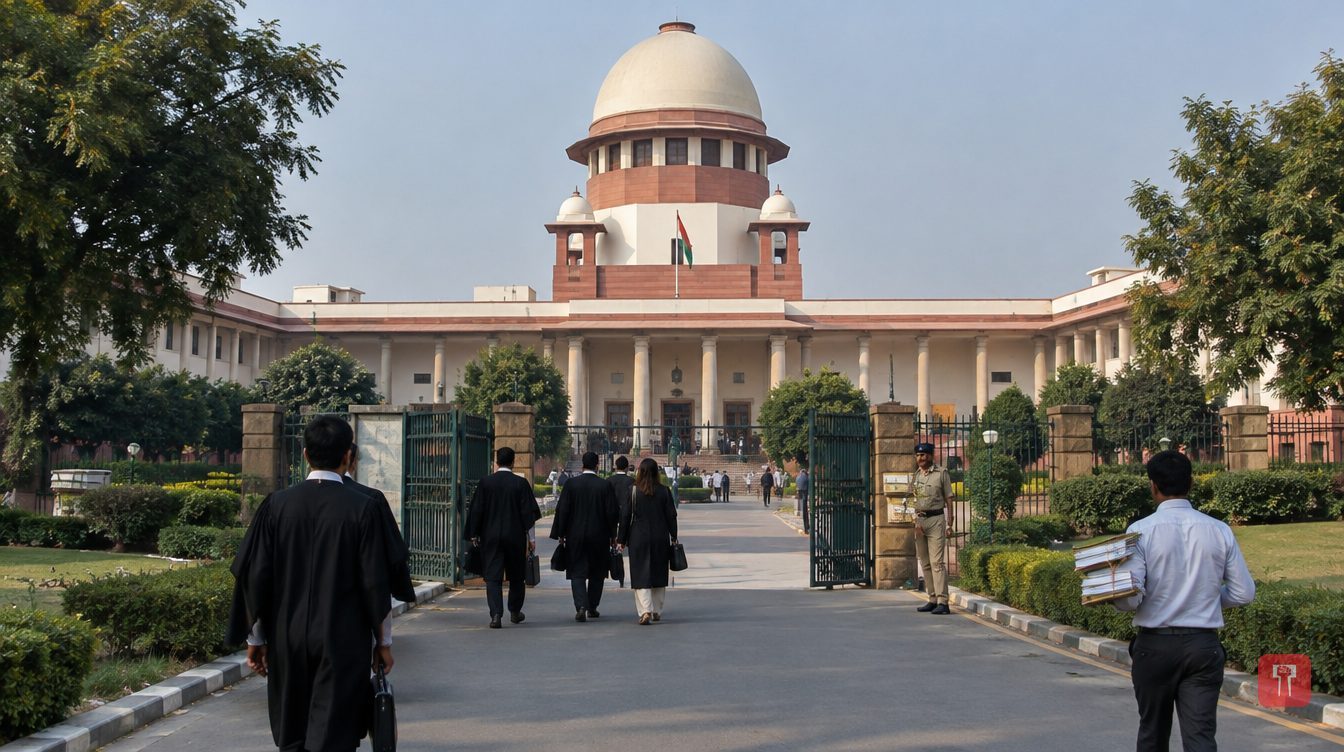
The Supreme Court ruled that a parent's salary cannot be the sole basis for placing an OBC candidate in the creamy layer, and dismissed the Centre's request for two years to implement the ruling.
The Supreme Court has delivered an important ruling on how the creamy layer is determined in OBC reservation. The court made it clear that a parent's salary cannot be made the only basis for deciding whether a candidate is placed in the creamy layer. The Centre had sought two years to implement the decision, but its plea was dismissed.
The dispute stems from an Office Memorandum issued on September 8, 1993, which fixed the creamy layer limit for the OBC category. Under the original rules, parents' salary and agricultural income were excluded from the count of property and income, so that backwardness could be measured fairly and practically.
On October 14, 2004, the Department of Personnel and Training (DoPT) issued a clarificatory letter. It directed that the salaries of employees of public sector undertakings (PSU), nationalised banks and the private sector should also be added to creamy layer income.
This created a major contradiction. For children of government employees in posts of the same category or equivalent status, salary was not counted, while the salaries of employees of private companies and public sector undertakings were added. As a result, children of employees from private firms and PSUs faced great difficulty in getting the benefit of OBC reservation, while children of government employees continued to get it easily.
During the hearing, the Supreme Court called this arrangement "discriminatory". The court observed that drawing such a distinction without properly determining the equivalence of posts is entirely wrong in the eyes of the law.
A bench of Justice P. S. Narasimha and Justice R. Mahadevan dismissed the Centre's plea and set out several points. According to the bench, it is wrong to decide whether a candidate falls in the creamy layer by looking only at a parent's salary. It is essential to examine the family's socio-economic status, the parent's post and other practical factors.
The Centre had sought an additional two years to implement the decision. The government had said it needed time to consult all stakeholders and frame a new uniform policy. The court did not accept this argument and said there is no solid reason for delay in implementing the judgment.
The court also clarified that the benefit of this judgment, delivered on March 11, 2026, will not apply retrospectively to old cases. Past appointments, selection processes and anyone's seniority will not be affected, and old cases will not be reopened.
The most immediate impact will be on upcoming or ongoing examinations. The result of the Civil Services Examination 2025 was declared on March 6, but the allocation of services has not yet been finalised. According to the court, this selection process is still pending, so the new creamy layer principles laid down in the March 11 judgment will apply to the service allocation of OBC candidates in this examination.
Presenting its case in the Supreme Court, the Centre had stressed that if the judgment were implemented immediately and retrospectively, it would badly affect the administrative system across the country. The government said service and cadre allocations made since 2012 could be put at risk. Seniority lists of lakhs of employees in large institutions such as the railways, banks, the postal department and paramilitary forces might have to be changed. Admissions to higher education institutions and ongoing recruitments could also be affected on a large scale. Government lawyers also said the administration should get full time to frame a new policy and determine the equivalence of posts.
On the other side, senior advocate P. Wilson, appearing for qualified OBC candidates, strongly opposed the Centre's stand. He alleged that the government was only buying time and trying to neutralise the Supreme Court's final judgment. Wilson also argued that the government should create supernumerary posts for qualified OBC non-creamy layer candidates who were denied appointment because of wrong creamy layer classification. In its original order, the court had also directed the administration to create additional posts to accommodate such qualified candidates.
The bench also said in its order that all appointments and implementation of reservation by roster point after the March 11 judgment will have to follow the court's new interpretation. The court's ruling also does not stop the government from framing its rules. As the court clarified, the Centre is fully free to frame its new reservation and creamy layer policies within the Constitution and in keeping with the principles laid down by the Supreme Court.
Reach readers on the ward they actually live in.
Advertise with Prime Time 24Reach readers on the ward they actually live in.
Advertise with Prime Time 24Reach readers on the ward they actually live in.
Advertise with Prime Time 24Reach readers on the ward they actually live in.
Advertise with Prime Time 24
Comments
No comments yet. Be the first.