

Buldhana agriculture department urges farmers to save home-grown soyabean seed for kharif
With deficient rain under El Nino hitting kharif yields, Buldhana's agriculture officials expect a soyabean seed shortage next year and want farmers to store their own seed.
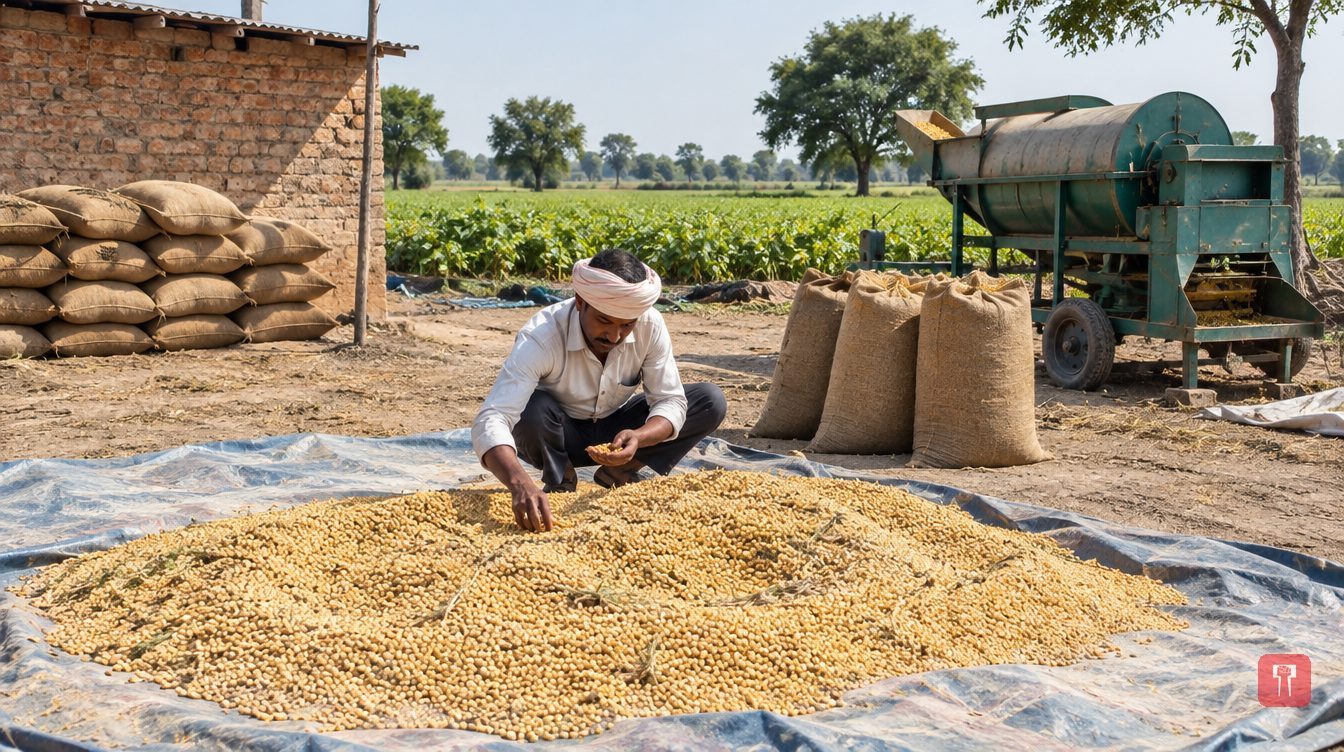 Images are not validated/verified
Rainfall has been lower this year because of El Nino, and the main kharif crops have taken a heavy hit in yield. Soyabean is the most important kharif crop in Buldhana district. With production down, a shortage of soyabean seed is likely in the coming year.
For this reason, Buldhana District Superintending Agriculture Officer Santosh Dabre has appealed to farmers to start preparing now to use good-quality home-grown seed in the next kharif season (2026-27).
With the future in mind, the agriculture department has started a campaign to save and store home-grown soyabean seed. Awareness is also being spread among farmers on a large scale. Agriculture officer Santosh Dabre and Deputy Director of Agriculture Anuradha Gavde have given farmers the following guidance on handling seed scientifically.
Farmers who have grown good-quality soyabean on land with assured irrigation should keep as much seed as they need for themselves. They should give the rest to other farmers nearby at a fair and reasonable price. This will make good seed available in the village itself and make farmers self-reliant in seed.
Soyabean seed is very delicate when it comes to germination. To preserve its germination capacity, the RPM of the thresher should be kept below 350 to 400. While threshing seed of different varieties, take care that they do not get mixed. Threshing should be done only after any residue of earlier crops in the thresher has been cleaned out completely.
Care should also be taken that the seed does not suffer jolts or knocks, such as being dropped hard, while it is being carried and handled. While storing seed, do not stack the sacks very high.
