

Bhutan glacial lake bursts, red alert in Assam and Bengal, over 10,000 people moved to safety
 Images are not validated/verified
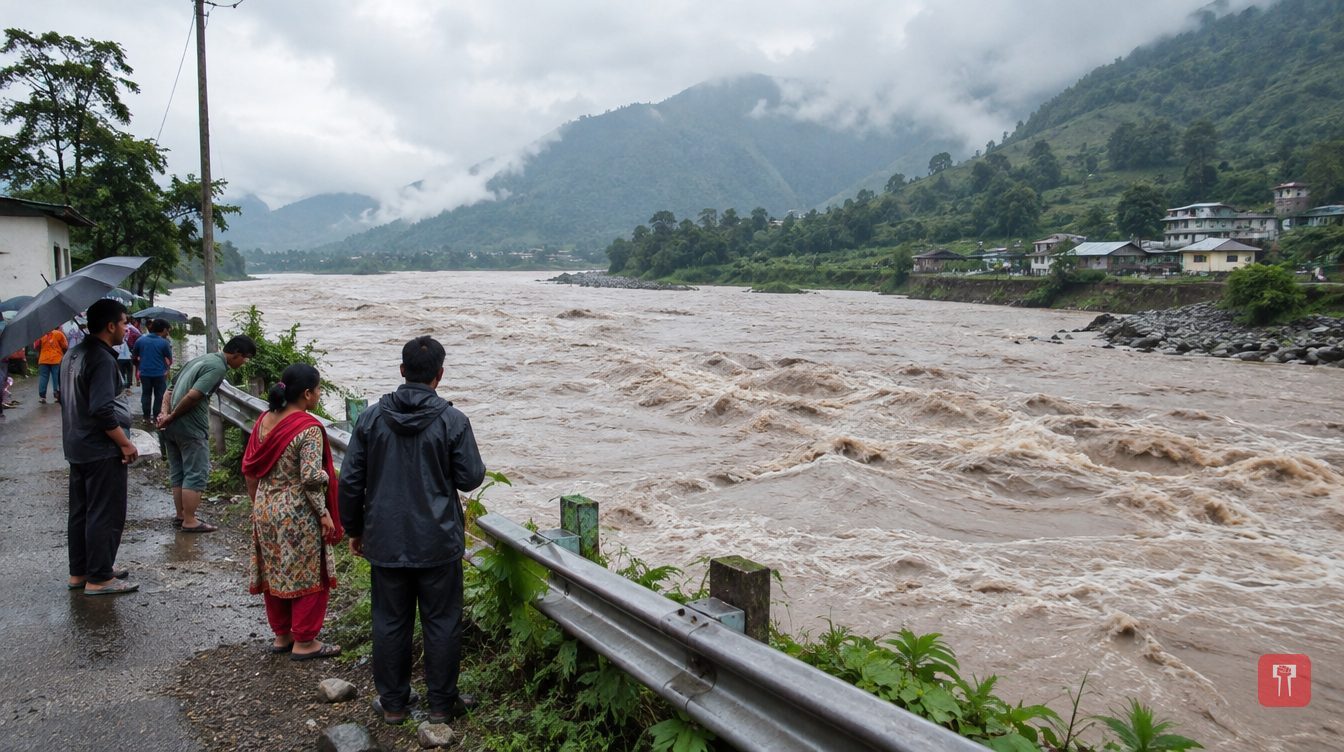
The natural glacier dam of Bhutan's Shintaphu lake has broken, releasing a huge volume of water whose effects have reached India's Northeast. Such an event is called a glacial lake outburst flood, or GLOF. The water now threatens Assam and West Bengal.
The Punatsangchu river in Bhutan has swollen with the sudden flood. The same river is known as the Sankosh once it enters India. Its water level has risen suddenly and very fast. Given the seriousness of the situation, the Central Water Commission (CWC) has issued an immediate flood warning and red alert for both Assam and West Bengal.
According to the Central Water Commission's official notice of October 29, the bursting of the Shintaphu lake is sending water and debris towards the lower areas at very high speed. Assam's Dhubri district and the Alipurduar area of West Bengal are feared to be the worst affected. The administration, disaster management machinery and local police in both states have been put on alert, and the situation is being monitored round the clock.
Assam Chief Minister Himanta Biswa Sarma has expressed concern and is closely monitoring the situation himself. In information posted on social media, he said the situation arising from the glacier burst in Bhutan and the water level of the Sankosh are being reviewed continuously. A special team of the Dhubri district administration has reached the spot. People living along the river and in low-lying areas are being moved to safe places at speed.
The Assam administration has appealed to local people in Dhubri not to go into the river and to stay alert. Relief arrangements, ambulances and food supplies have been kept ready in advance to minimise damage if floodwater enters villages.
In Alipurduar and nearby areas of West Bengal too, the administration is working on a war footing. Alipurduar Superintendent of Police Amit Kumar Shaw said there is no need to panic in the area, but vigilance is essential. The local administration is in constant touch with Bhutanese officials and every movement of the water is being watched.
As a precaution, more than 10,000 people have so far been moved from low-lying areas to safe locations. Of these, 4,000 to 5,000 have been housed in relief centres set up in schools and government buildings. The rest have been sent to other safe places. The relief centres have been provided with drinking water, dry food, rations and temporary toilets.
State Disaster Response Force (SDRF) and civil defence personnel are deployed at the site. A contingent of the National Disaster Response Force (NDRF) is also reaching there.
According to Superintendent of Police Shaw, the speed of the water has slowed a little for now, but the danger has not passed. A red alert is officially in force for the Sankosh river system. In the next few hours, large wooden logs, dead fish, trees and heavy concrete debris are very likely to be carried down with the flood. This could endanger bridges and structures along the riverbank.
GLOF stands for Glacial Lake Outburst Flood. In high mountains such as the Himalayas, melting ice forms natural lakes at the end of glaciers. Their banks are generally held by natural walls of soil, rock and ice. If too much water collects in the lake, or if an earthquake, landslide or rising temperature suddenly breaks the wall, the stored water rushes down into the valley below. This is what happened at Shintaphu lake, and it is why the flood has reached India.
Reach readers on the ward they actually live in.
Advertise with Prime Time 24Reach readers on the ward they actually live in.
Advertise with Prime Time 24Reach readers on the ward they actually live in.
Advertise with Prime Time 24
Comments
No comments yet. Be the first.