

31 Przewalski's horses released in Chernobyl exclusion zone have grown to a herd of hundreds
Released in 1998-99 in the radiation-hit zone, the rare wild horses survived and now live freely, camera-trap data show, with some even crossing into Belarus.
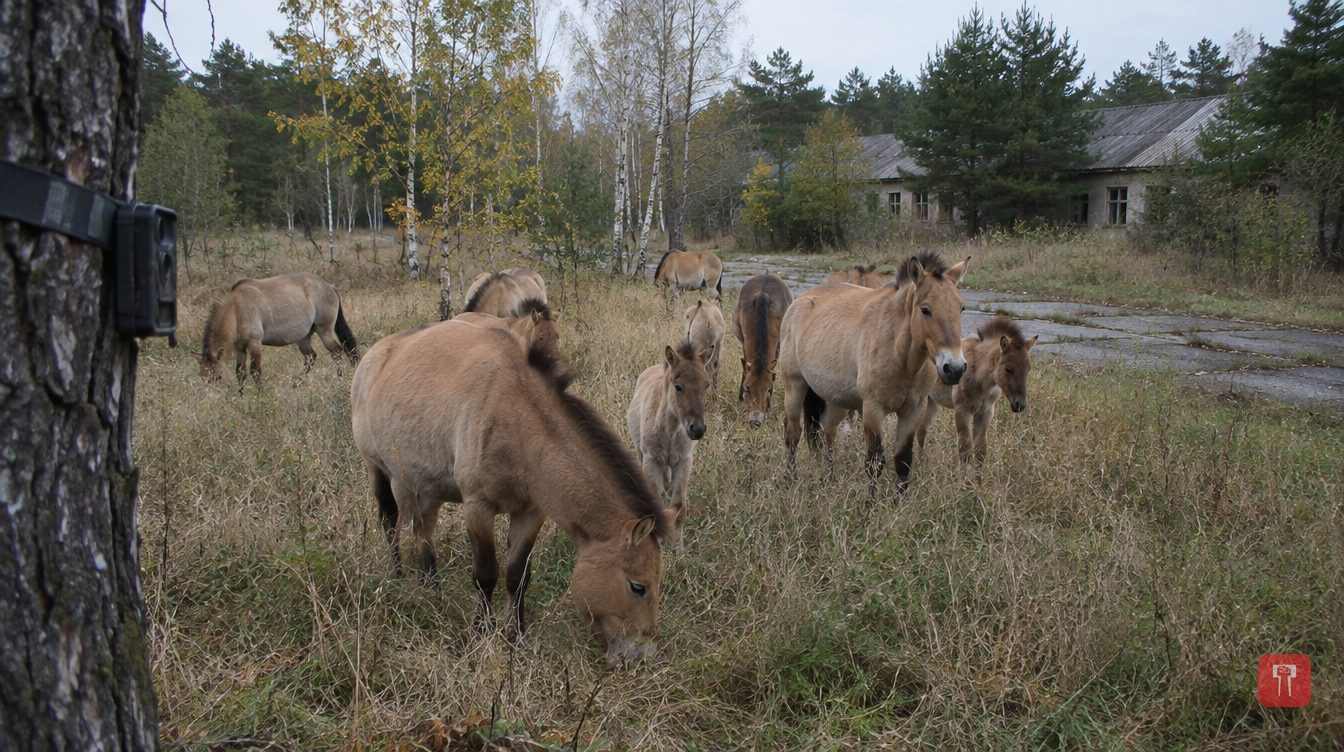 Images are not validated/verified
The massive explosion at the Chernobyl nuclear power plant in the then Soviet Union in April 1986 is regarded as the largest and most devastating nuclear accident in human history. The site lies in present-day Ukraine. Because of the deadly radiation released, thousands of people had to flee their homes in a single night. Hundreds of miles of land were declared an Exclusion Zone, closed completely to human habitation.
In a place where setting foot was like inviting death, nature has pulled off a feat that no scientist had imagined.
About 28 years ago, in 1998, 31 wild horses of the Przewalski's breed were released in this deserted, radiation-laden area of Chernobyl. The breed is extremely rare. Several researchers had expected radiation and a shortage of food to kill the horses. But results from camera traps three decades later have surprised the world and biologists. The horses not only survived but have established a full settlement in Chernobyl's dense, empty forest.
The Przewalski's horse is considered the last truly wild horse breed in the world. It is remarkably hardy in open grasslands and harsh weather. In the late twentieth century, the breed was on the verge of extinction. To maintain nature's balance and for biological restoration of the area, the Askania-Nova Biosphere Reserve decided, in a bold move, to release 31 horses into the restricted zone between 1998 and 1999.
Of the 31 horses, 10 males and 18 females were brought from Askania-Nova. The remaining three came from a local zoo. Before being released directly into the hazardous environment, they were kept in an enclosure for a few months so that they could get used to the conditions.
The early days were very hard for the horses. According to a scientific paper, eight horses died within a few months of arrival. The survivors then adapted to the environment and began to breed. By 2003-2004 their number had grown to 65. Seeing the numbers rise, 13 more horses were brought from a zoo in 2004, but they could not survive in the conditions and died without leaving a single foal.
By 2007 the herd had fallen again to between 30 and 40. Notably, the deaths were not caused by radiation or wolf attacks. Poachers, illegal hunting gangs, were behind them. Despite such hardships, the horses' tenacity did not let the line die out.
Researchers Sergey Gashchak and Sergey Paskevich published their study in the well-known scientific journal Theriologia Ukrainica. For it, they set up modern camera traps in 720 square kilometres of Chernobyl's 2,600 square kilometres.
Analysis of the camera-trap data showed that by 2018 at least 137 Przewalski's horses were living healthy and free in the Ukrainian part. They included 47 adult males, 66 females and 24 foals. The number is very likely higher in areas that were not surveyed.
The experiment points to an important scientific lesson. With human interference, pollution, urbanisation and road construction halted, nature has begun to restore itself. The radiation risk remains, yet the fearless environment created by the absence of people has helped the animals thrive.
The researchers also found that some horses have crossed the Pripyat river into Belarus and formed new breeding groups there. This remarkable resilience of nature shows that life can bloom again even on the scars of human devastation.

Comments
No comments yet. Be the first.