

Small firms have the technology but lack connected systems, says RHA OneAI co-founder
 Images are not validated/verified
Arun Meena says Indian SMEs use many digital tools that do not talk to each other, and that connecting data and processes matters more than buying another tool.
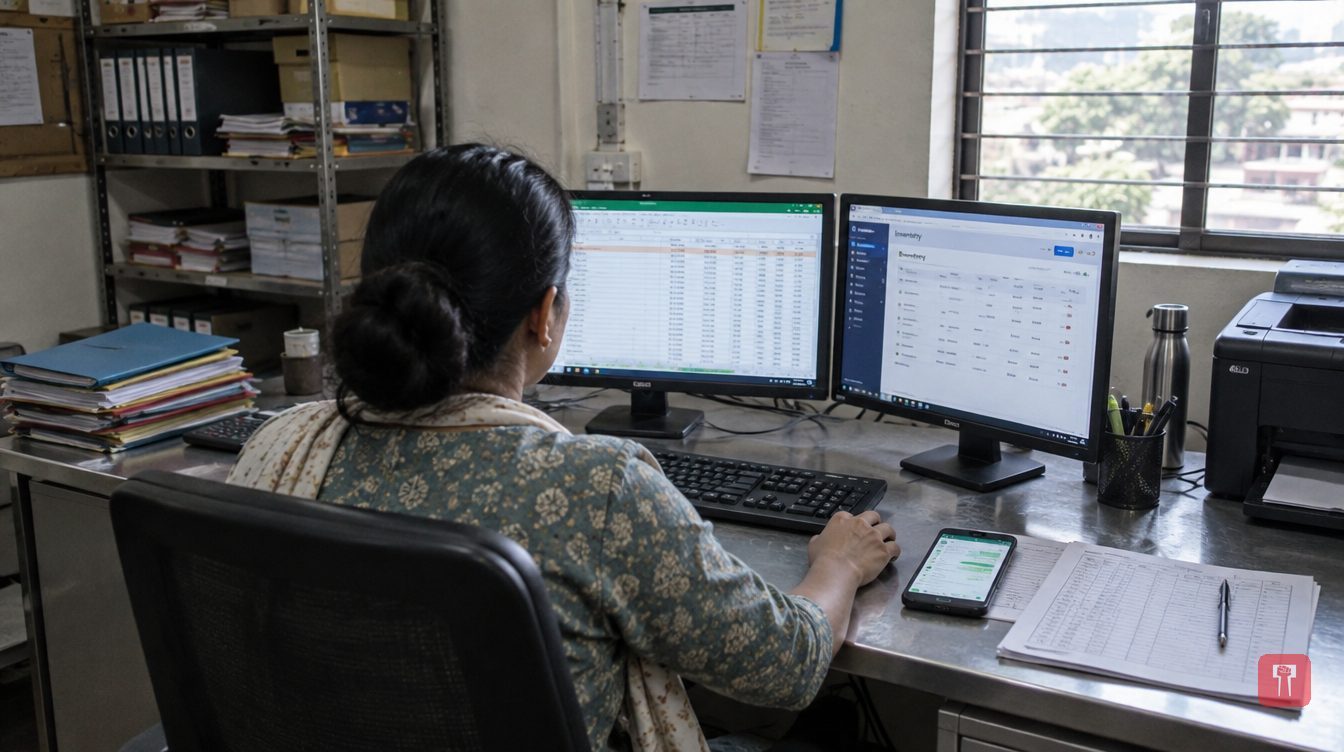
Pune, November 2, 2026: Indian small and medium businesses are often said to lag in adopting technology. Arun Meena, co-founder and CEO of RHA OneAI and RHA Technologies, says that is no longer true. According to him, a growing manufacturing company, healthcare service, logistics firm, retailer or professional services firm today will usually have accounting software, a CRM, inventory tools, WhatsApp Business, spreadsheets, cloud storage and, now, some kind of AI assistant. The problem is not a lack of technology, he says, but that these systems do not talk to each other.
Meena says sales data sits in one system and inventory in another. Customer conversations happen on WhatsApp. Accounts are reconciled at month-end. Operations teams keep their own trackers. Reports reaching management are weeks old. Everyone is busy, but no one has a complete, current picture of the business.
In his view, this is a quiet operational difficulty for many Indian SMEs. It does not show up on the balance sheet as a named cost. It appears as delayed decisions, repeated manual work, avoidable errors, working capital stuck in the wrong place, and growth that becomes harder to manage just when it should be easier.
Meena gave examples from different sectors. In an auto-ancillary unit, sales orders, production plans and purchasing are often in separate systems. If a customer changes a delivery schedule, sales may know first while planning and purchasing keep working to the old requirement. The result can be excess inventory, missed dispatches or unnecessary overtime. A restaurant group may use one platform for online orders, another for dine-in billing, WhatsApp for reservations and a spreadsheet for supplier purchases. Without integration, management is slow to learn which outlet's margin is falling, which menu items generate waste, or why delivery times vary.
Schools face the same challenge. Admissions, fees, attendance, transport and communication with parents often run on separate tools. If fee information arrives late or transport goes wrong, both cash flow and the parents' experience can suffer. A mall has to track footfall, parking, tenants' sales, promotions, maintenance and security. If these systems are disconnected, management may know how many people came but not whether they made purchases, or where costs are rising. In every case, Meena says, the obstacle is not the absence of software but the absence of connected, decision-ready operations.
On digital transformation, he says that for years it was sold as a simple equation: buy software, go digital. Many businesses bought tools, moved files to the cloud, built websites and apps, and digitised forms. Yet the day-to-day experience of running the company changed little. The reason, he says, is that digitising a process is not the same as improving it. Technology should not merely record what a business is doing. It should explain what is happening, what needs attention, and help people work faster.
On data, Meena says Indian businesses generate more data than before, but data alone has limited value. A dashboard full of numbers is not understanding, and a report that arrives after a decision is made is not information. Data is useful only when it is trustworthy, timely and tied to a decision. That requires clean data pipelines, shared definitions, clear ownership and workflows that link information to action. Many organisations start analytics by buying a dashboard and then find the underlying data is mismatched, duplicated or incomplete. The dashboard then becomes another source of confusion rather than a clear picture.
He advises starting differently. First identify the decisions that matter most: pricing, purchasing, capacity, credit, customer retention, working capital or service delivery. Then work backwards to decide what data is needed, where it comes from and who is responsible for its quality.
On AI, Meena says it can read documents, summarise conversations, catch errors, draft replies, forecast demand and automate repetitive tasks. But AI amplifies the state of the business it is applied to. If customer data is mismatched, the insights AI draws from it will be too. If approval processes are unclear, automation will only speed up the confusion. If financial and operational data do not reconcile, AI forecasts will answer confidently on a weak foundation. AI pays off when it is applied to a defined process, rests on trustworthy data and operates under clear human accountability. The practical approach, he says, is to begin with high-friction, repetitive work such as invoice processing, routing customer queries to the right place, extracting information from documents, inventory alerts or management reporting.
According to Meena, companies such as RHA Technologies and RHA OneAI work in this area. They help organisations connect data, applications and information so that AI is useful in real workflows and does not remain an isolated experiment. He says the question is not which AI tool to buy, but which decision or process would improve if AI were brought in responsibly.
On the founder's role, he says that in many Indian SMEs the founder is the central nervous system of the business, knowing every major customer, every key supplier and every important number. In the early years this is a strength, but as the organisation grows it can become a limit. A founder cannot personally review every exception, approve every purchase or resolve every operational dispute. At some point the business needs systems that hold institutional knowledge, enforce consistency and surface exceptions automatically. This does not mean removing human judgment, he says, but freeing it for the decisions where it truly matters.
Meena says the most effective leaders do not ask for more reports but ask better questions: What has changed since last week? Which customers are at risk? Where are we losing time? Which decisions can be standardised? Which exceptions need my attention? Technology should be built to answer these quickly. Leadership meetings then shift from combing through history to deciding the next move.
On what to do next, he says businesses do not need to change everything at once. The practical path is to pick one operational pain point that affects revenue, cash flow or customer experience. Map the current process honestly, looking at where data is created, where it is duplicated and where decisions get stuck. Then connect the systems that should be connected, set data standards, and bring in automation where the process is stable. The goal should be measurable: reducing turnaround time, improving forecast accuracy, closing the books faster, cutting stock-outs or saving management time. Technology partners can design and implement systems, but the definitions of data, the processes and the decision rights must remain in the business's own hands, he says, or even the best platform will slowly slide back to manual workarounds.
According to Meena, India's SME sector does not lack ambition; it lacks operational leverage. Over the next decade, sustainable growth will come to businesses that can see their operations clearly, react quickly to exceptions and decide on reliable information, not necessarily those with the most advanced technology. He says the next competitive advantage will come not from buying one more tool but from building an operating system for the business: connected data, disciplined processes, automation where it helps and AI where judgment is better. In his words, technology should not be a layer placed on top of the business; done well, it becomes part of how the business thinks. That calls for a technology partner who understands the founder's priorities and brings a business view, rather than an application-first one, to every decision.
Reach readers on the ward they actually live in.
Advertise with Prime Time 24Reach readers on the ward they actually live in.
Advertise with Prime Time 24Reach readers on the ward they actually live in.
Advertise with Prime Time 24
Comments
No comments yet. Be the first.