

Raj Thackeray questions e-challan burden on police, asks where the traffic plan is
MNS chief Raj Thackeray said he is not against e-challans but wants an inquiry into how fines are imposed, and warned of worsening traffic jams across Maharashtra.
 Images are not validated/verified
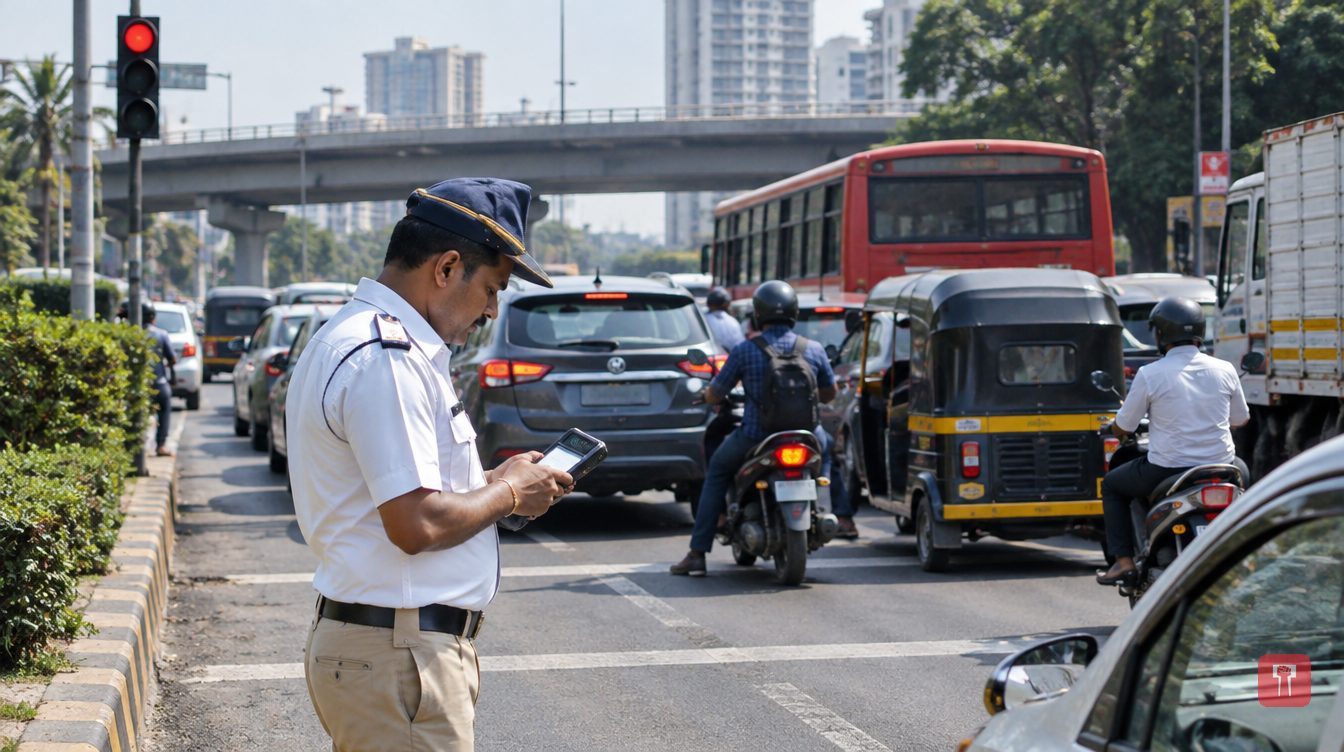
Maharashtra Navnirman Sena (MNS) chief Raj Thackeray on Monday raised questions about the way electronic traffic challans are issued. He said how strictness is being enforced should be examined, and that the larger problems of managing traffic also need attention.
Speaking at a meeting of transport workers in Vashi, Navi Mumbai, on October 26, Thackeray said he was not against the e-challan system, but the manner in which fines are imposed needs scrutiny. He also warned that if shortcomings in city planning and transport management are not fixed, traffic jams across the state could grow considerably in the coming years.
In a post on X after the meeting, Thackeray linked the growing traffic problem to the rising number of vehicles on the roads. He said there is no proper planning and that the pressure of handling the situation has fallen on the police.
According to Thackeray, he has repeatedly raised the issue of traffic jams in his speeches. He feels it will become harder to manage the situation in future. He said, "Looking at the traffic of this country, I can see the present and the future of this country." He stressed that transport infrastructure and traffic management play a major role in how cities function.
He also criticised the way flyovers and bridges are built without proper thought about how traffic will move in the surrounding areas. In his view, infrastructure projects alone will not end traffic jams unless they are accompanied by an effective traffic management plan.
On e-challans, Thackeray said his objection was not to the system but to how it is implemented. He demanded an inquiry into how fines are imposed, and said it should be looked at along with the other difficulties faced by road users.
He said he has given his drivers strict instructions never to break a signal, however late they may be. "Despite having police protection, I have strictly instructed all my drivers not to jump signals, no matter how much of a hurry there is," he said.
Thackeray argued that while larger questions such as vehicle registrations, population growth and weak planning remain unresolved, the responsibility of managing traffic should not be thrown on the police in an unreasonable way. He said, "Nobody knows how many new vehicles are being registered every day, how many vehicles are coming onto the road, or how many people are coming to live where. And in the end, the burden of all this falls on our police."
Thackeray also raised the issue of Mumbai's dependence on its local trains. He asked how the city's roads would cope if local services came to a halt and people took to the roads in their own vehicles. His words were, "If Mumbai's local trains stop tomorrow and everyone comes out on the road in their own vehicles, what will happen?"
He also questioned the emphasis on economic growth figures while the challenges of basic urban arrangements remain unchanged. He said, "There is no planning for anything, and we just keep saying that our GDP has reached 7.8 per cent. What is the use of that?"
Finally, Thackeray said that bringing discipline to traffic and fixing administrative shortcomings does not need complicated measures, only the intent to carry out the necessary changes. He said, "To be honest, I am watching to see when this Maharashtra will hand me power. Bringing discipline to all these things is no rocket science, it only needs willpower."

Comments
No comments yet. Be the first.