

New micro snail species found in Tillari forest in Kolhapur district
 Images are not validated/verified
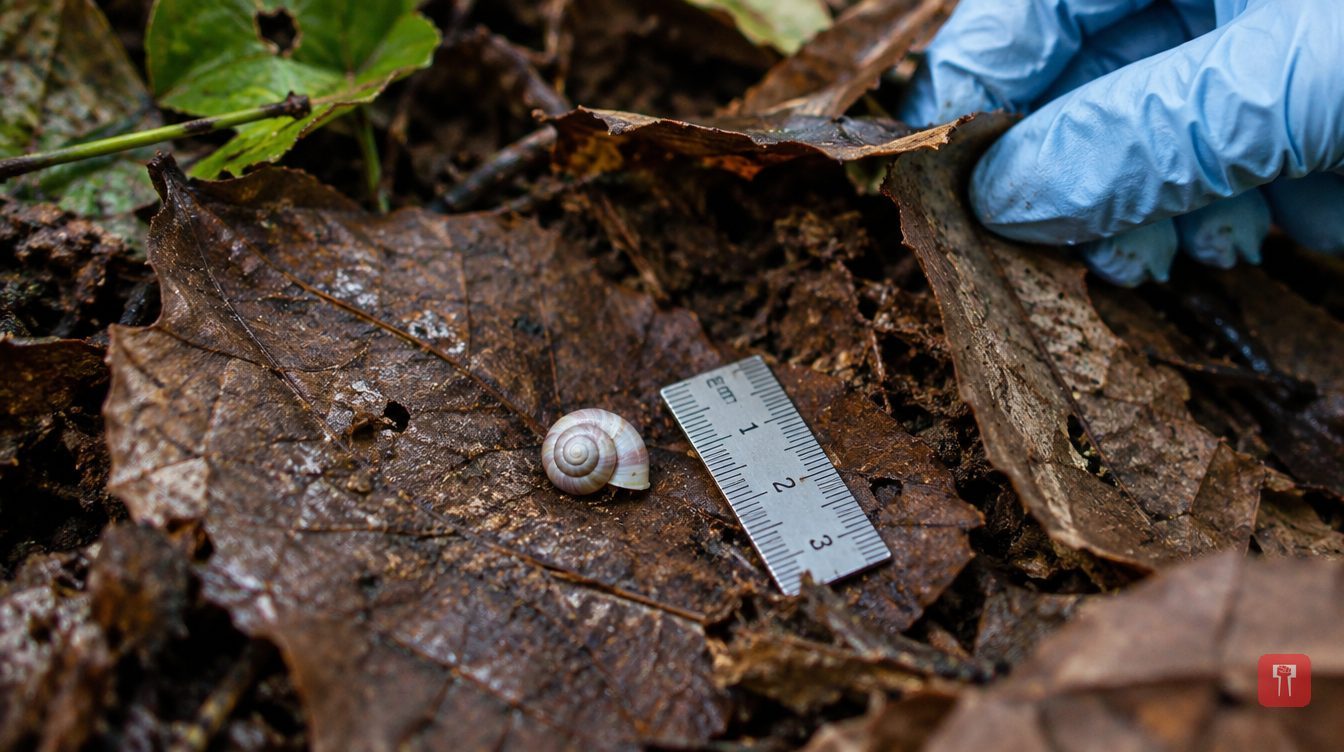
Researchers have described Dicharax tilariensis, a land snail a few millimetres long, from semi-evergreen forest near Swapnavel Point.
Researchers have found a new micro species of snail in the semi-evergreen forests of Tillari in Kolhapur district. It has been named Dicharax tilariensis. It is a land snail and measures only a few millimetres.
For now, the species is known only from the place where it was found, near Swapnavel Point. It has been described by Amrut Bhosale, Tejas Thackeray and Akshay Khandekar of the Thackeray Wildlife Foundation. Their paper was published in the Journal of Conchology on October 24.
It is the second species of its genus to be described from the northern Western Ghats and found only there.
The shell is whitish, with a faint tinge of pink or brown. Its width is 4.21 to 4.87 mm and its height 3.01 to 3.52 mm. Amrut Bhosale, an author of the paper, said, "Our team identified this new species as distinct from four similar species found in the Western Ghats and South India on the basis of differences in shell structure. These include a raised apex, a distinctive pattern of ribs and a sharp keel on the shell."
Researcher Akshay Khandekar said, "These findings show how important it is to keep a record of small and often overlooked species in order to understand the biodiversity of the Western Ghats. The Dicharax species was found in places with a dense forest canopy and plenty of dry leaf litter, while not a single specimen was found during surveys in areas with fewer trees."
The study has not assigned a conservation status to the new snail. Since it is known only from the site of its discovery, further systematic field surveys will be needed to establish how wide its range is.
Wildlife researcher Tejas Thackeray said, "Land snails are most active in the rainy season and are sensitive to changes in the weather. This is why they are considered important indicators of environmental change and the health of a forest. In a forest ecosystem they feed on decaying leaves, take part in the cycling of nutrients and are also a source of food and calcium for other animals."
Reach readers on the ward they actually live in.
Advertise with Prime Time 24Reach readers on the ward they actually live in.
Advertise with Prime Time 24Reach readers on the ward they actually live in.
Advertise with Prime Time 24
Comments
No comments yet. Be the first.