

Maharashtra sets aside 5% of district plan funds for fodder in drought, bans export outside state
 Images are not validated/verified
A government order directs collectors to set up fodder banks, cap fodder prices and introduce biometric tracking in fodder camps across drought-hit areas.
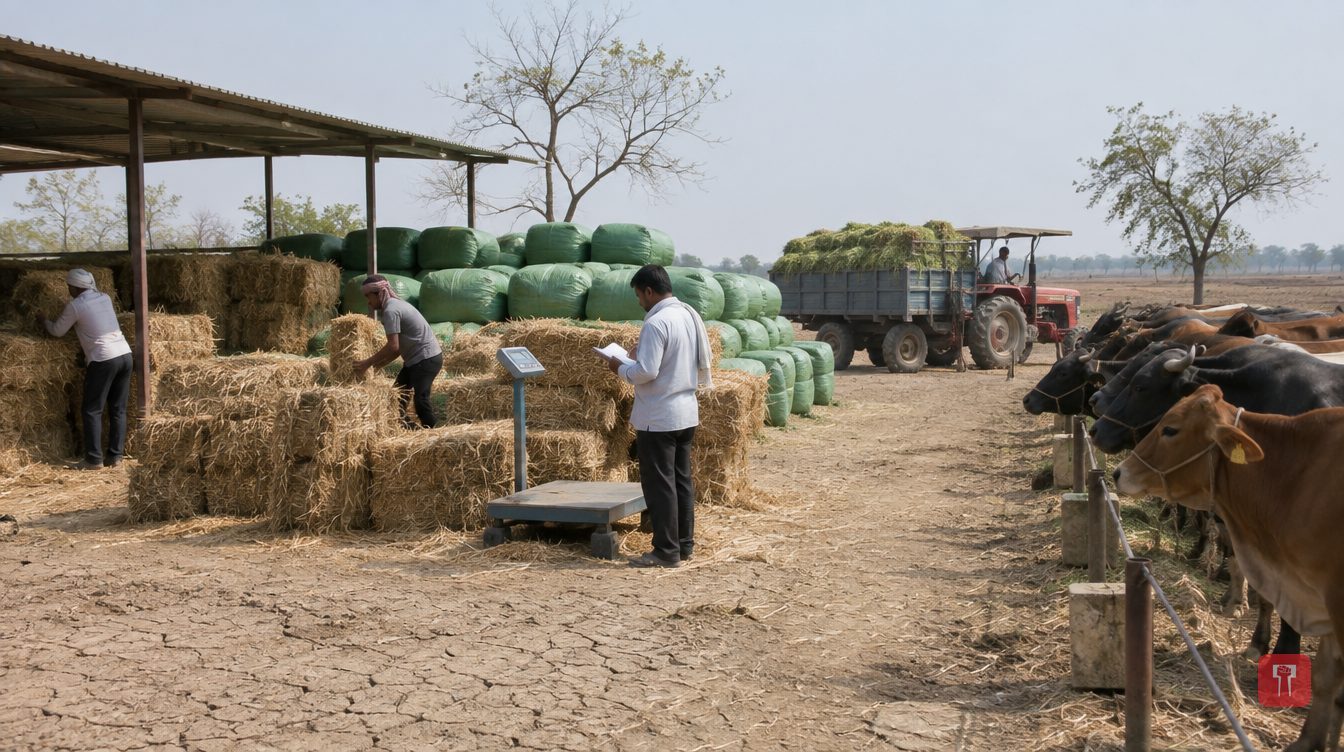
The Maharashtra government has set aside at least five per cent of the District Annual Plan fund for fodder-related schemes to ease the shortage of fodder in drought conditions. Restrictions have also been placed on the use and movement of fodder.
The Animal Husbandry, Dairy Development and Fisheries Department issued a Government Resolution (GR) on Friday. It directs district collectors to create fodder banks, fix an upper limit on the reference price for dry fodder and introduce biometric tracking in fodder camps.
The steps follow the recommendations of a study group headed by the Additional Chief Secretary (Revenue). The group was formed to suggest measures to deal with the fodder shortage caused by low rainfall. The Cabinet sub-committee on drought management approved its report at a recent meeting.
The state government has declared drought in 304 tehsils where Trigger-1 and Trigger-2 apply in the 2026 kharif season. Given the fear of an El Nino effect, a state-level task force headed by the Chief Secretary has also been formed to coordinate water conservation work.
According to the GR, district collectors will provide at least five per cent of the District Annual Plan fund, with the approval of the guardian ministers. The money will be spent on schemes to increase fodder production, protect and improve existing fodder, and develop alternative sources.
The Agriculture Department has been asked to make adequate fodder seed available for the rabi season. Farmers and livestock keepers will be encouraged to plant fodder crops that grow with little water and can be harvested more than once.
It is proposed to use land belonging to agricultural universities, seed multiplication centres, agriculture corporations and the Animal Husbandry Department for fodder cultivation. According to the order, fodder and grass available on forest land will also be harvested and stored, and distributed to livestock keepers when needed. Collectors will help grow fodder in fields left vacant after harvest, and will coordinate with farmer producer organisations, farmer producer companies and self-help groups to set up fodder banks.
The GR sets a reference price ceiling of Rs 12 per kg for dry fodder, excluding transport cost, and Rs 8 per kg for silage. Purchases will be made within these limits, and dry fodder will be preferred because it keeps for longer.
During the drought, fodder cannot be used for anything other than feeding animals, such as packaging, biofuel and power generation. Collectors have also been asked to impose a legal ban on taking fodder from drought-affected border areas of Maharashtra to neighbouring states. If local supply falls short, the divisional commissioner, animal husbandry officers and district collectors will together procure fodder from nearby districts.
To improve transparency, the government will create a "Chara Chawani Monitoring and Management System" at the state level. It will record fodder demand and availability, the functioning of fodder camps, livestock records, daily attendance, veterinary services and expenditure. CCTV surveillance and attendance by biometrics or QR code will be mandatory in fodder camps, and animals will be verified against records in the Bharat Pashudhan System of the National Digital Livestock Mission.
District-level drought management committees will be reconstituted. Guardian ministers will head the review committees, and district collectors will lead the executive committees that oversee implementation. Opening a fodder camp in a revenue circle will depend on the number of animals there and the availability of fodder.
The order calls for greater use of alternative fodder sources such as hydroponics and azolla. It also proposes training livestock keepers in fodder conservation and processing. The government has also encouraged the use of companies' CSR funds for fodder production, equipment, and water supply and sanitation in fodder camps.
Reach readers on the ward they actually live in.
Advertise with Prime Time 24Reach readers on the ward they actually live in.
Advertise with Prime Time 24Reach readers on the ward they actually live in.
Advertise with Prime Time 24
Comments
No comments yet. Be the first.