

IIT Bombay surveys students on why they cheat in exams, as panel reviews rules after student's death
 Images are not validated/verified
The institute has begun an 18-question survey on academic pressure, placements and punishment, as its review of exam and discipline rules continues.
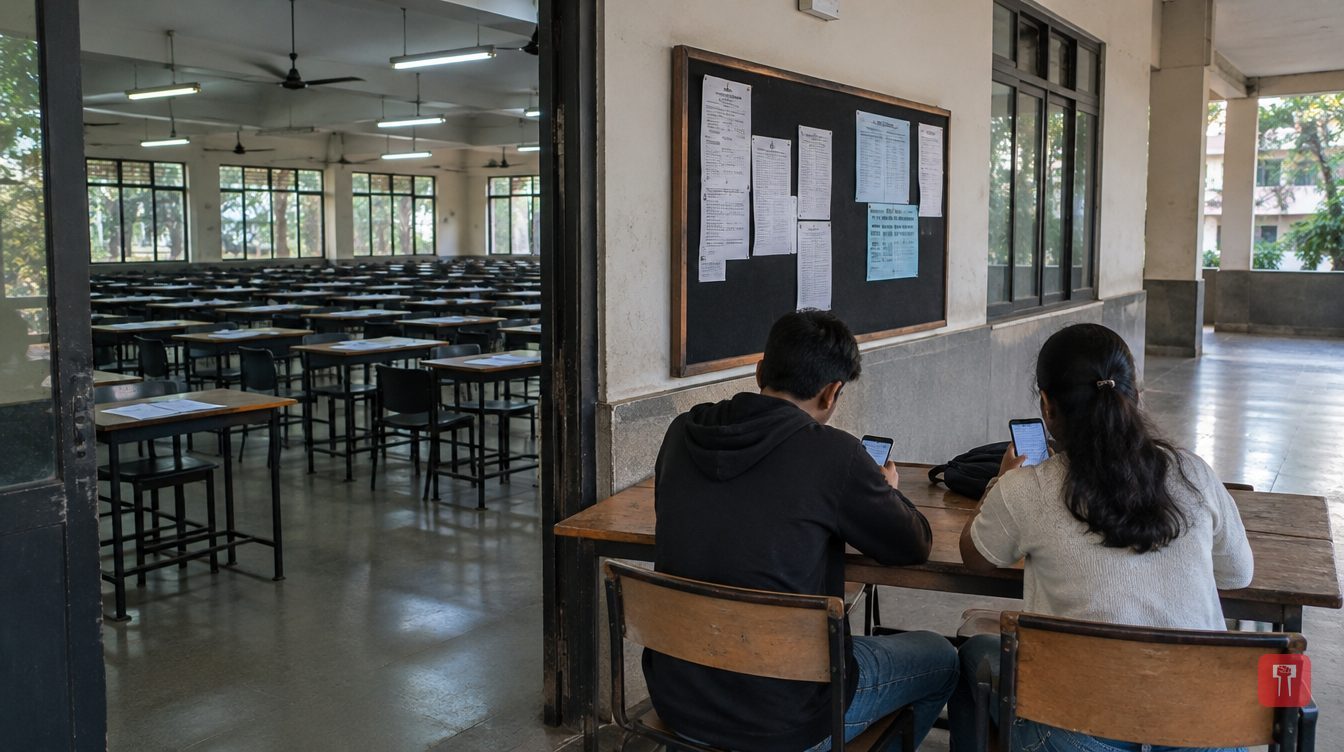
IIT Bombay has started a special survey to understand why students cheat in examinations. It will look at how academic pressure, the race for good marks, worries about internships and campus placements, and the punishment for cheating affect students' decisions.
The survey is believed to be part of the review of examination and discipline rules that the institute began after the suicide of student Sahil Wakode.
Titled 'Academic Integrity: Students' Perspective', the survey has been sent to students as a questionnaire by the Undergraduate Academic Council (UGAC). It has about 18 questions, a mix of multiple-choice and open-ended ones. It states clearly that students' identities will be kept confidential and their email IDs will not be collected.
The questions try to find out when students think of cheating, what pressures lie behind it and whether severe punishment helps stop it. For instance, they ask whether students would think of cheating if they feared failing, whether pressure to score well leads to justifying cheating, and how much academic performance affects internships and placements. They also ask whether the fear of being caught deters students, whether friends influence the decision to cheat, and whether students who do not cheat are held back by confidence in their preparation or by fear of action. One question asks whether strict invigilation and security in exams work better than severe punishment, and whether very harsh punishment makes students afraid to admit a mistake or seek help. The last question asks whether tight security makes even honest students feel under suspicion.
The strict examination rules approved in July 2026 have already caused controversy at the institute. Under those rules, a student found with a mobile phone in the examination hall was to be given an FR (Fail and Repeat) grade and suspended for one semester. After the rules were criticised, a special meeting of the Senate put the provisions on severe punishment on hold for now.
The committee formed to review the rules has submitted an interim report. It recommends a uniform procedure for recording exam irregularities, and the launch of a Quick Response Team (QRT) helpline to hear students and help them.
Sahil Wakode, a second-year BTech student at IIT Bombay, died by suicide on September 18. He is alleged to have taken his life a few hours after being caught using a mobile phone during a mid-semester examination. The institute had said Sahil tried to get answers by uploading the question paper to ChatGPT. It also clarified that no formal disciplinary action had been taken against him and that he had been given counselling.
Sahil's parents, on the other hand, have alleged caste discrimination and mental harassment at the institute. A case of abetment of suicide has been registered against Professor Suryanarayana Doola in the matter.
After the incident, students held a protest on campus. IIT Bombay director Prof. Shireesh Kedare then formed an eight-member committee, with four professors and four students, to review the examination rules and the disciplinary process.
In its interim report, the committee has recommended that the process of acting on exam irregularities be made more transparent. Under it, invigilators should stop the irregularity immediately, seize the material concerned and record the whole incident. The student should also be given a chance to put forward their side. The statements of the invigilator and the student, and the evidence at hand, should be recorded in a uniform manner. After the student leaves the examination hall, the invigilator should contact the QRT helpline so that any necessary help can be provided.
These recommendations are not yet final and are being discussed in the Senate. Through the new survey, IIT Bombay wants to frame fairer and more effective rules to curb cheating, based on an understanding of students' thinking.
Reach readers on the ward they actually live in.
Advertise with Prime Time 24Reach readers on the ward they actually live in.
Advertise with Prime Time 24Reach readers on the ward they actually live in.
Advertise with Prime Time 24Reach readers on the ward they actually live in.
Advertise with Prime Time 24
Comments
No comments yet. Be the first.