

Govandi residents demand ready-mix concrete plants in M East ward be sealed immediately
Residents say the plants across Deonar, Shivaji Nagar, Baiganwadi and Mankhurd keep the air hazardous, and have sought an independent emissions audit.
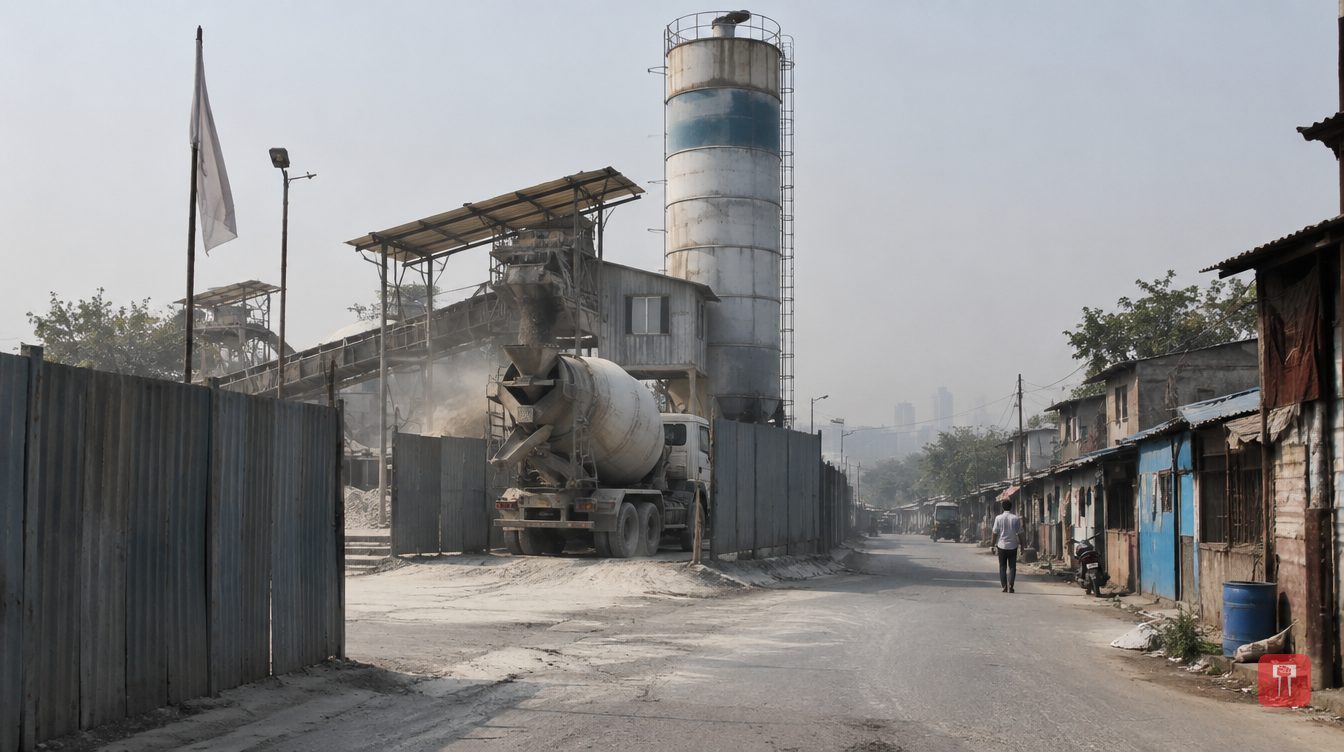 Images are not validated/verified
Residents of Govandi are continuing their fight against the ready-mix concrete (RMC) plants operating in M East ward. The plants are spread across Deonar, Shivaji Nagar, Baiganwadi and Mankhurd. The demand comes at a time when Mumbai has risen to fifth place among the world's most polluted cities in the IQAir ranking.
Locals allege that the plants keep the area's air hazardous even today. In October, they sent the plants a "show-cause-cum-stop-work notice".
The notice says M East ward is one of the most fragile areas of the city, with around 70 per cent of its population living in slums. It also points out that the Deonar dumping ground, an animal carcass incinerator and a waste incinerator are located near the area.
Residents also recalled that Mumbai has overtaken Delhi's poor AQI record in terms of pollution, and that the worst AQI figures in the city have been recorded in Deonar.
The residents have demanded that all RMC plants in and around Govandi be sealed immediately. They also want an independent audit of emissions. They have further sought action against officials who allegedly allowed the pollution to go unchecked.
According to the residents, their letter has been sent to the Chief Minister's Office. The matter is now being forwarded to the Environment and Climate Change Department. Attempts to contact M East ward officials drew no response.
Advocate Faiyaz Alam Shaikh, founder of the Govandi Citizens Welfare Forum, said: "Last December, the Maharashtra Pollution Control Board (MPCB) ordered the closure of 19 polluting RMC plants to reduce air pollution, four of which were in Govandi. The city is already enduring the October heat and air quality remains poor. That is why we have demanded the complete closure of these plants, which are suffocating the people here. These plants can cause long-term respiratory illnesses."

Comments
No comments yet. Be the first.