

BEST to add 1,500 electric midi buses as India lags on 2030 e-bus target
 Images are not validated/verified
An ITDP India analysis says annual electric bus registrations must rise about 12 times to meet the 2030 goal, as BEST prepares to induct 1,500 AC electric midi buses.
Mumbai's BEST undertaking is preparing to add 1,500 electric midi buses to its fleet. Meanwhile, a national analysis has listed the difficulties on the road to electric buses in the country. According to the analysis, India must raise annual electric bus registrations about 12 times to reach its 2030 target.
According to the latest figures from the Institute for Transportation and Development Policy (ITDP) India, about 5,400 electric buses were registered across the country in financial year 2025-26. This is only 4 per cent of all bus registrations.
The target is for electric buses to make up 40 per cent of annual bus sales by 2030. For that, annual registrations would have to reach about 62,352 by financial year 2030-31. At the current pace, registrations are projected to reach only 17,814. There is thus a wide gap between policy intent and ground reality.
The analysis has identified several hurdles to the adoption of electric buses: the high upfront cost of the vehicle, expensive credit, a limited market for old buses and inadequate support from regulations.
BEST has recently awarded contracts for 1,500 nine-metre AC electric midi buses under the Centre's PM E-DRIVE scheme. Of these, Mesar Mumbai Electric Vehicle Operations Private Limited will operate 1,050 buses and Mesar Skyline E-Bus Private Limited 450.
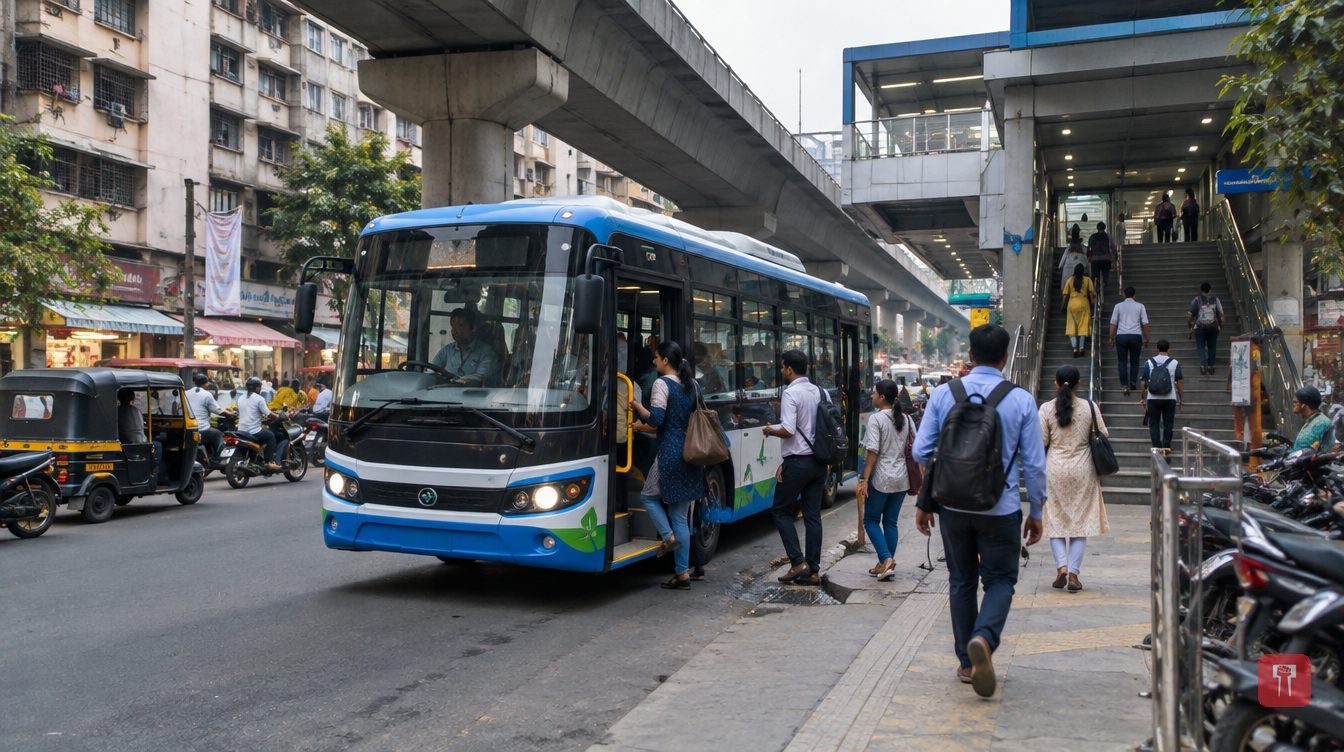
The buses will run mainly to metro stations and on last-mile routes, including narrow and congested roads. Each bus will run at least 200 km on a single charge. It will have seating for 21 passengers, a provision for wheelchairs, CCTV cameras and GPS tracking. The first 225 buses are expected by March 2027, and the rest of the fleet is planned to be inducted by March 2028.
Rane said the 1,500 new AC electric midi buses are an important opportunity to reshape Mumbai's bus network. In their view, instead of being merged into regular routes, the buses should form a separate feeder system that brings passengers to the metro. The city has six operational or partly operational metro lines spread over 101 km, carrying more than 10 lakh passengers a day. Rane said the full potential of this will open up only when neighbourhoods 3 to 5 km from the stations are linked by reliable feeder services.
Rane said BEST and metro officials should jointly assess access to stations so that separate feeder routes can be created for underserved residential and commercial areas. "These services should have their own identity, with route branding such as 'Metro Feeder 1' and 'Metro Feeder 2', so that passengers can identify them easily," Rane said.
Rane also said bus timings should match metro arrivals and departures, so that passengers get an immediate connection and do not have to wait 20 to 30 minutes. In frequency, reliability and comfort, these services should be on a par with the metro.
Reach readers on the ward they actually live in.
Advertise with Prime Time 24Reach readers on the ward they actually live in.
Advertise with Prime Time 24Reach readers on the ward they actually live in.
Advertise with Prime Time 24Choose primetime24.com as a preferred source on Google Google shows more stories from your preferred sources in Top Stories.
Reach readers on the ward they actually live in.
Advertise with Prime Time 24
Comments
No comments yet. Be the first.