

Mumbai logs 499 Diwali fires, 333 from crackers; Dongri response draws Congress fire in BMC House
 Images are not validated/verified
Fire brigade data show 333 of the 499 incidents were caused by firecrackers, and the Dongri fire has set off a political row over the brigade's response time.
Mumbai recorded 499 fire incidents over the five days of Diwali, from November 6 to 10, and 333 of them were traced to firecrackers. The Mumbai Fire Brigade's figures show that cracker-related fires have risen against the past two years. In Diwali 2024 the city saw 262 fires, 80 of them from crackers. In 2025 the count was 289, with 113 from crackers. Ten people were injured this year. The numbers have set off a political fight over how prepared the brigade was and how fast it responded.
Day-wise figures show how the load built up. Lakshmi Puja day, November 8, brought 142 incidents, 137 of them from crackers. November 9 was the busiest day overall, with 166 fires, 144 of them from crackers. On November 10, Diwali Padwa, there were 102 fires, 24 from crackers. On Lakshmi Puja night, 142 emergency calls were logged between 7 pm and 6 am, and fire stations got a fresh call about every 10 minutes through the day. Personnel and vehicles across the city were kept constantly busy.
The reports differ on the human toll. The latest account puts the injured at ten. Other reports speak of two deaths and eight injured. One of the dead was a 16-year-old, Shahnawaz Niyaz Khan, who died in Malad-Malwani when a cracker blast brought down part of the slab of a shop. Another report describes the blast as a fire at a cracker shop. In Zone 4 in the western suburbs, covering Goregaon to Dahisar, 96 fires were logged in 48 hours. One person died and two were injured in that zone.
In the BMC House, leader of the House Ganesh Khankar praised the brigade. He said personnel worked well under heavy pressure and prevented any major mishap during the festival.
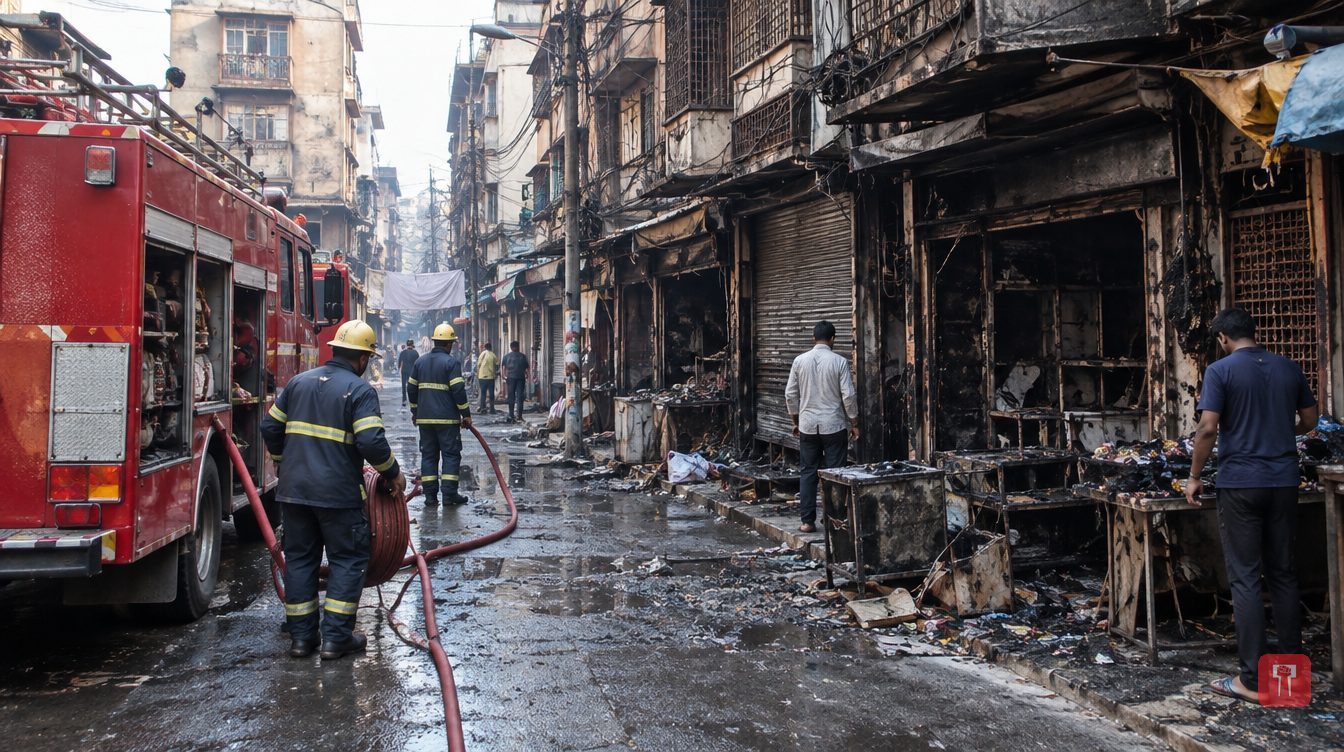
Congress questioned the response to the major fire of November 8 on Dr Maheshwari Road, near Dongri police station. Congress group leader Ashraf Azmi alleged that the brigade did not reach in time, so the fire spread and caused heavy damage. He said about 500 small businesses were gutted, hitting traders, workers and their families. He also accused the civic body of failing to spread enough awareness about cracker safety before Diwali, and of failing to bring the fire under effective control afterwards.
Congress MLA Amin Patel claimed the first fire engine arrived about 45 minutes after the fire was reported. On November 9 he wrote to Municipal Commissioner Pragyata Lavangare-Verma. He asked for an inquiry into alleged flaws in the emergency response system and for the immediate suspension of Chief Fire Officer Ravindra Ambulgekar, citing alleged negligence and delay.
The debate turned heated when Azmi cited a video by actor Dia Mirza. Councillors of the ruling party objected strongly and the House was disrupted. Presiding officer Prabhakar Shinde resumed proceedings once order was restored.
Ambulgekar rejected the charge of delay. He said the first engine left within four minutes of the call and more engines were sent at about the tenth minute, once the fire grew more intense. He added that the call load during Diwali was above normal, that every station had deployed its vehicles, and that many calls had to be kept on hold. Even so, he said, personnel tried to reach every recorded incident.
The ban on rockets and aerial crackers was meant to cut the risk. The BMC barred them from November 9 to November 25, following Thane. Teams were also deployed at night for enforcement. Yet rockets and large aerial crackers were still set off openly, notably in Juhu Koliwada. Rockets landing on terraces, balconies and windows of high-rises, and on flammable material, raised the fire risk. Civic officials admitted that night enforcement was proving hard. Residents are asking whether the order exists only on paper.
Deputy commissioners of police, assistant municipal commissioners and fire officers share the duty of enforcing the ban. But there were no clear instructions on who should act and how, and the lack of coordination showed. The civic body has no figures on how many places saw action against cracker use on roads. On the court's directions it had Bollywood artistes appeal to people not to burst crackers. Fires still rose sharply.
The brigade also faced a water shortage. Crews drew water from swimming pools, underground building tanks and wells, and lakhs of litres were still used amid drought-like conditions in the city. The force kept 1,150 firefighters and 68 officers on duty round the clock. Its equipment included 39 fire engines of 4,500 litres each, 23 jumbo tankers, 2 water tankers of 15,000 litres each, 6 high-rise firefighting vehicles, 6 aerial water tankers, 2 mini water tankers and 2 mini fire engines.
Reach readers on the ward they actually live in.
Advertise with Prime Time 24Reach readers on the ward they actually live in.
Advertise with Prime Time 24Reach readers on the ward they actually live in.
Advertise with Prime Time 24Choose primetime24.com as a preferred source on Google Google shows more stories from your preferred sources in Top Stories.
Reach readers on the ward they actually live in.
Advertise with Prime Time 24
Comments
No comments yet. Be the first.