

Bawankule orders dues to farmers whose wells were used in drought paid by November 20
 Images are not validated/verified
Maharashtra Revenue Minister Chandrashekhar Bawankule said farmers may refuse future well acquisition if unpaid, as a cabinet sub-committee announced drought relief measures.
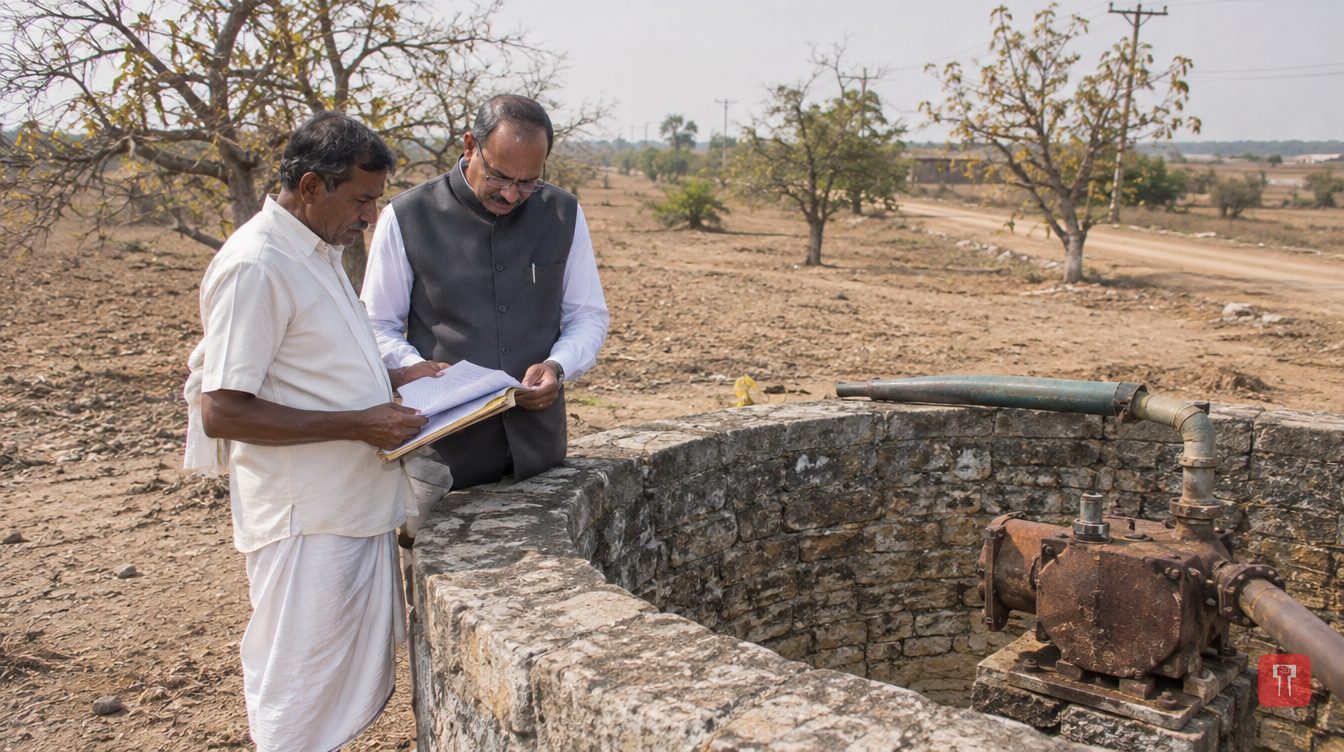
Maharashtra Revenue Minister Chandrashekhar Bawankule on Wednesday directed officials to pay by November 20 the dues of farmers whose private wells were used to ease water shortages over the past two years. He warned that if the money was not paid, farmers could refuse to let their wells be acquired in future.
Bawankule chairs the state cabinet sub-committee on drought mitigation. According to a government statement, the order is one of several decisions announced to give relief to affected farmers and villages in the present situation.
Bawankule also said a high-level committee headed by the Chief Secretary has been formed to examine a proposal to raise the wages of workers under the employment guarantee scheme VB-G RAM G. He said a government order on the proposal is expected within 10 days.
The sub-committee, at its meeting on Wednesday, reviewed the drought situation in the state. It was decided that pending Jal Jeevan Mission works will be completed quickly, orchards will be saved, and fodder will be moved from areas with surplus to districts facing a shortage.
According to the statement, about 75 per cent of the work under the Centre-assisted water scheme Jal Jeevan Mission has been completed. The remaining 25 per cent has been ordered to be taken up on priority.
The state government has declared drought in 304 of 358 talukas, about 85 per cent of the state. An initial relief of Rs 5,000 for every farmer, as immediate assistance before Diwali, has also been announced.
The statement said at least Rs 500 crore will be made available for schemes costing less than Rs 5 crore. Planning will also be carried out over the next three months in line with the Centre's guidelines. The allocation for District Planning Committees (DPC) will be increased, and MGNREGA and DPC schemes will be merged to avoid duplication of work.
Bawankule asked officials to prepare an SOP so that four to five lakh families who cultivate government, temple or other land without formal records can benefit from Central and state schemes. Farmers cultivating fallow and other land will also be allowed to grow crops such as jowar, maize and gram.
The sub-committee asked officials to restore water sources, protect horticultural crops and speed up proposals from 13 drought-hit districts. Officials must submit a detailed report by November 15 on talukas where a drought declaration may be needed. The possibility of adding 13 more talukas to the drought-affected list is also being examined.
The meeting also discussed complaints of alleged coercive recovery by microfinance companies, particularly in villages in Nanded and Latur. Representatives of the companies were summoned and asked whether they were lending, in violation of rules, more than 50 per cent of borrowers' income.
Bawankule cautioned the companies against forcibly recovering loans from farmers and women in drought-like conditions. According to the statement, most such loans are in the names of women, with a limit of about Rs 55,000 and a tenure of two years. The companies were told to restructure eligible loans according to the rules, rather than coerce borrowers who could not repay because of the drought.
Reach readers on the ward they actually live in.
Advertise with Prime Time 24Reach readers on the ward they actually live in.
Advertise with Prime Time 24Reach readers on the ward they actually live in.
Advertise with Prime Time 24
Comments
No comments yet. Be the first.