

Somaprabha of the Kathasaritsagara: the legend of a maker whose casket held walking, talking dolls
The ancient tale of Somaprabha, daughter of the asura Mayasura, describes flying, water-carrying and talking mechanical dolls, though there is no historical proof such machines existed.
 Images are not validated/verified
India has a vast store of ancient art, traditions and the remarkable knowledge of earlier times. Alongside its history, its old legends are just as astonishing. One such ancient tale is that of Somaprabha, which offers an unusual account of magical objects, travel through the air and machines that work on their own.
Somaprabha is mentioned prominently in the Sanskrit story collection Kathasaritsagara. According to the tale, she was the daughter of the famed asura and architect Mayasura, who was known for his remarkable buildings and illusory arts. In Hindu belief, Mayasura also built the city of the magical Tripurasura. He is said to have built three cities floating in the sky, of iron, silver and gold. Somaprabha received from Mayasura the knowledge of many unusual arts and of making machines.
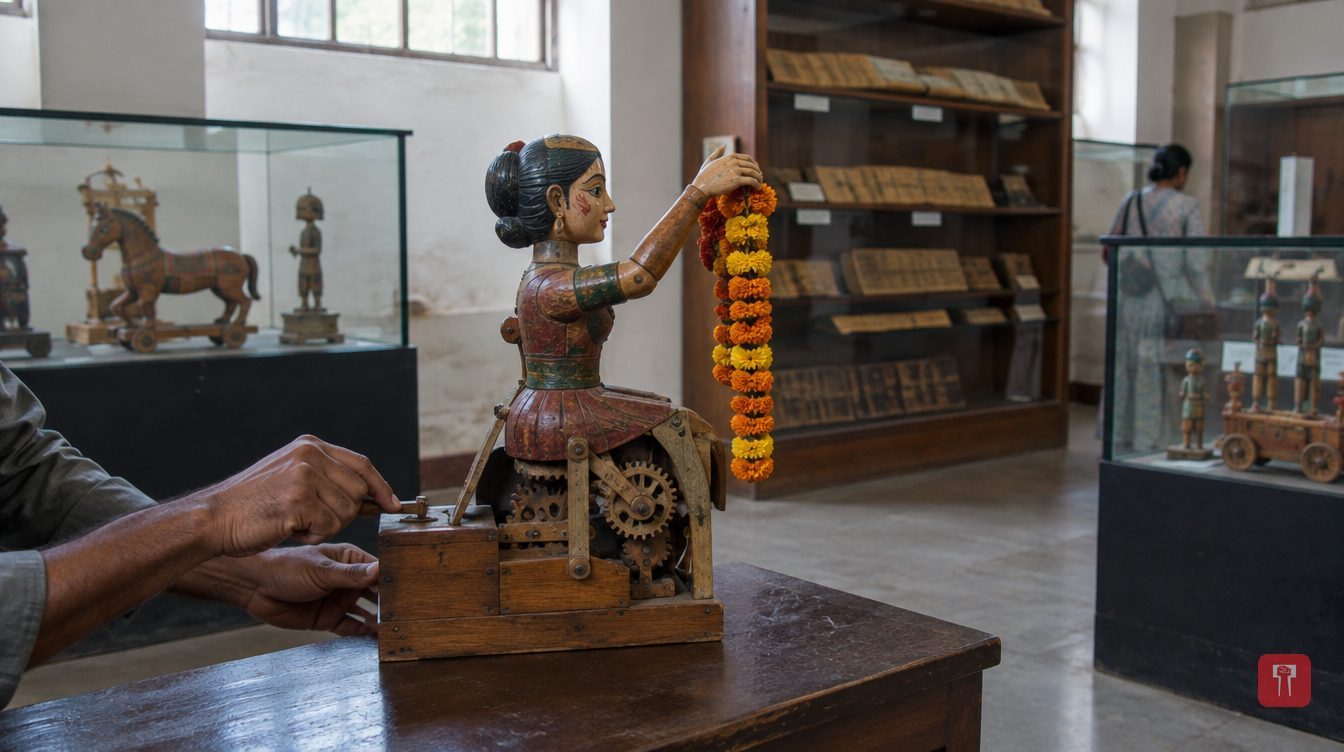
The most interesting part of the tale is Somaprabha's casket full of machines. When she came to meet her friend Kalingasena, she showed her some extraordinary mechanical dolls made of wood from this casket. According to the tale, when a particular lever was pressed on one doll, it flew through the air and returned with a garland of flowers. Another doll fetched water, while some dolls danced and even spoke.
Today such descriptions can be compared with the ideas of robotics, automation and programmed machines. However, there is no solid historical evidence that the machines described in the tale actually existed. It does show how strongly the idea of making lifeless things work on their own appealed to ancient storytellers. According to one tale, Mayasura also had an entire war army bound to mechanical men.
Somaprabha's story is not limited to mechanical dolls. Her character appears to give weight to knowledge, skill and ingenuity. In the tale, she shows these unusual things to please her friend. The episode suggests that machines are not only symbols of war or power, but can also serve entertainment and everyday tasks.
As we talk today of robots, artificial intelligence (AI) and self-operating machines, the tale of Somaprabha seems especially interesting. But it is important to distinguish between mythological description and scientific evidence. It cannot be concluded that Somaprabha could have built a robot in the modern sense. Even so, the presence in ancient literature of the idea of machines that move on their own, fetch things and talk is quite notable as a matter of imagination.
The tale also suggests that human imagination is not bound by the limits of time and means. Even in stories from centuries ago, people dreamed of remarkable machines that worked under human control. Somaprabha is therefore not merely a mythological character but a fascinating symbol of the imagination of mechanical skill in ancient literature.

Comments
No comments yet. Be the first.