

Security guard on Rs 18,000 a month saves Rs 2,000, and his budget post goes viral
 Images are not validated/verified
A security guard's month-by-month account of how he runs a household on Rs 18,000, shared on X by Ankit Pandey, has set off a debate on low wages and savings.
Everyone these days says prices have risen and salaries do not stretch. Someone earning Rs 50,000 says he does not know where the month went. Even a person earning Rs 1 lakh says nothing is left in hand. Against this, how a security guard runs a home on a job paying just Rs 18,000 has become a talking point on social media.
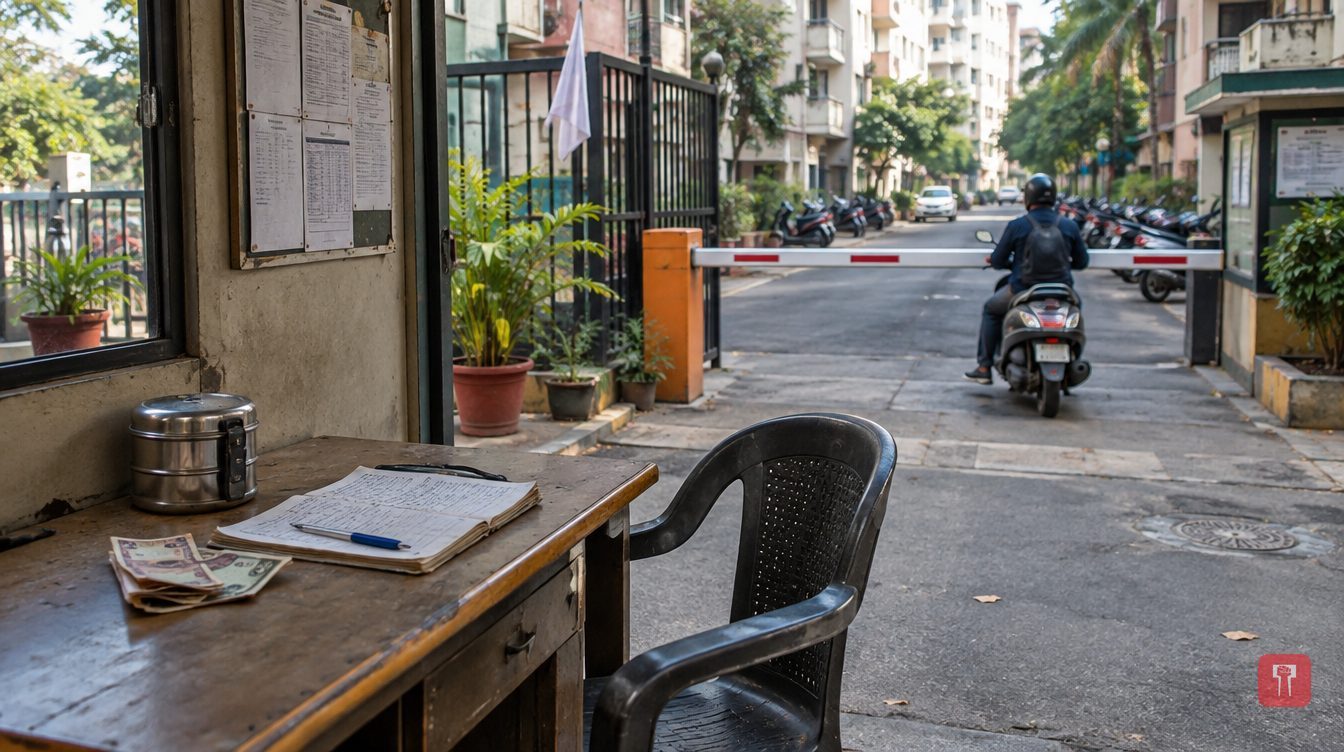
It began with a post on X by Ankit Pandey, who had spoken to a security guard. The guard gave him a full account of his month: how much he earns, where each rupee goes and how much is left at the end. Pandey posted the account as he heard it. The post went viral, and people said there was much to learn from it.
The guard is paid Rs 18,000 a month. The largest share, Rs 6,000, goes on food and groceries. House rent is Rs 4,000. These two items alone take Rs 10,000, more than half the salary.
Another Rs 2,000 goes on the children's school fees. Bus and train fares to get to work cost Rs 2,000 a month. Rs 1,000 is set aside for electricity and other bills and Rs 1,000 for medicines. Added up, monthly spending comes to Rs 16,000. Subtracting that from Rs 18,000 leaves Rs 2,000 in hand. About 89 per cent of the income thus goes on necessities alone, leaving no money for outings, eating out or entertainment.
Opinion on the post is divided. Some praised the guard and said saving Rs 2,000 out of Rs 18,000 is no small thing. Others asked how long the saving would last. If someone at home suddenly falls ill, the school asks for higher fees, or a fan or television breaks down, the Rs 2,000 would vanish at once. Money left at the end of the month, they said, does not mean the man is secure.
The post has brought the financial struggles of low-paid workers such as security guards, drivers and employees of private schools back into discussion. In cities such as Mumbai, Pune and Thane, given the cost of rent, travel and education, saving on a low income can be harder still.
Some in the discussion also said that a room for Rs 4,000 is hard to find in Mumbai, yet this man pays rent, runs his home on Rs 6,000 and educates his children. The difference, they said, lies not in the salary but in keeping an account. The guard knows where each rupee has to go, which is why he is able to save Rs 2,000.
Reach readers on the ward they actually live in.
Advertise with Prime Time 24Reach readers on the ward they actually live in.
Advertise with Prime Time 24Reach readers on the ward they actually live in.
Advertise with Prime Time 24Choose primetime24.com as a preferred source on Google Google shows more stories from your preferred sources in Top Stories.
Reach readers on the ward they actually live in.
Advertise with Prime Time 24
Comments
No comments yet. Be the first.