

Jalindarnath of Nath sect: legend of his birth from a sacrificial fire and his yoga practice
Revered among the Navnaths, Jalindarnath is believed to have appeared from a yajna fire and attained spiritual power through penance under Dattatreya.
 Images are not validated/verified
The Nath sect holds a special place in India's saint tradition. Through yoga practice, renunciation, devotion to the guru and spiritual attainment, the sect has had a deep influence on Indian society. In the tradition of the Navnaths, Jalindarnath Maharaj is known as a highly accomplished, ascetic and influential yogi. His life shows severe penance, the grace of his guru, the practice of yoga and a concern for the welfare of people. The text 'Shri Navnath Bhaktisar' describes his life from birth to his various spiritual feats and powers.
According to the legend handed down in the Nath sect, Jalindarnath is regarded as an incarnation of Antariksha Narayan. 'Shri Navnath Bhaktisar' says he appeared from the radiance of the fire in the sacrificial pit during the Somayajna of King Brihadrava of Hastinapur. The child who appeared from the fire was later named Jalindarnath.
This birth story is not seen merely as a flight of the supernatural. In the Nath tradition it is also taken as a symbol of his special standing. Fire is said to stand for purification, radiance, energy and transformation, and these symbols are linked to the tradition of Jalindarnath's penance and yoga practice.
According to the popular legend, Jalindarnath lost interest in worldly life in childhood. At the age of 12 he left domestic life and took up the spiritual path. He then met Agnidev, and following the path Agnidev showed him, he met Shri Guru Dattatreya.
In the Indian spiritual tradition, Shri Dattatreya is regarded as the Adiguru and a symbol of yoga. The accounts of Jalindarnath's life say he was initiated by Dattaguru into yoga practice, the knowledge of mantras and spiritual knowledge. Attaining self-realisation through practice under the guidance of a guru is an important part of the Nath sect's path.
This episode in Jalindarnath's life underlines the importance of a guru's guidance. The message of the tradition is that a desire for knowledge alone is not enough for a seeker. A true guru, steady practice and self-restraint are needed.
The stories of the Navnaths say that after receiving the guru's grace, Jalindarnath performed severe penance. Traditional belief holds that he practised in the Badrinath region. According to accounts of his life, he gained spiritual strength through solitude, restraint, meditation and yoga.
Yogic attainment matters in the Nath sect, but showing miracles is not considered the final aim of practice. The aim is self-elevation and spiritual experience. The stories of Jalindarnath bring out the idea that a seeker should try to overcome attachment, ego and the pull of the senses.
'Shri Navnath Bhaktisar' describes many of Jalindarnath's powers and supernatural abilities. Some traditional stories also mention a 'Vatakarshan astra' associated with him. These stories are religious and narrative in nature, so they need to be understood in the context of the Nath sect's tradition of faith.
The mention of Jalindarnath's name brings with it that of his chief disciple, Kanifnath Maharaj. In the Navnath tradition the guru-disciple relationship has a special place. The knowledge received from the guru, the discipline of practice and the preservation of the spiritual tradition are carried forward through the disciple. The relationship between Jalindarnath and Kanifnath makes clear the importance of the tradition of knowledge in the Nath sect. A guru teaches not only mantras or yoga, but also gives the seeker a way of looking at life, restraint and constancy in practice. For this reason, devotion to the guru is regarded in the Nath tradition as an inseparable part of practice.
'Shri Navnath Bhaktisar' is an important devotional text describing various episodes, teachings and miracles in the lives of the Navnaths. Nath devotees in Maharashtra hold this text in special reverence. The episodes from Jalindarnath's life bring out the importance of yogic power, devotion to the guru and renunciation.
In the wider tradition of the Nath sect, Jalindarnath is regarded not merely as a yogi who attained powers, but as a symbol of the strength of spiritual practice. The supernatural episodes in his life strengthen the faith of devotees, while the accounts of renunciation and penance inspire spiritual life. It is also said that Jalindarnath's textual tradition is mentioned in some Tibetan Buddhist literary references, especially those linked to the Tanjur. The exact texts and the historical connection in these references are a matter for separate study.
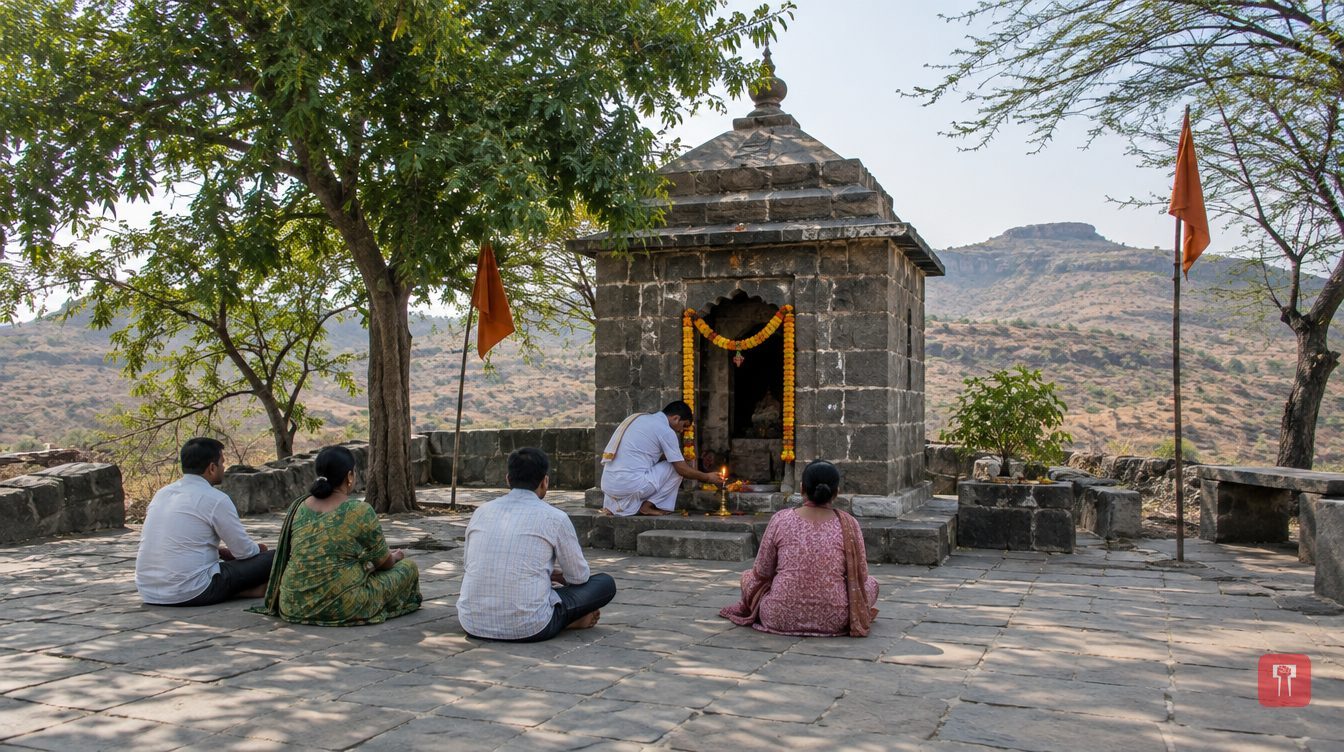
There are several places of devotion linked to Jalindarnath Maharaj in Maharashtra. His samadhi site is believed to be in the Yevalwadi and Garbhagiri area of Shirur Kasar taluka in Beed district. Devotees visit it with faith. Such samadhi sites are regarded as centres that preserve the memory of saints' practice and give devotees spiritual support.
Samadhi has a special place in the Nath sect's saint tradition. Samadhi sites are considered important for remembering the life work of saints, reflecting on their teachings and expressing faith in the path of practice.

Comments
No comments yet. Be the first.